- Multi Channel Order Management
- TikTok Shop
- Amazon
- Temu
- About 4Seller
- Shopify
- Multi Channel Inventory Management
- Amazon MCF&FBA
- Seller Tips
- Listing Management
- Marketplace News
- Amazon Shipping
- DHL Express
- Amazon MCF
- UPS
- FedEx
- eBay
- Shein
- Creator Bulk Invite
- Multi-channel Store
- Inventory Sync
- GLS
- Walmart WFS
- Walmart
- Seller Story
- Beginner Tutorial
- Royal Mail
- Kaufland
- Shipping Integration
- DHL Parcel
- 3PL
- WooCommerce
- Walmart MCS
- Deutsche Post
- Shipping Label
- OTTO
- Platform Integration
- PayPal Tracking Sync
- UniUni
- Yodel
- ShipHero
- SPU Catalog
- Stripe Tracking Sync
- USPS
- AliExpress
- GOFO
- CIRRO
- Correos
- Correos Express
- DPD
- Etsy
- Evri
- FBM
- Request Review
- Logistics Rule
- CaiNiao
- BRT
- Chronopost
- Poste Italiane
- Cdiscount
- OMS
- DHL
- WFS
- ShipBob
- Price Sync
Goflow vs 4Seller Easy MCF: Which Amazon MCF Tool Is Better for TikTok Shop Sellers?
 By Joline19 Mar,2026
Many new sellers moving from Amazon to TikTok Shop, or trying to use FBA inventory to fulfill TikTok orders, are running into the exact same problem lately: traffic is coming in, orders are picking up fast, but fulfillment is where things start to break down. One wrong step can lead to policy violations, account health issues, penalty points, or even store suspension.
That is exactly why MCF has become almost a standard solution. But the real question is not whether you should use MCF. The real question is which tool you should use.
At first glance, both legacy systems like Goflow and newer fast-growing platforms like 4Seller seem capable of connecting with Amazon MCF fulfillment. But once you get into real operations, the difference becomes obvious very quickly. This is not just about whether a tool can fulfill orders. It is about whether you can run fulfillment in a stable, scalable, and low-risk way.
1. Plug-and-play vs. deep configuration
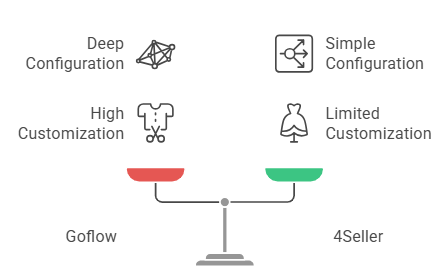
Goflow’s underlying logic is very typical of an engineering-driven system. You need to define warehouse priorities, segment regions, and set fallback rules so the system knows which warehouse to use and which route to follow under different conditions.
That kind of architecture is undoubtedly powerful and flexible. In theory, it can support very complex business models. But that flexibility comes at a cost. For most operators, this feels less like using a tool and more like building a system. If the configuration sequence is wrong, or if one warehouse runs into an inventory issue, orders can get stuck. And troubleshooting itself becomes a time-consuming and expensive task.
4Seller takes the opposite approach. Its logic is essentially: you should not have to reinvent common fulfillment workflows from scratch.
In an MCF workflow, it breaks the entire process into a few very simple steps. From store authorization and SKU mapping to enabling auto-fulfillment and inventory sync, most of it is handled through simple switch-style actions. You do not need to understand complex routing logic, and you do not need to design warehouse strategies yourself. The system has already built in a default setup that is “good enough” for most sellers.
While its customization may not be as deep as Goflow’s for extremely complex fulfillment scenarios, for the vast majority of sellers using TikTok + FBA, the ability to get up and running immediately is often far more valuable.
2. Real-time visibility vs. black-box operations
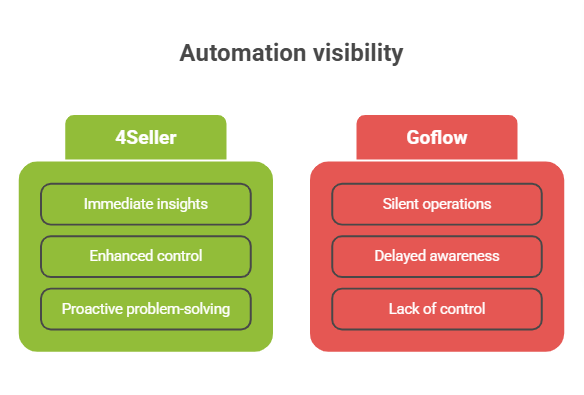
On the execution side, Goflow tends to operate more in the background. Order pushes, API calls, and exception handling often happen silently within the system. The advantage is a high level of automation, but the downside is very real: if something goes wrong in the middle of the process, sellers often do not know right away.
By the time customers start asking where their orders are, or the platform begins applying penalties, sellers may only then realize that the order was already stuck somewhere earlier in the workflow.
This is where 4Seller does something important: it makes automation visible.
Every step of an order in the MCF workflow can be clearly tracked. You can immediately see which orders were pushed successfully, which were blocked due to inventory issues, and which have address-related exceptions. At a glance, you know what is happening.
In essence, 4Seller does not reduce automation. It simply gives sellers a sense of control. And on a fast-moving platform like TikTok Shop, that kind of visibility is often more valuable than having a few extra layers of advanced configuration.
3. A dedicated high-volume fulfillment engine vs. a general-purpose tool
Goflow feels more like a traditional ecommerce middleware system. Its strengths lie in distribution, multichannel order consolidation, and complex inventory management. MCF is just one fulfillment option within that larger framework.
Although it does support Amazon FBA multichannel fulfillment, the overall product is not specifically optimized around the use case of “using FBA to handle surging TikTok Shop orders.” As a result, it is better suited for businesses with large B2B supply relationships or dropshipping-heavy models, where granular control matters more than execution speed.
4Seller Easy MCF, on the other hand, is much more aligned with today’s MCF fulfillment environment, especially for fast-evolving platforms like TikTok Shop and Temu.
Its MCF workflow feels more like a dedicated execution engine built specifically for FBA-based multichannel fulfillment. You can treat Amazon warehouses as your backend fulfillment center, connect orders from multiple sales channels, and automate allocation and fulfillment from one place.
It also includes targeted optimizations in key operational details, such as shipping information handling, logistics tracking control, and proof-of-delivery synchronization. These may seem like small features on the surface, but they are exactly the kind of details that new sellers most often trip over.
4. Free and fast to launch vs. high upfront cost
Goflow’s pricing is clearly designed with larger businesses in mind. Even its entry-level Launch plan costs $499 per month and only supports 750 orders. The Scale plan jumps to $1,449 per month and supports 10,000 orders plus 100 wholesale/EDI orders. Higher-tier Enterprise plans require custom pricing through sales, and the cost can be substantial depending on the complexity of your operation.
To be fair, Goflow’s higher price point comes with broad functionality and deep customization. But for startups or fast-growing sellers, that cost is a serious burden.
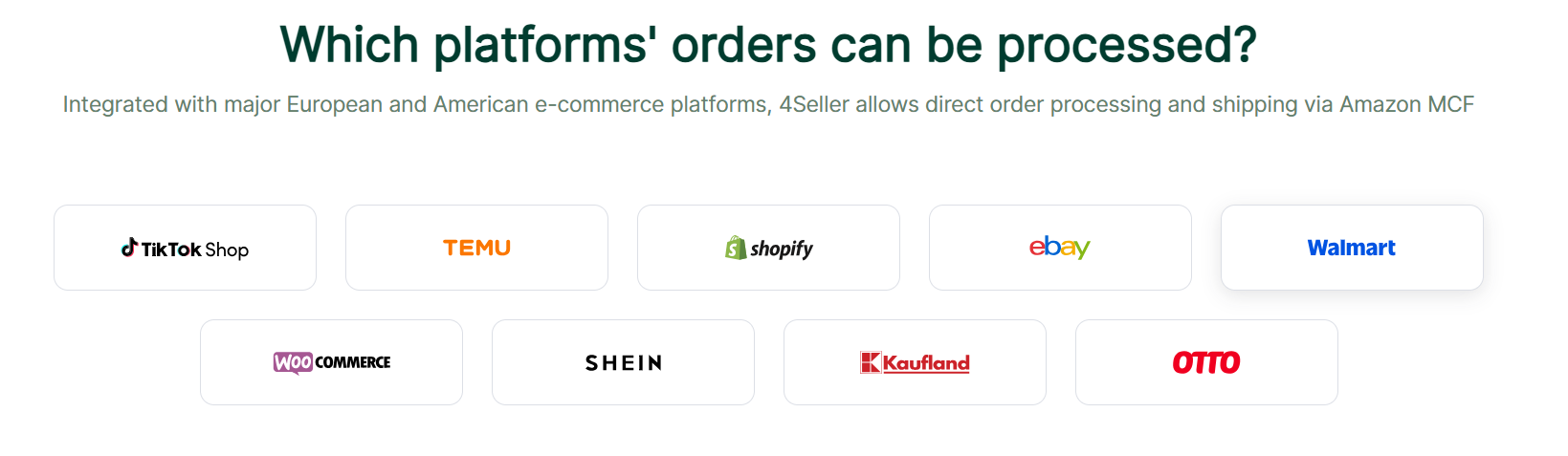
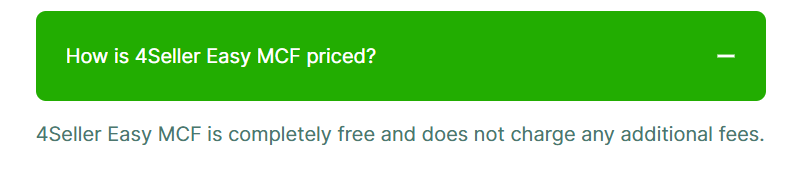
4Seller, by comparison, is completely free to get started with. There is virtually no barrier to entry and no hidden fees. You can connect TikTok Shop, Amazon FBA, and other stores directly, and start running your MCF workflow almost immediately.
It may not offer the same level of extreme customization as Goflow, but for most sellers chasing new market opportunities and trying to scale quickly with maximum efficiency, that low-cost, ready-to-use advantage translates much more directly into growth and profit.
Put another way, if Goflow is a fully equipped but expensive commercial aircraft, then 4Seller is a fast, flexible sports car with automatic transmission. You do not need a massive budget or a specialized operations team to maintain it. You can simply use your FBA inventory to start processing TikTok Shop orders quickly and scale across multiple channels.
5. So how should you choose?
If you are a large brand with a complex channel structure, significant offline supply relationships, and extremely high requirements for inventory precision—and you also have the budget and team needed to maintain a sophisticated system—then a heavyweight platform like Goflow may be a better fit for your business. It is not that Goflow is a bad product. It is just solving a different kind of problem.
But if you are a seller operating on emerging ecommerce platforms like TikTok Shop, Amazon, or Temu, with a lean team but fast growth, and you need to frequently adjust listings, sync inventory, and expand fulfillment capacity, then a lightweight, direct, highly automated, and free tool like 4Seller will likely fit your pace much better.
Its feature updates can happen as often as once a week, with iteration driven by real seller needs and real operational pain points.
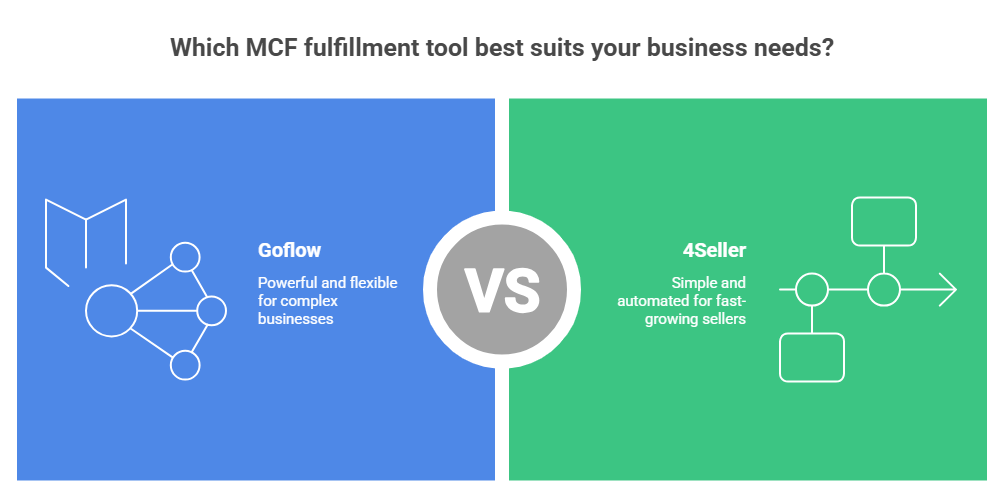
In other words, Goflow is more like a system that requires precision handling, while 4Seller is more like a lightweight, practical solution designed to get the job done quickly.
Conclusion
In today’s ecommerce environment, success is not just about who understands systems better. It is about who can convert traffic into stable fulfillment capacity faster.
Choose the wrong tool, and you will spend all your time fixing the system. Choose the right one, and you can spend your time scaling growth.
For sellers trying to capture the TikTok traffic wave, maximize cost efficiency, and operate with a small team of just three to five people, 4Seller Easy MCF is essentially an automatic-transmission “order growth accelerator.”
It is not just easy to use. With one-click product listing, unlimited SKU mapping, and bundle selling support, it helps you scale faster with less friction. More importantly, it backs your operation with powerful, practical features like blank box shipping, TBA carrier masking, and proof-of-delivery photo sync, helping you build a fulfillment workflow that is automated, reliable, and verifiable.
Start using 4Seller Easy MCF for free today and get your Amazon MCF auto-fulfillment workflow up and running in as little as 30 minutes.
Free multilingual 24/5 remote 1-on-1 meeting booking [Link]
For reference: [Easy MCF user guide] 【4Seller X Amazon MCF Introduction】
Contact us: [WhatsApp] / [LinkedIn] / [Instagram] / [Facebook] / [E-mail: support@4seller.com]

- Multi Channel Order Management
- TikTok Shop
- Amazon
- Temu
- About 4Seller
- Shopify
- Multi Channel Inventory Management
- Amazon MCF&FBA
- Seller Tips
- Listing Management
- Marketplace News
- Amazon Shipping
- DHL Express
- Amazon MCF
- UPS
- FedEx
- eBay
- Shein
- Creator Bulk Invite
- Multi-channel Store
- Inventory Sync
- GLS
- Walmart WFS
- Walmart
- Seller Story
- Beginner Tutorial
- Royal Mail
- Kaufland
- Shipping Integration
- DHL Parcel
- 3PL
- WooCommerce
- Walmart MCS
- Deutsche Post
- Shipping Label
- OTTO
- Platform Integration
- PayPal Tracking Sync
- UniUni
- Yodel
- ShipHero
- SPU Catalog
- Stripe Tracking Sync
- USPS
- AliExpress
- GOFO
- CIRRO
- Correos
- Correos Express
- DPD
- Etsy
- Evri
- FBM
- Request Review
- Logistics Rule
- CaiNiao
- BRT
- Chronopost
- Poste Italiane
- Cdiscount
- OMS
- DHL
- WFS
- ShipBob
- Price Sync

 17 Dec,2024
- 17 Dec,2024