-
For many Amazon sellers, launching a new product comes with a familiar challenge: inventory risk and high upfront capital investment.
Before a product generates sales, sellers often need to invest heavily in product sourcing, bulk inventory orders, 3PL warehousing, and FBA fulfillment. If market demand falls below expectations, excess stock can quickly turn into costly long-term storage fees.
Today, more sellers are exploring a different approach: Print on Demand (POD) combined with AI-powered workflows.
Instead of producing large quantities upfront, sellers can test product ideas first, create items after receiving orders, and use technology to improve the entire process.
What Is Amazon Print on Demand (POD)?
Amazon Print on Demand (POD) is an e-commerce order fulfillment model where custom items—like apparel, drinkware, and home decor—are produced only after a shopper completes a purchase.
Unlike traditional Amazon FBA (Fulfillment by Amazon) private label models, POD sellers don't need to purchase large inventory volumes before validating buyer intent.
The Standard Amazon POD Workflow:
Market Research & Keyword Analysis: Identify high-demand niche products and customer search trends.
Graphic Design & Listing Creation: Develop custom print designs and craft optimized Amazon product listings.
Publishing to Amazon: List items via Amazon Merch on Demand or third-party POD integration platforms.
Order Receipt: Process incoming shopper orders automatically.
POD Production & Fulfillment: A print supplier manufactures, packages, and ships the item directly to the customer.
This print-to-order system allows e-commerce entrepreneurs and Amazon Merch sellers to launch and test more SKU variations with low financial risk.
Top POD Product Categories for Amazon Sellers:
Custom apparel (graphic tees, hoodies, streetwear)
Personalized gifts & custom drinkware (coffee mugs, tumblers)
Seasonal products & holiday merchandise
Niche designs targeting specialized micro-audiences
How AI Is Transforming the Print-on-Demand Workflow
AI is not replacing sellers. Instead, it helps sellers move faster and make better decisions.
At Amazon Accelerate, AI was one of the major topics as Amazon introduced new AI-powered tools designed to help sellers manage their businesses more efficiently.
For POD sellers, AI tools can support different stages of the workflow:
Product Research & E-commerce Market Insights
AI keyword research tools and data analytics platforms allow sellers to quickly analyze:
Trending search queries and seasonal customer interest
Low-competition, long-tail Amazon search keywords
High-performing product categories and buyer niches
Competitor pricing strategies and listing positioning
Design Ideation & AI Content Generation
Creating new designs consistently can be time-consuming.
AI can help generate:
design concepts
creative directions
product variations
listing copy ideas
Sellers can then refine these ideas based on their brand identity and customer needs.
Listing Optimization & Performance Analytics
Successful Amazon sales requires continuous optimization. AI tools assist with:
listing quality
keyword performance
advertising results
customer feedback
The goal is not to automate every decision, but to reduce repetitive work and help sellers focus on growth. Most of the AI tools above work with text and numbers, but a POD catalog is mostly made of images. As the number of designs grows, sellers start to run into visual work that keyword tools can't handle. Examples include spotting near-duplicate artwork, tagging hundreds of mockups by style or color, and checking that a printed item matches the approved file before it ships. Off-the-shelf AI tools cover the common cases, and for many small stores they are enough. Larger sellers, and the POD suppliers behind them, sometimes use custom computer vision software instead. These systems are trained on the seller’s own product photos and designs, so they can sort images, flag print defects, or let shoppers search the catalog with a photo. The choice usually comes down to volume: a ready-made tool is cheaper to start with, while a custom model starts to pay off once manual image review slows down every new launch.
3 Reasons Sellers Are Combining AI with Amazon POD
Test Products with Zero Upfront Inventory Risk
Traditional Amazon private-label launches demand thousands of dollars in production and shipping costs before a single sale occurs. Combining AI product research with a POD model allows sellers to launch hundreds of product variations, gather real buyer data, and scale only the winning SKUs.
Streamline Multi-Channel & Custom Order Fulfillment
Because POD items are created post-purchase, sellers eliminate warehouse overhead and dead-stock write-offs. Whether using Amazon FBM (Fulfillment by Merchant) or transitioning winning items into FBA or hybrid fulfillment models, POD provides extreme operational flexibility.
Build a Scalable, AI-Powered Operating System
The ultimate benefit of AI e-commerce tools is turning labor-intensive steps—like listing writing, keyword clustering, and trend research—into standardized, repeatable workflows.
Print on Demand Is a Product Validation Strategy, Not a Shortcut
While AI + POD significantly reduces financial barrier-to-entry, launching a profitable Amazon brand still requires real business strategy. Long-term e-commerce success depends on:
Distinct, high-quality artwork that respects trademark guidelines
Intent-driven Amazon keyword optimization
Clear brand identity and targeted marketing campaigns
Reliable POD suppliers and fast order fulfillment times
Instead of replacing traditional product sourcing models entirely, top sellers use Amazon POD as an incubation sandbox to test ideas risk-free before placing bulk inventory orders.
Manage Amazon POD Orders Efficiently With 4Seller
For sellers managing custom products across multiple channels, order processing can become complicated.
With 4Seller, Amazon POD orders can be managed through centralized order management workflows. Sellers can add customized product links directly to the order details, making it easier to track special product requirements and fulfillment information.
By combining flexible product testing with efficient order operations, sellers can spend less time managing manual processes and more time growing their business. Serena - 29 Sep,2026
What is 4Seller?
4Seller is a free multichannel ecommerce operations platform that helps sellers manage listings, inventory, orders, and fulfillment across multiple sales channels from one centralized dashboard.
By connecting 15+ leading marketplaces and ecommerce platforms, including Amazon, Shopify, Walmart, TikTok Shop, eBay, Temu, SHEIN, AliExpress, Etsy, Kaufland, OTTO, Miravia, Cdiscount, WooCommerce, and PrestaShop, 4Seller enables sellers to streamline daily operations without switching between multiple systems.
4Seller also integrates with 40+ major logistics providers such as UPS, FedEx, USPS, DHL, DPD, GLS, Hermes, Royal Mail, and GOFO. 4Seller supports shipping label creation, tracking synchronization, and fulfillment workflows with these carriers.
Launched in 2023, 4Seller has 60,000 sellers across North America, Europe, and Australia. With 4Seller, SMB and growing ecommerce sellers can one powerful and free platform to operate product management, inventory synchronization, order processing, and fulfillment workflow.
Supported Platforms & Sales Channels
4Seller provides certified, seamless integrations with the world’s leading ecommerce channels:
Global & Regional Marketplaces: Amazon, Walmart, TikTok Shop, Temu, eBay, SHEIN, Etsy, AliExpress
European Marketplaces: Kaufland, OTTO, Miravia, Cdiscount
DTC Store Platforms: Shopify, WooCommerce, PrestaShop
Who Is 4Seller For?
Amazon Sellers Expanding Multi-Channel: Easily connect platforms like Shopify, Walmart, or TikTok Shop while maintaining perfect stock accuracy across all channels.
DTC Brands & Retailers: Expand your reach from DTC store builder platforms into high-volume marketplaces without operational complexity.
European Marketplace Sellers: Unify cross-border operations across key European channels like Kaufland, OTTO, Miravia, and Cdiscount.
Growing Ecommerce Teams: Streamline multi channel order management and replace repetitive spreadsheet tasks with centralized automation.
Core Operations & Platform Features
Multi Channel Order Management & Fulfillment
Unified Dashboard: Centralize and manage orders from every connected marketplace in one clean view.
Automated Order Processing: Generate shipping labels in bulk and automatically update tracking numbers back to original store channels without cost.
Carrier Integrations: Connect directly with major postal and logistics carriers across North America and Europe.
Real-Time Multichannel Inventory Synchronization
Automated Stock Sync: Stock levels automatically adjust across all platforms instantly when an order is placed.
Multi-Warehouse Control: Manage inventory across self-owned warehouses, 3PL partners, Amazon FBA, and Walmart WFS.
Prevent Overselling: Automated stock deduction keeps inventory aligned, preventing stockouts and overselling penalties.
Automated Amazon MCF Fulfillment
Multi-Channel Fulfillment (MCF): Automatically route non-Amazon orders (Shopify, TikTok Shop, Walmart) to Amazon FBA for automated fulfillment.
Smart SKU Mapping: Simplify SKU mapping and automated workflows between non-Amazon platforms and Amazon MCF.
Efficient Listing & Catalog Management
Cross-Channel Listing Migration: Quickly publish, copy, and migrate product listings to new marketplaces.
Bulk Catalog Management: Update product information, SKUs, and pricing across channels simultaneously.
Ecommerce Analytics & Market Research
Performance Insights: Track cross-channel sales metrics, revenue growth, and operational efficiency in real time.
Product Scraper Tools: Utilize market research tools to identify hot product trends and new sales opportunities.
Why Choose 4Seller?
Certified Platform Partner: Officially certified integration partner with Amazon, Walmart, Shopify, TikTok Shop, Temu, SHEIN, Kaufland, and OTTO.
Bridge Western & Asian Ecommerce Platforms: Seamlessly manage traditional US/EU marketplaces (Amazon, Walmart, eBay) alongside rapid-growth social & global channels (TikTok Shop, Temu, SHEIN).
AI-Powered 1-Click Listing Migration: Migrate a 1,000-SKU store in just 10 minutes instead of 80+ manual hours, complete with AI category matching and automatic image resizing.
Real-Time Webhook Inventory Sync: Prevent overselling and stockouts during peak shopping events with instant, automated stock deduction across all channels.
100% Free Core Tools: Access essential multi channel order management and fulfillment tools with no hidden charges.
Integrated Amazon MCF & WFS Automation: Automatically route non-Amazon orders (from Shopify, TikTok Shop, or SHEIN) directly to Amazon FBA or Walmart WFS without paying extra add-on fees.
Human Support: Get up and running quickly with personalized 1-on-1 onboarding and an average support response time under 15 minutes.
Frequently Asked Questions (FAQ)
Q: Is 4Seller free to use?
A: Yes. 4Seller offers free access to its core operations tools with no hidden fees.
Q: Which global regions does 4Seller support?
A: 4Seller fully supports sellers operating across North America, Europe, and Australia.
Q: How does 4Seller handle inventory sync compared to other tools?
A: 4Seller uses real-time webhook inventory sync to ensure stock updates occur instantly across all channels, preventing overselling.
Q: Can I use Amazon FBA inventory to fulfill orders from Shopify, TikTok Shop, or SHEIN?
A: Yes, 4Seller automates Amazon Multi-Channel Fulfillment (MCF) for non-Amazon orders without requiring expensive add-on subscriptions.
How to contact 4Seller?
Email: support@4seller.com
4Seller ERP: https://www.4seller.com
Youtube: www.youtube.com/@4seller
TikTok: tiktok.com/@4sellererp
Facebook: facebook.com/erp4seller
Whatsapp: +44 7754 004919
Conclusion
If you are looking for a user-friendly and efficient platform to sell your products or listings, it is time to sign up for 4Seller. With our easy-to-use interface, in just a few clicks you can create your own online store and start selling your products to a global audience.
Start managing your multichannel operations for free with 4Seller today!
Karen - 21 Sep,2026
If you run an established US e-commerce business, such as Amazon, Walmart, or your own Shopify store, you already know the daily pressures of single-channel dependency. Escalating Amazon PPC ad costs, shrinking margins, and aggressive competitor bidding make expanding your sales footprint essential for growth. You should know more about AliExpress in 2026.
AliExpress is often misunderstood as solely a cross-border platform for overseas factories. However, through its AliExpressLocal program, the marketplace is actively expanding its network of domestic US merchants. If you hold inventory in US warehouses, you can now reach millions of global and domestic shoppers with fast local shipping, zero cross-border logistics friction, and significantly lower customer acquisition costs.
Before creating your account, this article helps you to choose the right business model (AliExpress Marketplace vs. AliExpress Direct), optimize your inventory across channels, and understand platform requirements to scale fast.
AliExpress Marketplace vs. Direct: Which Operating Model Fits You?
When onboarding onto the AliExpressLocal framework, US merchants choose between two operational models: Marketplace (self-managed) or Direct (platform-managed).
Option A: AliExpressLocal Marketplace
Self-Operated Control Store Model
Best Suited For: Established Amazon, Walmart, or Shopify sellers with in-house operations teams
Complete Control: You manage product pricing, store promotions, custom merchandising, and MAP policies.
Option B: AliExpressLocal Direct
AliExpress-Assisted Managed Store Model
Best Suited For: Emerging brands, catalog owners, or sellers wanting lean operational overhead
Platform-Guided: AliExpress assists directly with marketing strategy, merchandising, pricing guidance, and customer service.
Choosing the Right Model for Your US E-commerce Operations
To decide which path aligns with your current infrastructure, evaluate your team's bandwidth and business goals:
td {white-space:nowrap;border:0.5pt solid #dee0e3;font-size:10pt;font-style:normal;font-weight:normal;vertical-align:middle;word-break:normal;word-wrap:normal;}
Strategic Business Criteria
AliExpress Marketplace (Self-Managed)
AliExpress Direct (Platform-Assisted)
Existing Amazon or Walmart Store?
✅ Strongly Recommended
🟡 Optional Path
US Warehouse Inventory On Hand?
✅ Excellent Fit
🟡 Optional Path
Full Pricing & MAP Policy Control?
✅ Total Control
🔴 Platform-Guided
In-House Marketplace Operations Team?
✅ Required
🔴 Not Required
Dedicated Platform Support Needed?
🔴 Self-Managed
✅ Hands-On Support
Multi-Channel Brand Scaling Target?
✅ Designed for Scaling
🟡 Channel-Specific
Strategic Advantages of Expanding Your US E-commerce Brand to AliExpress
Turn Your US Inventory into a New Sales Channel
Many US sellers already have proven products, inventory, and fulfillment operations through marketplaces like Amazon. AliExpress provides another opportunity to reach new customers without rebuilding an entirely new ecommerce operation.
With AliExpressLocal, US merchants can choose different selling models based on their business needs while managing their products, pricing, and operations through the platform.
Maximize Revenue from Your Existing US Warehouse Stock
If you already hold inventory in US fulfillment centers, you have already funded photography, product pages, supplier runs, and freight shipping. Listing on AliExpress lets you reuse these exact assets to generate new order volume without extra capital expenditure.
Reduce Amazon Ad Dependency and Diversify Revenue Streams
Relying solely on Amazon leaves your business vulnerable to rising PPC ad rates and sudden buy box shifts. Adding AliExpress creates a complementary sales stream that lowers your average customer acquisition cost (CAC).
High-Converting Product Categories and US Compliance Standards
While AliExpress hosts virtually all retail verticals, success depends on aligning your inventory with consumer discovery behavior.
Categories with High Marketplace Traction
Consumer Electronics & Accessories: Mobile accessories, smart desk gadgets, audio gear, and charging solutions. Buyers actively compare technical specs across channels, making competitive pricing and local delivery speed key differentiators.
Home & Garden: Modular storage, outdoor accent lighting, DIY tools, and home organization tools. High visual appeal makes these products effective for image-driven marketplace discovery.
Beauty & Personal Care: Cosmetic tools, skincare devices, LED therapy equipment, and styling accessories. A trend-sensitive, social-discovery-heavy category with strong impulse-purchase conversion.
Fashion & Lifestyle Accessories: Jewelry, bags, wallets, and watches. Compact packaging limits shipping overhead, providing healthy margins on multi-unit orders.
Compliance Note: Categories such as Food/Supplements (FDA compliance), Children’s Products (CPSC testing), and specialized wireless electronics (FCC certification) require official licensing and documentation uploaded prior to listing approval.
Onboarding Checklist: Verification Requirements for US Merchants
To open an official enterprise seller account on AliExpress, you must register as a verified corporate entity.() Prepare the following documentation before starting your application:
Business Documentation: State business registration certificate, legal corporate entity name, and verified physical business address.
Identity Verification: Government-issued photo ID (Driver’s License or Passport) of the company's legal representative.
Federal Tax Data: Employer Identification Number (EIN) issued by the IRS along with tax registration forms.
Corporate Payment Account: US business bank account details matching your corporate entity for automated payouts.
Brand Rights (If Applicable): Registered trademark documentation or authorized distributor authorization letters to unlock Brand Store badges.
td {white-space:nowrap;border:0.5pt solid #dee0e3;font-size:10pt;font-style:normal;font-weight:normal;vertical-align:middle;word-break:normal;word-wrap:normal;}
Onboarding Step
Verification Stage
Required US Documentation
Step 1
Entity Registration
US Corporate Certificate (LLC or Corporation), official legal business address, and corporate contact details.
Step 2
Owner Identity Check
Government-issued ID (US Driver’s License or Passport) of the legal representative.
Step 3
Tax Identification
Official Employer Identification Number (EIN) issued by the IRS.
Step 4
Financial Settlement
US Business Bank Account details matching your corporate registration for automated payouts.
Step 5
Brand Protection
Registered US trademark documentation or official brand authorization letters (optional, for official brand badges).
Step-by-Step Store Launch Process for US Merchants
td {white-space:nowrap;border:0.5pt solid #dee0e3;font-size:10pt;font-style:normal;font-weight:normal;vertical-align:middle;word-break:normal;word-wrap:normal;}
Launch Sequence
Operational Phase
Key Tasks & Objectives
Phase 1
Model Selection
Choose between Marketplace (full control) or Direct (platform assistance).
Phase 2
Account Verification
Submit company EIN, business registration, legal ID, and US bank payout info on the AliExpress Seller Portal.
Phase 3
Store Customization
Set up your brand logo, custom header banners, shipping policies, and domestic return rules.
Phase 4
Catalog Publication
Upload product titles, assign category mappings, set pricing rules, and add high-resolution imagery.
Phase 5
Fulfillment Setup
Connect your US warehouse or 3PL, configure handling cutoffs, and publish local shipping templates.
How 4Seller Accelerates Your Multi-Channel Expansion onto AliExpress
Expanding to a new sales channel manually can overwhelm your operations team. 4Seller provides multi-channel e-commerce automation software that connects your existing Amazon, Walmart, or Shopify workflows directly with AliExpress. Both of AliExpress Direct stores and Marketplace stores can be authorized to 4Seller.
Catalog Migration
One-Click Listing Migration: Automatically import your Amazon or Shopify catalog, reformat data for AliExpress guidelines, and publish listings in bulk.
Inventory Overselling
Real-Time Inventory Synchronization: Sync stock levels across all your sales channels automatically whenever an order is placed.
Omnichannel Order Management
Centralized Fulfillment Hub: Manage orders from Amazon, AliExpress, Shopify, and other channels in one dashboard, automatically pushing tracking numbers back to each platform.
Summary: Which AliExpress Store Model Should Your Brand Choose?
Expanding your US e-commerce footprint beyond Amazon doesn't require reinventing your supply chain. You can quickly unlock a new revenue stream by choosing the store model that matches your internal resources.
Choose AliExpress Direct if:
You are an emerging brand or supplier with great physical products but a small operating team.
You prefer to outsource platform merchandising, campaign enrollment, pricing guidance, and customer service to AliExpress.
You want to use 4Seller on the back end to automatically sync multi-channel inventory, handle fulfillment workflows, and avoid overselling.
Choose AliExpress Marketplace if:
You are an established Amazon, Walmart, or Shopify brand with an in-house marketplace management team.
Strict control over pricing, MAP policies, promotional scheduling, and direct customer branding is essential to your business model.
You use multi-channel management tools like 4Seller to seamlessly automate catalog migration, inventory sync, and order routing alongside your existing channel stack.
Serena - 20 Sep,2026
How a K-Beauty Pioneer Is Using Temu to Reach New Skincare Fans Across the U.S
Wishcompany, a Korean beauty and content company (CEO Soungho Park) with U.S. offices in Irvine, California, is using Temu to bring its skincare brands to more American shoppers looking for quality products at good prices.
The Seoul-founded company sells its brands — Dear Klairs and By Wishtrend — through a single Temu store. Wishcompany, which was founded to bring gentle, effective skincare to a global audience, says the move is helping attract first-time Korean beauty buyers, especially in the Midwest and South, where the trend has been slower to take hold.
“Skincare products are highly targeted, but Temu’s broad reach into diverse consumer segments allows our brands to find their ideal audiences, making it a strong partner for expanding their footprints in North America,” said Chongrim Ku, who leads Wishcompany’s U.S. operations. “That synergy helps raise brand awareness, encourages mix-and-match purchases, and builds a stickier following.”
Since launching, Wishcompany’s Temu shop has maintained a 4.9 out of 5 customer rating, with shoppers praising the quality and gentleness of the products. Wishcompany lists about 50 products on the marketplace and says sales are growing in areas where K-beauty has had a smaller presence. The team is selling both full-size products and smaller trial versions. Regular sizes now outsell the minis, Ku said, but the smaller ones helped first-time buyers test the products before committing.
Wishcompany also offers “discovery” kits that bundle bestsellers from its brands. Ku said combining items such as Dear Klairs’ serum and a By Wishtrend cream helps shoppers explore different routines and see how the products work together.
The company uses Temu’s promotional campaign tools and real-time analytics dashboards to test prices, bundles, and coupons. Ku said Temu’s business development team also shares insights on how products are performing and suggests ways to improve visibility. One example, he said, was when Temu featured the Dear Klairs Midnight Blue Youth Activating Drop, helping boost interest and sales.
Ku said Temu attracts shoppers who look for affordable but high-quality skincare. Wishcompany’s core customers range from ages 24 to 39, but the company sees room to expand that base. The company is testing product bundles and planning seasonal sets, such as a holiday pairing of products from Dear Klairs.
Wishcompany entered the U.S. market in 2017 to tap into the growing curiosity about K-beauty. Many consumers wanted cruelty-free, ingredient-focused skincare at approachable prices, Ku said, and this matched Wishcompany’s flagship brand, Dear Klairs. “Our goal was to make K-beauty not just a trend but a trusted part of everyday skincare routines in the U.S.,” he said.
The company manages its logistics, fulfillment, and customer service from a 10,000-square-foot facility in Irvine, California, where about a dozen employees handle U.S. operations. The team may expand as Temu sales grow, Ku said.
While Wishcompany continues to sell through other channels, Ku said Temu is key because it lets the company keep prices accessible and respond quickly to shoppers’ feedback. Ku recalled one customer who found Dear Klairs on Temu and later told the company the products finally calmed her sensitive skin after years of trying others. “She described it as ‘finding skincare she could finally trust,’” Ku said.
For Wishcompany, success on Temu will depend on how many of those new K-beauty users return for more.
This article is for informational purposes only and does not substitute for professional medical advice. If you are seeking medical advice, diagnosis or treatment, please consult a medical professional or healthcare provider.
4Seller newsletters and editorial staff were not involved in the creation of this content. Serena - 16 Sep,2026
As the Q4 peak season approaches, high-volume e-commerce sellers in the Home Improvement and Furniture categories are locking in their product roadmaps. The goal? Finding high-margin winning products and timing the market right to maximize Q4 GMV.
A quick look at historic TikTok Shop analytics shows clear category sales spikes: outdoor living peaks in late summer, while Black Friday/Cyber Monday (BFCM) drives the year's largest conversion surge.
For Amazon, eBay, SHEIN, and Shopify merchants, Q4 growth isn’t just about doubling down on saturated best-sellers. It’s about spotting undersupplied, high-demand niches, especially items with strong short-form video appeal, and capturing untapped TikTok traffic before your competitors do.
Here is your breakdown of high-potential products, low-competition subcategories, Q4 pricing strategies, and multi-channel fulfillment tips for TikTok Shop.
High-Potential Home Improvement Categories: Proven Winners vs. Low-Competition Niches
Data shows five main home improvement segments driving massive GMV growth and content engagement on TikTok Shop:
Lighting & Home Ambience
Appliances & Off-Grid Energy
Bathroom Fixtures & Upgrades
DIY Building Supplies & Renovation Tools
Lawn, Garden & Outdoor Living
Here’s where the Q4 profit opportunities lie:
Lighting: Commodity vs. Short-Video Friendly Accent Lighting Lighting is one of TikTok Shop’s top visual categories. Products with a strong "before-and-after" visual hook naturally go viral in short videos and Live shopping sessions.
Outdoor Lighting (BFCM Powerhouse):
- Proven Best-Sellers: Permanent eave lights and smart outdoor LED string lights consistently hit top seller lists. Top storefronts generated over $100,000/day during peak BFCM promotions via organic affiliate shorts and shop ads.
- Low-competition Opportunity: Solar-powered garden ambient lighting and RGB patio accent lights. These items carry a massive search volume on Amazon but are far less saturated on TikTok Shop. Showing a 5-second backyard transformation offers the ultimate impulse-buy trigger.
Indoor Lighting:
- Highly Saturated: Standard ceiling fixtures and motion-sensor under-cabinet lights face intense price competition across Amazon and TikTok. Competing on price alone shrinks profit margins.
- Low-Competition Niches: Focus on trendier, aesthetic lighting like magnetic track lighting, minimalist spotlights, RGB corner floor lamps, and monitor light bars.
Appliances & Off-Grid Power: High Order Values
Smart Outlets & Wall Receptacles: Everyday electrical hardware remains underrepresented in TikTok Shop. Merchants with proper U.S. Safety certifications (UL/ETL) can dominate by leveraging simple DIY setup videos.
Portable Power Stations & Solar Upgrades: Brands like EcoFlow proved that big-ticket home energy solutions thrive on TikTok.
- Low-competition Opportunity: DIY Solar Panel Accessories & Off-Grid Kits. With rising utility costs, the U.S. homeowners in suburban and rural areas are actively searching for budget-friendly solar accessories, battery connectors, and mounting hardware to build custom backup power systems.
Bathroom Upgrades: High-Margin Impulse Purchases Massive bathroom remodels aren’t practical for impulse shopping, but quick-install accessories are perfect for TikTok Shop:
High-pressure showerheads with filtration filters
Easy-install bidet attachments & smart toilet upgrades
Space-saving bathroom organization racks
Why they convert: Essential daily demand + low price point ($20–$50 range) + clear visual product demos.
DIY Building Supplies: The Creator-Led Renovation Trend American consumers love DIY home improvement. Products that eliminate expensive contractor fees perform exceptionally well in short video formats:
Cordless handheld paint sprayers
Peel-and-stick vinyl flooring & 3D wall tiles
Drywall patch kits & quick-fix renovation tools
Furniture Category Playbook: Unlocking Big-Ticket Q4 Sales
Furniture plays by a different set of rules on TikTok Shop. Higher Average Order Value (AOV), larger package dimensions, and freight shipping costs create a higher barrier to entry.
However, big-ticket furniture holds an unbeatable edge: massive BFCM sales velocity.
40% of Annual Furniture GMV on TikTok Shop is generated during the Q4 Black Friday to Cyber Monday promotional window.
Warm-up Period: Daily unit sales typically double in early November compared to standard October baselines.
Peak Days: Sales surge to 3X–4X normal volume during Black Friday week.
Pricing Strategy: A 15%–20% discount on mid-to-high ticket furniture ($150–$400) triggers high checkout conversion during holiday shopping.
Q4 Furniture GMV Distribution by Price Point:
Under $100 (41% of Total GMV): Driven primarily by low-ticket, high-impulse entry furniture such as side tables, fabric storage dressers, and entryway coat racks.
$100–$300 (50% of Total GMV - Core Sweet Spot): The largest revenue driver on TikTok Shop, dominated by functional home staples like memory foam mattresses, bed frames, and LED vanity desks.
$300+ (9% of Total GMV): High-ticket, premium furniture items, led by modular sectional sofas and power recliners with top-performing SKUs priced at $600+.
Furniture Winning SKUs vs. Low-competition Alternatives
Living Room Sofas:
Saturated: Standard compressed vacuum-packed sofas are overcrowded.
Low-competition: Target niche seating—oversized modular bean bag chairs, accent armchairs, and mid-century minimalist loveseats designed for small apartments.
Beds & Mattresses:
Saturated: Memory foam bed-in-a-box.
Low-competition: Upholstered storage bed frames with built-in LED/USB ports, space-saving loft beds for kids, and roll-up floor mattresses for renters.
Vanities & Makeup Desks:
Watch Out: Glass vanity mirrors carry high shipping damage rates.
Low-competition: 3-in-1 multifunctional nightstand vanity units or oversized desktop LED vanity mirrors (allowing buyers to turn any desk into a glam station at a lower price point).
Storage & Space-Saving Furniture:
Focus on under-utilized space solvers: behind-the-door pantry organizers, under-bed hidden rolling bins, and entryway shoe storage benches.
Strategic Takeaways for E-Commerce Sellers Ahead of Q4
To capture Q4 organic traffic and ad scale on TikTok Shop, keep these 4 pillars in mind:
Source for Visual Hooks: Choose items with instant before-and-after appeal for short videos.
Avoid Price Wars: Shift away from ultra-competitive commodities into underserved, functional niches.
Prep Inventory Early: Big-ticket furniture and home goods require earlier warehousing and fulfillment prep to avoid Q4 stockouts or logistics delays.
Scale Multi-Channel: If you already sell on Amazon, eBay, SHEIN, or Walmart, cross-list your top ASINs to TikTok Shop to capture incremental revenue without reinventing your supply chain.
Seamlessly Scale to TikTok Shop with 4Seller
Already selling on Amazon, eBay, SHEIN, or Walmart? TikTok Shop can become an additional growth channel without forcing you to rebuild your entire operations stack.
With 4Seller, you can connect your TikTok Shop alongside your existing stores and manage inventory, orders, fulfillment, and multi-warehouse operations from one centralized dashboard.
Real-time Inventory Sync: Prevent overselling during Q4 flash sales.
Unified Order Management: Process orders and route shipping labels automatically across all storefronts.
Multi-Warehouse Support: Seamlessly connect 3PLs and FBA/WFS inventory workflows.
Don't let multi-channel complexity hold you back this peak season. Connect your store with 4Seller today and get ready to capitalize on TikTok Shop's Q4 traffic boom! Serena - 16 Sep,2026
Selling on Kaufland across Europe offers massive growth potential, but order fulfillment can quickly become complex. Many Kaufland sellers have traditionally managed shipping through separate carrier platforms or external logistics tools. Sellers need to switch between different websites to purchase shipping labels, manually update tracking numbers, and manage shipments across multiple systems. As order volume grows, this fragmented workflow can increase operational costs, create manual errors, and slow down delivery updates.
To simplify Kaufland fulfillment, sellers can now combine platform-connected shipping solutions like Kaufland Shipment Solutions (KSS) with multi-carrier shipping automation tools. With 4Seller, sellers can connect their Kaufland stores, sync orders automatically, purchase shipping labels from multiple carriers, and manage the entire fulfillment process in one centralized platform.
In this guide, we will explain how Kaufland shipping works, how KSS with GLS helps streamline parcel delivery, and how you can manage both online and seller shipping options through 4Seller.
What is Kaufland Shipment Solutions (KSS)?
Kaufland Shipment Solutions (KSS) is Kaufland's official online shipping capability designed to simplify marketplace fulfillment. Instead of leaving the ecosystem to buy labels manually, KSS allows sellers to purchase official shipping labels directly inside the order workflow.
Key Details About KSS:
Carrier Provider: Under KSS, online shipping services are powered by GLS.
Dispatch Origin: KSS currently supports orders dispatched directly from Germany.
Supported Destination Markets: Sellers can use KSS to ship from Germany to 5 major European markets: Germany, Austria, Poland, Czech Republic, Slovakia.
With KSS, sellers gain access to standardized shipping workflows, ensuring compliant tracking and faster delivery confirmation across key European storefronts.
Centralized Fulfillment: Online KSS Shipping and Seller Shipping
To avoid toggling between KSS settings and individual carrier dashboards, 4Seller provides a centralized order management and fulfillment system for Kaufland sellers.
Online Shipping via KSS: Purchase official Kaufland online shipping labels directly in 4Seller.
Seller Shipping: Connect your own direct contract accounts with top carriers: GLS, DHL Parcel & DHL Express, DPD, Hermes, UPS, FedEx, and Deutsche Post to 4Seller.
With 4Seller, you can manage both KSS online shipping and direct seller carrier accounts in a single interface. You can sync orders, buy and print labels in bulk, and let the system automatically transmit tracking numbers back to Kaufland.
Step-by-Step: Process Kaufland Orders in 4Seller
Set up Kaufland shipping in 4Seller in three simple steps:
Step 1: Connect Your Kaufland Shop to 4Seller
Authorize your Kaufland seller account in 4Seller. Once connected, orders from all your regional Kaufland storefronts automatically synchronize to your 4Seller dashboard in real time.
👉 Read guide: How to Connect Kaufland Shop to 4Seller
Step 2: Enable KSS or Connect Custom Carriers
In 4Seller's settings, activate Kaufland Shipment Solutions (KSS) to enable online shipping for eligible orders. At the same time, you can link your existing independent carrier accounts (such as DHL, DPD, Hermes, GLS, or UPS) to handle offline logistics.
Step 3: Sync Orders, Print Labels in Bulk & Auto-Sync Tracking
Once connected, orders flow seamlessly through your central 4Seller workflow:
From the 4Seller Order Management dashboard, you can:
View and filter orders across all Kaufland international domains.
Select KSS online shipping or direct carrier rates depending on package destination and weight.
Generate and print shipping labels in bulk with a single click.
Automatically push tracking details back to Kaufland to meet performance SLAs.
Simplify Kaufland Return Label Management
Efficient return processing helps protect your Kaufland seller metrics. With 4Seller, merchants can also purchase return shipping labels directly for supported carriers inside the platform.
Key benefits of return handling in 4Seller:
⚡ Fast Processing: Generate pre-paid return labels for buyers instantly.
📦 Centralized Records: Keep outbound and return shipping data organized in one place.
🛡️ Better Buyer Experience: Provide smooth return experiences to avoid customer disputes.
👉 Read guide: How to Purchase Return Shipping Labels for Germany Carriers
Why Centralized Fulfillment Matters for Kaufland Merchants
Managing logistics across separate portals slows down order dispatch and increases operating costs. By combining Kaufland’s official KSS online shipping with direct carrier connections inside 4Seller, sellers gain:
Automated Multi-Store Order Sync: Eliminate manual order entry across all Kaufland European storefronts.
Unified Label Printing: Purchase and print labels in bulk for KSS (GLS) alongside offline accounts like DHL, DPD, Hermes, and UPS.
Automated Tracking Sync: Automatically push tracking information to Kaufland to avoid late shipment penalties.
Scalable Infrastructure: Easily scale cross-border fulfillment across Germany, Austria, Poland, the Czech Republic, and Slovakia.
Optimize Your Kaufland Order Fulfillment Today
Whether you fulfill domestic orders in Germany or ship across international Kaufland marketplaces in Austria, Poland, the Czech Republic, and Slovakia, 4Seller provides the centralized tools you need to process orders faster, lower operational costs, and eliminate shipping errors.
👉 Ready to streamline your Kaufland fulfillment? Connect your Kaufland store to 4Seller today and start shipping with KSS, GLS, DHL Parcel, DPD, and more! Serena - 10 Sep,2026
Linnworks -- Best for: Large and growing retailers that need advanced automation across many sales channels
ShipStation -- Best for: Sellers prioritizing shipping automation and carrier rate optimization
4Seller -- Best for: SMB ecommerce sellers looking for a free all-in-one multichannel order and fulfillment solution
Veeqo -- Best for: SMB retailers that want free order, inventory, warehouse, and shipping management
Cin7 -- Best for: Inventory-heavy brands, wholesalers, and retailers with complex supply chains
Extensiv -- Best for: High-volume businesses coordinating multiple warehouses and 3PLs
Selling across Amazon, Shopify, eBay, Walmart, TikTok Shop, and other ecommerce channels can quickly turn order processing into a daily juggling act. Orders are scattered across different dashboards, inventory needs to stay synchronized, and every order still needs to be routed, fulfilled, shipped, and tracked.
A multichannel order management system (OMS) brings these workflows together, giving merchants one place to manage orders across sales channels while connecting inventory, warehouses, shipping, and fulfillment.
Not every OMS is built for the same type of seller. Some prioritize shipping and carrier management, while others focus on inventory, ERP, or complex warehouse and 3PL orchestration. And while many established platforms require a paid subscription, two of the platforms in this list offer free options for merchants looking to manage multichannel orders without adding another software expense.
To help merchants choose the right solution, we compared six leading multichannel order management platforms across five key operational areas:
Channel Breadth & Integration Depth: Native connectivity across traditional marketplaces, social commerce platforms, and web stores.
Intelligent Order Routing: Automation capabilities for warehouse selection, order splitting, merging, and carrier rules.
Centralized Inventory Visibility: Multi-warehouse stock tracking, real-time synchronization, and SKU mapping.
Shipping & Fulfillment Flexibility: Multi-model support including FBA, 3PL, FBM, and direct shipping carrier integrations.
Returns & Post-Purchase Workflow: Inbound return processing, inventory restocking, and reverse logistics management.
Direct Comparison Table: Top Multichannel Order Management Systems
td {white-space:nowrap;border:0.5pt solid #dee0e3;font-size:10pt;font-style:normal;font-weight:normal;vertical-align:middle;word-break:normal;word-wrap:normal;}
Platform
Best For
Channel Coverage
Order Routing
Inventory
Shipping
Returns
Free Option
Linnworks
Advanced multichannel automation
⭐⭐⭐⭐⭐
⭐⭐⭐⭐⭐
⭐⭐⭐⭐⭐
⭐⭐⭐⭐⭐
⭐⭐⭐⭐
No
ShipStation
Shipping & fulfillment
⭐⭐⭐⭐⭐
⭐⭐⭐
⭐⭐⭐⭐
⭐⭐⭐⭐⭐
⭐⭐⭐⭐
No
4Seller
SMB multichannel operations
⭐⭐⭐⭐⭐
⭐⭐⭐⭐
⭐⭐⭐⭐⭐
⭐⭐⭐⭐⭐
⭐⭐⭐⭐
Yes
Veeqo
SMB order + warehouse operations
⭐⭐⭐⭐
⭐⭐⭐
⭐⭐⭐⭐
⭐⭐⭐⭐⭐
⭐⭐⭐⭐⭐
Yes
Cin7
Inventory-heavy businesses
⭐⭐⭐⭐⭐
⭐⭐⭐⭐
⭐⭐⭐⭐⭐
⭐⭐⭐⭐
⭐⭐⭐⭐
No
Extensiv
Complex 3PL fulfillment
⭐⭐⭐⭐
⭐⭐⭐⭐⭐
⭐⭐⭐⭐
⭐⭐⭐⭐
⭐⭐⭐⭐
No
Two Free Multichannel Order Management Options
For SMB merchants, software costs can be an important part of the decision. Among the six platforms reviewed here, 4Seller and Veeqo offer free options. It is particularly relevant for sellers who want to centralize orders and fulfillment without committing to a monthly software subscription.
6 Best Multichannel Order Management Software Compared
Linnworks
Best for enterprise retailers needing advanced workflow automation across complex supply chains.
Channel Breadth & Integration Depth: Linnworks connects to over 100 global sales channels, including Amazon, eBay, Shopify, Walmart, TikTok Shop, and Temu. Its deep API framework supports high-volume transaction syncing across diverse platforms.
Intelligent Order Routing: Features an enterprise-grade Rules Engine. Users can automate order assignments based on delivery destination, postal code, stock availability, carrier costs, or packaging parameters, including split-shipment and order-merge logic.
Centralized Inventory Visibility: Provides centralized visibility across physical warehouses, 3PLs, and retail outlets. Includes stock buffer management, purchase order automation, and batch/serial number tracking.
Shipping & Fulfillment Flexibility: Integrates natively with 60+ postal couriers and shipping aggregator platforms, allowing automated label creation and tracking updates across global fulfillment networks.
Returns & Post-Purchase Workflow: Includes a dedicated RMA module that manages customer return requests, logs return reasons, tracks inbound items, and triggers refunds or stock re-entry workflows.
Limitations: Implementation requires substantial setup time and technical configuration. Subscription costs are geared toward established mid-market and enterprise businesses, making it less accessible for early-stage sellers seeking a budget-friendly Linnworks alternative.
ShipStation
Best for businesses requiring a dedicated order fulfillment software focused on shipping efficiency and postage rate optimization.
Channel Breadth & Integration Depth: Offers extensive integration with over 100 shopping carts, marketplaces, and selling channels, including Shopify, Amazon, eBay, Walmart, and Etsy.
Intelligent Order Routing: Routing capabilities focus primarily on shipping automation rules. Users can automate carrier selection, insurance, and service levels based on package weight, order value, or destination.
Centralized Inventory Visibility: ShipStation now combines inventory, orders, warehouse workflows, and fulfillment in one platform. However, its core strength remains shipping and fulfillment execution rather than highly configurable multi-warehouse order orchestration.
Shipping & Fulfillment Flexibility: High-performance shipping execution engine. Supports bulk label generation, rate comparison across major carriers (USPS, UPS, FedEx, DHL), and automated order status updates back to sales channels.
Returns & Post-Purchase Workflow: Features a branded return portal where customers can generate their own return shipping labels based on customizable merchant rules.
Limitations: It provides strong shipping and fulfillment execution, but merchants often need a separate inventory tool alongside a ShipStation alternative.
4Seller
Best for US/Europe SMB ecommerce merchants seeking a free-to-start, multi-channel order management and fulfillment solution.
4Seller is designed for small and medium-sized ecommerce businesses that sell across multiple marketplaces and online stores. Instead of requiring sellers to manage orders, inventory, warehouses, and shipping separately, 4Seller brings these workflows into one platform.
Channel Breadth & Integration Depth: 4Seller connects with major ecommerce marketplaces and online stores, including Amazon, Shopify, Walmart, eBay, TikTok Shop, Temu, SHEIN, WooCommerce, and AliExpress. Most major channels support real-time order synchronization through webhooks, while some channels sync on a 15-minute schedule.
Intelligent Order Routing: Includes configurable shipping and fulfillment rules. Orders can be automatically assigned to specific warehouses based on geographic proximity to the buyer, SKU characteristics, or carrier preferences. Supports manual and automated order editing, splitting, merging, and bulk processing. 4Seller goes beyond simply collecting orders into one dashboard. Sellers can create fulfillment and shipping rules to determine how orders should be processed.
Centralized Inventory Visibility: Connects order workflows directly to multi-warehouse inventory counts. Features real-time stock updating, cross-channel SKU mapping, and automated synchronization with FBA and 3PL stock pools to prevent overselling.
Shipping & Fulfillment Flexibility: Sellers can purchase shipping labels directly inside 4Seller instead of switching between marketplaces, carriers, and shipping platforms. Natively supports hybrid fulfillment models, including FBA, Walmart WFS, FBM, and 3PL warehouses. Features built-in shipping label purchasing, batch label/packing slip printing, and channel tracking updates via 40+ direct carrier integrations and 9 shipping platforms like Shippo.
Returns & Post-Purchase Workflow: 4Seller covers the complete basic order lifecycle in one platform. Capable of handling reverse logistics across self-managed warehouses. 4Seller centralizes return-related order information and inventory updates, helping SMB teams keep fulfillment and stock records aligned after a return.
Limitations: As a growing platform, its historical brand presence in the enterprise-tier retail segment is more recent compared to legacy enterprise platforms like Linnworks or Extensiv.
Veeqo
Best for SMB merchants selling primarily within the Amazon ecosystem who look for a free, easy-to-use order, inventory, warehouse, and shipping platform.
Channel Breadth & Integration Depth: Integrates with core marketplaces including Amazon, Shopify, eBay, and Walmart. Its feature set is tightly optimized for Amazon merchants.
Intelligent Order Routing: Provides essential routing rules based on destination and stock availability, along with direct routing paths into Amazon Multi-Channel Fulfillment (MCF).
Centralized Inventory Visibility: Real-time inventory tracking across multiple warehouse locations with stock transfer management and low-stock threshold notifications.
Shipping & Fulfillment Flexibility: Provides access to discounted shipping rates and label printing. Orders fulfilled through Amazon's shipping services receive A-to-z Guarantee protection against delivery issues.
Returns & Post-Purchase Workflow: Allows teams to track customer returns, log receiving states, and issue refunds directly back to integrated channels.
Limitations: Offers a narrower range of native integrations for newer social commerce platforms (e.g., TikTok Shop, Temu, SHEIN). Advanced fulfillment routing logic across multiple non-Amazon 3PLs is relatively limited.
Cin7
Best for inventory-focused brands, B2B wholesalers, and businesses requiring light ERP capabilities.
Channel Breadth & Integration Depth: Connects online sales channels (Shopify, Amazon) with B2B wholesale portals, Electronic Data Interchange (EDI) connections, and brick-and-mortar Point of Sale (POS) systems.
Intelligent Order Routing: Order routing is closely tied to procurement, bill of materials (BOM), and stock availability across retail, wholesale, and ecommerce channels.
Centralized Inventory Visibility: Advanced inventory management features, including batch/lot tracking, serial number tracking, kitting, assembly, and landed cost accounting.
Shipping & Fulfillment Flexibility: Integrates with major 3PL providers, warehouse management tools, and external shipping platforms to execute fulfillment.
Returns & Post-Purchase Workflow: Manages formal RMA processes aligned with accounting and inventory financial adjustments.
Limitations: Order management is part of a broader supply chain management system. The platform’s broad feature set and accounting modules create a steeper learning curve. Pure-play DTC sellers may find the system overly complex for simple marketplace order processing.
Extensiv Order Manager
Best for high-volume merchants operating complex fulfillment setups across multi-3PL networks.
Channel Breadth & Integration Depth: Integrates with major ecommerce platforms, custom web stores, digital marketplaces, and 3PL warehouse management systems (WMS).
Intelligent Order Routing: Utilizes an advanced automation engine ("Orderbot") capable of executing complex logic, such as splitting orders across different fulfillment centers based on real-time stock levels or carrier rates.
Centralized Inventory Visibility: Unifies inventory visibility across self-managed warehouses, FBA, and external 3PL networks into virtual stock pools.
Shipping & Fulfillment Flexibility: Highly tailored for multi-location orchestration, allowing complex allocation rules across 3PL partners and internal warehouses. Extensiv is not the simplest all-in-one ecommerce dashboard but orchestrating complex fulfillment networks.
Returns & Post-Purchase Workflow: Provides systematic return routing to direct items back to specific fulfillment centers based on product category or return condition.
Limitations: Requires significant onboarding, technical setup, and ongoing operational management. The platform is designed for mid-market to enterprise operations rather than smaller SMB setups.
Summary: Key Differences and Selecting the Right System
Each multichannel order management software serves a distinct operational profile depending on business size, primary channels, and fulfillment complexity:
Linnworks & Extensiv Order Manager serve enterprise-level operations. Linnworks excels at global marketplace automation, while Extensiv targets complex multi-3PL fulfillment setups. Both require higher financial investment and longer implementation cycles.
ShipStation remains a strong choice for sellers prioritizing shipping automation and carrier management, but it relies on external systems for deep inventory control and complex order routing. If you're looking for a free ShipStation alternative with broader inventory and order management capabilities, 4Seller is worth considering.
Veeqo offers an accessible, free-to-use option for SMBs operating primarily on Amazon, providing essential inventory and shipping tools within that ecosystem.
Cin7 is built for inventory-heavy businesses, wholesalers, and multi-channel brands requiring EDI, POS, and cost accounting capabilities alongside standard order management.
4Seller provides a free and accessible multi-channel order management solution tailored for SMBs. It balances real-time channel sync, multi-warehouse routing, FBA/3PL flexibility, and returns management without the setup friction or costs of legacy platforms.
td {white-space:nowrap;border:0.5pt solid #dee0e3;font-size:10pt;font-style:normal;font-weight:normal;vertical-align:middle;word-break:normal;word-wrap:normal;}
Software
Best for
Choose it if...
Linnworks
Growing / enterprise retailers
You need advanced automation and 100+ channel integrations
ShipStation
Shipping-focused sellers
Shipping, carrier rates, and label automation are your priority
4Seller
SMB multichannel sellers
You want centralized orders + inventory + fulfillment without subscription costs
Veeqo
SMB retailers
You want a free, simple solution for orders, inventory, warehouse, and shipping
Cin7
Inventory-heavy businesses
You also need purchasing, wholesale, POS, manufacturing, or ERP-style capabilities
Extensiv
Complex fulfillment operations
You work with multiple warehouses and 3PLs
Serena - 08 Sep,2026
Recently, many Amazon sellers noticed red policy alerts on their Seller Central dashboards warning: "Your account is in violation of Amazon's Detail Page Creation Policy due to duplicate ASIN creation."
Many brand owners and FBA sellers are left confused: How did minor photo updates, SKU changes, or packaging redesigns trigger a duplicate listing policy violation?
This initiative represents a major compliance crackdown by Amazon. The platform is aggressively targeting sellers engaging in malicious listing refurbishment (Listing Renovation), multi-ASIN review manipulation, and unauthorized variation splitting. Amazon's core policy is explicit: if an identical item already exists within the catalog, creating a new ASIN is strictly prohibited. Any secondary stand-alone listing created for an existing catalog product is flagged as "Detail Page Creation Abuse — Duplicate Product Detail Page."
⚠️ Common Misconception Alert
Many sellers mistakenly believe that tweaking titles, updating main images, modifying bullet points, or assigning a new barcode makes a product "unique" in Amazon's eyes. This is incorrect. Amazon’s updated AI auditing system performs multi-dimensional cross-matching far beyond surface text.
How Amazon Identifies Duplicate ASINs (Algorithmic Detection)
Amazon’s detection algorithm scans listings across four critical vectors:
Core Attribute Cross-Matching: Matches in Brand Name, Model/Style Number, Manufacturer Part Number (MPN), GTIN/UPC/EAN barcodes, and key specifications automatically flag listings as duplicates.
Computer Vision & Computer Graphic Analysis: Systems inspect image composition, physical appearance, and scale proportions. Cropping images, applying filters, adjusting brightness, or replacing backgrounds will not bypass detection if the physical item is identical.
Copywriting & Sub-Category Overlap: High similarity across Product Titles, Bullet Points, A+ Content, Backend Search Terms, and Category Browse Nodes triggers secondary algorithmic verification.
Invalid Variation Relationships: Splitting color/size variations into standalone ASINs—or attaching unrelated items to an existing parent—is recognized as a policy violation.
The Penalties for Ignoring Duplicate ASIN Warnings
Amazon enforces a progressive penalty system for listing policy violations, recorded on your Account Health page for 180 days:
Initial Trigger: Dashboard warning banners, immediate listing suppression/forced ASIN merges, and lowered Account Health Rating (AHR).
Escalated Risk: ASIN creation privileges restricted, followed by temporary suspension of selling privileges if unaddressed.
Severe / Repeated Violations: Permanent account closure, removal of all selling privileges, and long-term funds restraint.
How to Fix Duplicate Amazon Listings
When resolving duplicate ASIN issues, choose the method best suited to your account setup and listing status.
Method 1 — Fix via Seller Central
Best for: FBA private-label sellers, small catalog management, offer-level duplication.
Steps:
Navigate to Inventory > Manage All Inventory.
Locate and select the duplicate ASIN.
Mark the incorrect listing as "Close & Delete" (This removes the offer safely without deleting customer reviews or rank history).
Ensure the correct primary ASIN remains active and fully stock-enabled.
Method 2 — Merge ASINs via Brand Registry (Official Way)
Amazon will only merge duplicate ASINs when product attributes match 100% identically.
Common Amazon Rejection Reasons:
Slightly differing Product Titles
UPC/GTIN mismatches
Packaging or weight variations
Missing manufacturer or brand attributes
CaptenAMZ Merge Request Template (Used to achieve our 98% approval rate):
"We request a catalog merge of ASIN A and ASIN B. Both represent the same product with identical GTIN, dimensions, brand, images, and manufacturing details. The second ASIN was created accidentally due to a listing duplication issue. Please consolidate all reviews and sales history into ASIN A."
Method 3 — Fix Using Flat Files (Most Effective Method)
Flat Files (Inventory Loader Templates) offer granular catalog control to resolve complex backend glitches.
Steps:
Download the specific Category Inventory File Template from Seller Central.
Enter your SKU-to-ASIN mapping precisely.
Add the update-delete field set to Delete for the duplicate SKU.
Use PartialUpdate to correct and update values on the primary ASIN.
Re-upload the inventory file via Add Products via Upload.
Monitor for "0 errors" in the processing report.
Method 4 — Fix and Manage Catalog Duplicates via 4Seller
You can also manage catalog entries and streamline ASIN updates directly inside 4Seller:
Filter & Fix Existing Duplicate ASINs:
In the 4Seller Amazon Listing management module, filter your listings by ASIN to locate any duplicated or unlinked inventory items. From there, you can edit product attributes or clean up redundant SKU mappings directly.
Prevent Duplicates on New Listings:
When publishing new listings through 4Seller, assigning distinct and unique SKU values allows the platform to generate corresponding ASINs automatically. This automated catalog mapping prevents accidental re-uploads of identical SKUs and eliminates duplicate ASIN creation at the source.
Method 5 — Vendor Central Merge Form
For First-Party (1P) Amazon Vendors:
Access Vendor Central support and select the Item Merge Request template.
Provide complete compliance details: EAN, Model Number, Manufacturer Code, and compliance specifications.
Method 6 — Remove Third-Party / Hijacker Duplicates
If unauthorized resellers or listing hijackers created clone ASINs to steal buy box traffic:
File an official Report Infringement notice via Brand Registry.
Submit a Brand Registry Violation under Report a Marketplace Abuse.
Utilize an escalation via Account Health Call Me Now for urgent threats.
Method 7 — Rebuild Listing (When Duplicates Destroy SEO)
If duplication causes indexing and keyword ranking loss, rebuild the listing structure:
Copy core attributes, backend keywords, and media assets.
Use a category flat file to recreate and refresh the correct ASIN.
Restore parent-child variation structure cleanly.
Resync SEO backend attributes (Search Terms, Subject Matter, Intended Use).
Request Amazon Seller Support to consolidate accumulated customer reviews.
Plan of Action (POA) & Appeal Strategy for Policy Alerts
If you have already received a formal policy violation warning in Seller Central, act immediately:
If the Policy Violation is Correct:
Immediate Clean-up: Deactivate and delete all duplicate ASINs. Keep only the principal listing with established sales history, review depth, and keyword authority. Clear all inventory for deleted ASINs.
Document Evidence: Save full screenshots of deletion logs, inactive SKU lists, and inventory audit logs as proof of resolution.
Submit a 3-Part POA Structure:
Root Cause: Acknowledge operational oversights clearly without blaming platform automated systems.
Immediate Corrective Actions Taken: Detail ASIN deletions, inventory clearing, and catalog adjustments with dates and screenshots.
Long-Term Preventive Measures: Outline updated SOPs, employee training programs, and software monitoring tools (such as 4Seller integration).
If the Warning is a False Positive (Misidentification):
If Amazon incorrectly flagged distinct products as duplicates, gather evidence before appealing:
6-side real physical product photos clearly showing EAN/UPC labels and branding.
Manufacturer specification documents and model number sheets.
Official GS1 GTIN certificates matching brand details.
Valid commercial invoices from official supply chain partners.
Frequently Asked Questions (FAQs)
Q: Does Amazon allow duplicate listings?
A: No. Amazon treats duplicate listings as ASIN creation policy abuse and actively suppresses duplicate detail pages.
Q: How long does merging ASINs take?
A: Usually 24–72 hours once submitted with identical matched attributes.
Q: Will reviews merge?
A: Yes, if products are confirmed identical by Amazon, customer reviews, ratings, and sales history will consolidate into the primary ASIN.
Q: Can I fix duplicates without Brand Registry?
A: Yes, using Inventory Loader flat files (Close & Delete method) or by submitting requests directly through Seller Support.
Q: What if Amazon rejects my merge request?
A: Refine product attributes, so both ASINs match 100% identically across titles, GTINs, and brand fields, or escalate the request through Brand Registry support.
Serena - 02 Sep,2026
Walmart just released a strong financial report.
For the second quarter of FY2027 ending July 31, 2026, Walmart’s total revenue reached $187.937 billion. This marks a 5.9% year-over-year growth, equivalent to approximately 1.26 trillion RMB. Adjusted EPS was $0.81, while operating income grew by 28.8% year-over-year.
More importantly, Walmart’s growth no longer relies solely on in-store sales.
This quarter, Walmart’s global e-commerce sales grew by 23% year-over-year. Advertising revenue grew by 38%, and membership fee income rose by 17%. In the U.S., e-commerce sales grew by 24%, store-fulfilled delivery grew by about 40%, and 3P Marketplace sales grew over 50%.
China operations also saw rapid e-commerce growth. Walmart China’s Q2 net sales reached around $7 billion, up 20.7% year-over-year. E-commerce sales increased by 26%. Digital business accounted for 55% of total China sales, up 239 basis points from last year.
Looking at these figures together, Walmart is completing an identity transformation.
It remains a giant retailer with over ten thousand stores. However, its fastest-growing segments now stem from e-commerce, advertising, membership, and marketplace services.
01) Walmart’s E-Commerce: Not Building from Scratch
Many people view e-commerce transformation as building a site, buying traffic, building warehouses, and doing fulfillment.
Amazon is the textbook example. It started with online shelves and built warehouses, logistics, memberships, and ad networks step by step.
Walmart took a different path.
It already owned dense physical stores, stable supply chains, and established local shopper bases. Once e-commerce launched, these stores were not left in offline legacy accounts. Instead, they were reconfigured into the online order fulfillment chain.
A customer places an order on the site. A nearby store picks and packs it, then handoff to delivery drivers. Consumers see an online order. Internally, Walmart leverages store inventory, store labor, and local delivery networks.
By Q2, Walmart U.S. store-fulfilled delivery grew about 40%. Roughly 37% of these store-fulfilled orders arrived within 3 hours.
The advantage of this model is straightforward. Amazon must build warehouses to move goods closer to buyers. Walmart’s stores were already located near consumers. Previously, products on shelves sat waiting for foot traffic. Now, they simultaneously serve as inventory for online orders.
This is why Walmart’s e-commerce is scaling up.
It did not duplicate Amazon’s warehouse network. Instead, it repurposed its existing retail network.
2) Ten Years of E-Commerce Catch-Up: Finding Its Own Position
Walmart was not good at e-commerce initially.
In 2016, Walmart acquired Jet.com for about $3 billion in cash and $300 million in stock. It aimed to catch up to Amazon using Jet's technology and team.
This deal was seen as Walmart’s key digital pivot. Jet.com founder Marc Lore took over Walmart U.S. e-commerce. Walmart also acquired online brands like Bonobos and ModCloth.
Yet, these acquisitions did not turn Walmart into Amazon overnight.
In 2020, Walmart phased out Jet.com and consolidated resources into Walmart.com. It took years to realize its core advantage was not just owning an online website.
Walmart’s true edge comes from store density, inventory positioning, supply chain, and local fulfillment.
Traditional retailers often overlook this point during digital shifts. Seeing online growth, many treat offline stores as liabilities and build e-commerce teams, warehouses, and traffic hubs from zero.
Walmart’s proven path blends stores, websites, memberships, delivery, and ads into a single operating model.
Its strategy in India was similar.
In 2018, Walmart acquired roughly 77% of Indian e-commerce platform Flipkart for about $16 billion. This gave Walmart immediate access to local users, sellers, and logistics networks.
In the U.S., Walmart transformed e-commerce using stores. In India, it entered the market by investing in a local platform.
The tactics differ, but the logic remains identical: locate existing retail infrastructure first, then integrate it into its growth engine.
3) Rising Online Orders Do Not Mean Empty Stores
Numerator's tracking of Walmart shoppers shows that online and offline channels do not simply replace each other.
In the year ending June 2026, Walmart’s foot traffic dropped by ~118 million visits, but Walmart.com visits rose by nearly 250 million. Online shoppers averaged $65 per transaction, higher than the $40 average in stores.
However, in annual spend, Walmart.com buyers averaged ~$1,600 per household, while store buyers still reached ~$1,900.
These numbers show consumers simply route different shopping needs to different channels.
Quick restocks, fresh groceries, and daily essentials still draw buyers to physical stores. Furniture, appliances, home goods, and planned purchases shift online more easily.
Consumers do not care whether an order counts as e-commerce or store sales. They care about stock availability, delivery speed, and easy returns.
Walmart’s goal is to retain consumers within its ecosystem even as their shopping habits evolve.
This sets it apart from traditional supermarkets. While some treat online channels as separate units, Walmart gets every store to drive e-commerce growth.
Another key trend: Ads and 3P Marketplaces are shifting Walmart’s business structure.
Selling 1P merchandise yields retail margins.
Opening the marketplace to 3P sellers broadens revenue streams. Walmart collects income from transactions, warehousing/fulfillment, advertising, and subscriptions simultaneously.
In Q2, Walmart’s global ad revenue grew 38%, and U.S. Walmart Connect ad revenue grew 43%. 3P Marketplace sales surged over 50%. Nearly half of marketplace transactions now use Walmart Fulfillment Services (WFS).
For sellers, Walmart.com is transforming from a digital shelf into a complete platform ecosystem.
Merchandise brings in traffic, while the platform monetization handles traffic allocation, ads, and fulfillment. The platform captures value at entry points, product impressions, and final checkouts.
This framework moves closer to Amazon, yet Walmart retains distinct advantages.
Walmart's physical stores support local pickup, same-day delivery, and store returns. For bulky items, fresh goods, and daily essentials unsuitable for long-distance shipping, store networks lower fulfillment friction.
Its online business does not merely expand SKU count; it widens the use cases where consumers rely on Walmart.
4) For Sellers: Walmart Opportunities Are Evolving
Previously, sellers joined Walmart mainly to ask if items could sell. Now, sellers must run broader financial calculations:
Inventory Positioning
Walmart’s edge relies on local inventory and fast fulfillment. Where inventory sits, stock replenishment speeds, and meeting delivery promises directly impact seller conversion rates.
Product Catalog Fit
Walmart shoppers want more than just low prices. Categories like home essentials, home decor, tools, outdoor, consumer electronics, and groceries favor solution-oriented bundles.
For instance, buyers might look for complete garage organization sets rather than a single storage bin, or patio lighting setups over individual outdoor lights.
Platform traffic will increasingly favor products solving specific needs over simple low-cost duplicates.
Advertising Spend
A 38% growth in ad revenue shows Walmart is converting more transaction traffic into ad sales. Listing products is just the start. Sellers must compete in search, recommendations, onsite ads, and campaign placements.
Low gross margins combined with ad costs, fulfillment fees, and return costs will thin profit margins as order volumes grow.
Post-Purchase Operations
With stores acting as online fulfillment hubs, consumers expect higher standards for delivery and customer care. Sellers focusing only on front-end sales without local return, exchange, and support capabilities will face operational bottlenecks.
Walmart’s next step goes beyond selling more goods.
A subtle detail in the Q2 report: Global e-commerce grew 23%, ads grew 38%, and membership fee revenue grew 17%—all outpacing total revenue growth.
This indicates Walmart is actively reducing its reliance on pure retail margins.
It aims to retain consumers on-platform, encourage sellers to run ads, fulfill orders through its logistics network, and monetize convenience via memberships. Product transactions serve as the entry point, while platform services unlock growth potential.
Walmart is translating traditional retail supply chains, stores, and shopper relationships into digital-era competitiveness.
It spent nearly a decade catching up on e-commerce, incurring significant costs along the way.
Now, Walmart has built a distinct path instead of becoming a second Amazon.
It uses stores for fulfillment, platforms to scale product and ad revenues, memberships to boost frequency, and online channels to retain users within its ecosystem.
For sellers, Walmart’s evolution provides insights beyond just adding another sales channel.
As the platform integrates offline stores, online traffic, ads, and fulfillment, price competition alone is no longer enough. Sellers providing stable inventory, managing local delivery, and positioning products within specific consumer use cases are far more likely to thrive in this new retail network.
Walmart did not abandon big-box stores. It transformed over ten thousand physical stores into e-commerce fulfillment centers, delivery nodes, and customer service hubs.
This may be the most valuable blueprint for traditional retailers entering the late stage of e-commerce transformation.
Q&A: How Can Sellers Master Walmart’s E-Commerce Transformation?
Q: With Walmart’s strict requirements for local fulfillment speeds, how can multi-channel sellers manage inventory without risking overselling or stockouts?
A: As Walmart evolves into a unified platform driven by fast fulfillment, seamless backend operations become critical. This is where 4Seller empowers marketplace sellers to scale efficiently:
Real-Time Multi-Warehouse Inventory Sync: 4Seller integrates directly with Walmart and WFS. It can manage the inventory across own warehouses, Walmart Fulfillment Services (WFS), and other 3PLs. This prevents overselling and keeps inventory accurate across all sales channels in real time.
Flexible Multi-Channel Solutions (MCS) via WFS: Beyond fulfilling Walmart Marketplace orders, 4Seller enables sellers to leverage WFS inventory to fulfill orders from other sales platforms (such as Amazon, eBay, Shopify, and TikTok Shop). This increases inventory flexibility while lowering safety stock requirements and management costs.
Automated Order Processing: Manage all your order fulfillment directly inside 4Seller. With automated logistics and fulfillment rules, 4Seller streamlines order routing, label purchasing, and tracking updates. It helps sellers effortlessly meet Walmart's strict delivery SLAs and protect key metrics like Order Defect Rate (ODR).
Serena - 31 Aug,2026
CedCommerce is a popular Shopify marketplace integration solution that helps sellers connect their stores with platforms like Amazon, Walmart, Etsy, and eBay. Its marketplace-specific apps provide dedicated features for individual channels, making it a practical choice for sellers managing one or a few marketplaces.
However, as sellers expand to multiple sales channels, managing inventory synchronization through separate apps can become more complicated. Multiple marketplace connectors may lead to fragmented inventory data, different subscription costs, and additional setup work. Many growing sellers start looking for a more centralized multichannel inventory sync solution that can manage stock across platforms from one place.
This guide compares the best CedCommerce alternatives for 2026, focusing specifically on inventory synchronization methods, SKU management, warehouse support, marketplace coverage, and overall pricing. Whether you are looking for a Shopify Amazon inventory sync tool or a centralized inventory management platform, these solutions can help you find the right fit for your business.
Quick Comparison: Shopify & Amazon Inventory Sync Tools
td {white-space:nowrap;border:0.5pt solid #dee0e3;font-size:10pt;font-style:normal;font-weight:normal;vertical-align:middle;word-break:normal;word-wrap:normal;}
Feature / App
4Seller
LitCommerce
Sellbrite
Nembol
CedCommerce
System Architecture
Centralized Platform
Centralized Dashboard
Centralized Workspace
Lightweight Middleware
Decentralized App Connectors
Inventory Sync Speed
1–5 Minutes (Webhook Real-Time on Amazon and Shopify)
Scheduled / Triggered
Near Real-Time
Periodic / Triggered
App-Dependent
SKU Mapping & Bundles
Advanced (1-to-Many, Bundles)
Standard (1-to-1 Mapping)
Standard (Master SKU)
Basic SKU Matching
Basic SKU Matching
Key Channel Support
Amazon, Shopify, Walmart, TikTok Shop, Temu, SHEIN, eBay, Etsy
Amazon, Shopify, eBay, Etsy, Walmart, TikTok Shop
Amazon, Shopify, eBay, Etsy, Walmart
Amazon, Shopify, eBay, Etsy, Walmart
Channel-Specific Extensions
Best Pricing Value
Free Plan Available
Paid Tiered Plans
Free Tier (Low Volume) / Paid
Paid Subscription
Pay Per Marketplace App
Core Selection Criteria: What Matters in Inventory Synchronization?
When moving away from CedCommerce’s single-connector model, focus on these technical inventory capabilities:
Sync Frequency & Latency: Look for platforms capable of rapid stock adjustments (e.g., 1–5 minute intervals or Webhook triggers) to prevent overselling across high-velocity sales channels.
Multi-Warehouse Order Routing: The capability to match buyer shipping addresses with the nearest self-operated warehouse to optimize fulfillment efficiency.
SKU Mapping Flexibility: Handling scenarios where a single internal SKU corresponds to different ASINs, Shopify handles, or bundled kits across platforms.
Detailed Breakdown: Best 4 CedCommerce Alternatives
4Seller – Best Centralized Multichannel Inventory Sync Platform
4Seller is a comprehensive multichannel operations platform built to solve complex inventory sync challenges across modern marketplaces. Unlike CedCommerce, which requires separate apps for each platform, 4Seller centralizes all inventory logic under a single control center.
Fast Sync & Webhook Triggers: 4Seller maintains a rapid stock update interval of 1 to 5 minutes, with supported Amazon and Shopify leveraging Webhook integration for instant, real-time inventory updates upon sales events. For cross-platform inventory fulfilled through shared self-operated warehouses, 4Seller effectively prevents overselling and can automatically route orders to the nearest local warehouse based on the buyer's shipping address.
SKU & Bundle Mapping: Supports complex 1-to-Many SKU mapping, multi-pack variations, and product bundles. If a customer buys a 3-pack on Shopify, 4Seller instantly deducts 3 individual units from the main pool across Amazon and eBay.
Next-Gen Marketplace Coverage: Beyond Amazon and Shopify, 4Seller natively integrates with high-growth channels including TikTok Shop, Temu, and SHEIN, ensuring centralized inventory control across both traditional and social commerce platforms.
Pricing: Offers a functional free plan, which is significantly more cost-effective than paying separate CedCommerce subscription fees for each channel.
Best For: Growing Amazon and Shopify merchants and sellers operating across 3+ channels (including TikTok Shop/Temu) who need multi-warehouse inventory rules.
LitCommerce – Best for Shopify-Centric Marketplace Expansion
LitCommerce is designed primarily for Shopify merchants seeking a simple way to push products to Amazon, eBay, and Etsy while keeping basic inventory levels matched.
Inventory Sync Approach: Operates on a central dashboard using a "Main Store" (usually Shopify) as the central inventory source. When stock changes on Shopify, LitCommerce pushes updates to connected channels.
Listing & Inventory Linkage: Strong focus on quick listing creation alongside stock updates. It allows simple inventory rules, such as setting a fixed quantity limit for specific channels.
Inventory Limitations: Lacks advanced multi-warehouse routing and native 3PL/FBA inventory allocation logic compared to full ERP/operations platforms.
Pricing: Starts around $29/month, scaling with order volume and listing count.
Best For: Shopify-first stores with simple inventory structures looking for straightforward cross-listing and basic stock mirroring.
Sellbrite – Best for Simple Multi-Channel Catalog Sync
Sellbrite (by GoDaddy) provides an intuitive, standalone workspace to list products and control inventory across traditional channels like Amazon, eBay, Walmart, and Shopify.
Centralized Master Inventory: Uses a "Master SKU" system. Sellers adjust the master stock level, and Sellbrite broadcasts the available inventory across all connected listings.
Inventory Control Features: Allows sellers to set "Channel Reserve" inventory (e.g., holding back 5 units for Shopify while listing the rest on Amazon) to prevent stockouts.
Inventory Limitations: Multi-warehouse handling is basic, and it lacks deeper automation rules for multi-channel fulfillment or social commerce platforms like Temu and SHEIN.
Pricing: Free plan for up to 30 orders/month; paid tiers scale based on monthly order volume.
Best For: Small-to-medium businesses selling primarily on Amazon, eBay, and Shopify who prefer an easy-to-use, clean interface.
Nembol – Best Lightweight Inventory Sync Tool for Small Catalogs
Nembol is a minimalist tool focused on rapid product replication and basic stock level updates across platforms.
Lightweight Sync Mechanism: When a product is purchased on one channel, Nembol automatically deducts the quantity on other connected platforms (Shopify, Amazon, Etsy, eBay).
Inventory Limitations: Nembol does not support multi-warehouse stock, advanced SKU bundle mapping, or FBA inventory tracking. It operates purely as a 1-to-1 inventory deduction middleware.
Pricing: Flat monthly/annual subscription fees based on channel connections.
Best For: Micro-sellers or boutique stores with small product catalogs looking for no-frills, low-cost stock deduction across 2-3 marketplaces.
FAQ: Key Decisions on Shopify & Amazon Inventory Sync
What is the best CedCommerce alternative for multi-channel inventory sync?
4Seller is the top alternative for sellers managing multiple channels. Unlike CedCommerce’s single-app model, 4Seller provides a centralized dashboard supporting inventory sync across Amazon, Shopify, Walmart, TikTok Shop, eBay, Etsy, Temu, and SHEIN, with 1–5 minute sync intervals, Webhook integration, and automated bundle SKU deduction.
How does 4Seller manage multi-warehouse order fulfillment?
In 4Seller, inventory levels are set manually by the seller for each warehouse, keeping self-operated warehouse stock separate from FBA. For orders fulfilled via self-operated warehouses, 4Seller can automatically match the buyer's delivery address to the nearest warehouse for optimal shipping.
Can these alternatives prevent overselling during sales spikes?
Yes. Platforms like 4Seller use real-time sync triggers and allow safety stock buffer settings (e.g., hiding a listing when stock hits 2 units), preventing overselling during flash sales on channels like TikTok Shop or Amazon.
How are bundle and kit products synced in 4Seller?
When a customer purchases a composite or bundle product on any channel, 4Seller automatically deducts the corresponding stock from each child SKU, preventing overselling across connected storefronts.
Conclusion
Choosing the right CedCommerce alternative depends on your operational complexity:
Choose Nembol or LitCommerce if you are a small Shopify seller needing basic 1-to-1 stock updates on 1 or 2 marketplaces.
Choose Sellbrite if you prefer a traditional catalog dashboard for Amazon and eBay.
Choose 4Seller if you need a centralized platform to sync inventory across Amazon, Shopify, TikTok Shop, Temu, and multi-warehouse setups with Webhook speed, localized order routing, and automatic bundle SKU deduction.
Serena - 20 Aug,2026
10 Best Multichannel Inventory Management Software
Sellercloud -- Best for high-volume marketplace sellers
Linnworks -- Best for multichannel retailers scaling operations
4Seller -- Best for growing ecommerce sellers
Cin7 -- Best for retail, wholesale and manufacturing businesses
Sellbrite -- Best for small marketplace sellers
Veeqo -- Best for Amazon-focused sellers
Brightpearl -- Best for omnichannel retail brands
Ordoro -- Best for shipping-focused ecommerce sellers
ChannelEngine -- Best for marketplace expansion
Rithum -- Best for enterprise marketplace management
It is essential for ecommerce sellers who sell across multiple channels to choose the right multichannel inventory management software. The right solution helps sellers sync inventory, manage stock levels, and prevent overselling across platforms such as Amazon, Shopify, Walmart, and other marketplaces.
Different sellers have different inventory needs. Enterprise retailers may need advanced warehouse management and forecasting features, while growing marketplace sellers may look for affordable inventory sync software that connects multiple sales channels in one place.
In this guide, we compare the 10 best multi-channel inventory sync and inventory management solutions for ecommerce sellers in 2026.
td {white-space:nowrap;border:0.5pt solid #dee0e3;font-size:10pt;font-style:normal;font-weight:normal;vertical-align:middle;word-break:normal;word-wrap:normal;}
Software
Best For
Main Channels
Business Size
Pricing
Sellercloud
High-volume marketplace sellers
Amazon, Walmart, eBay, Shopify, marketplaces
Mid-market to Enterprise
Custom pricing
Linnworks
Multichannel retailers scaling operations
Amazon, Shopify, Walmart, eBay, TikTok Shop, 100+ channels
Mid-market
Custom pricing
4Seller
Growing ecommerce sellers
Amazon, Shopify, Walmart, TikTok Shop, eBay, Temu, SHEIN
SMB to Mid-market
Free / Affordable
Cin7
Retail, wholesale and manufacturing businesses
Ecommerce, wholesale, retail
Mid-market
Paid plans
Sellbrite
Small marketplace sellers
Amazon, eBay, Walmart, Shopify
SMB
Paid plans
Veeqo
Amazon-focused sellers
Amazon and ecommerce channels
SMB
Free / Low cost
Brightpearl
Omnichannel retail brands
Ecommerce, retail, POS
Mid-market to Enterprise
Custom pricing
Ordoro
Shipping-focused ecommerce sellers
Ecommerce channels, dropshipping suppliers
SMB
Paid plans
ChannelEngine
Marketplace expansion
950+ marketplaces/channels
Mid-market to Enterprise
Custom pricing
Rithum
Enterprise marketplace management
400+ channels
Enterprise
Custom pricing
Sellercloud
Best for: High-volume marketplace sellers and complex inventory operations
Sellercloud is a robust multichannel inventory management software engineered for high-volume sellers with expansive product catalogs, complex fulfillment workflows, and multiple sales channels.
Inventory Synchronization & Frequency: Supports strict, automated multi-channel inventory sync. Inventory updates trigger nearly instantly upon order receipt or stock adjustments, syncing across connected channels (Amazon, eBay, Walmart, Wayfair, etc.) within 1 to 5 minutes (depending on the target marketplace API thresholds).
Preventing Overselling: Features customizable reserve stock rules (safety stock buffer) that artificially reduce published quantities to prevent overselling during high-volume sales events.
Low Stock Alerts & Purchasing: Includes intelligent forecasting engines that generate purchase orders automatically when stock hits defined reorder points.
Support for Multiple Warehouses: Complete multi-warehouse visibility, supporting bin/grid tracking, physical stock transfers, and seamless integration with FBA, WFS, and 3PL networks.
Best suited for: High-volume Amazon/Walmart sellers, enterprise catalogs (10,000+ SKUs), multi-warehouse logistics.
Limitations: Steeper learning curve, higher setup fee, suited mainly for mid-market and enterprise businesses.
Linnworks
Best for: Growing multichannel retailers and automated order/inventory operations
Linnworks is an industry-leading multi channel ecommerce inventory management system that bridges inventory, orders, listings, and shipping within a unified platform.
Inventory Synchronization & Frequency: Offers automated inventory synchronization across dozens of global marketplaces. Sync intervals typically range from 1 to 15 minutes based on marketplace API capabilities and user automation configurations.
Preventing Overselling: Automatically updates and locks available stock quantities across all secondary channels the moment an order is finalized on any single channel.
Low Stock Alerts: Provides low stock threshold monitoring, reorder point triggers, and supplier management to streamline replenishment.
Support for Multiple Warehouses: Full multi-location tracking with intelligent rule-based routing (e.g., routing orders to the closest warehouse with available stock).
Best suited for: Growing mid-sized ecommerce brands, sellers expanding internationally across European and US marketplaces.
Limitations: Premium pricing structure; initial system onboarding and implementation require dedicated time.
4Seller
Best for: Fast-growing cross-border and marketplace sellers seeking affordable, near real-time sync
4Seller is a highly specialized inventory sync software designed for ecommerce merchants expanding aggressively across platforms like Amazon, Shopify, Walmart, TikTok Shop, eBay, Temu, and SHEIN.
Inventory Synchronization & Frequency: Engineered specifically for dynamic marketplace demands. 4Seller delivers high-frequency multi-channel inventory sync, processing updates within 5 minutes after an order is placed to eliminate inventory lag across fast-paced platforms like TikTok Shop and Temu.
Preventing Overselling: Uses zero-stock protection and virtual stock allocation rules to lock inventory instantly upon checkout, making it a reliable solution to prevent overselling.
Support for Multiple Warehouses: Supports seamless multi-warehouse allocation, enabling sellers to split stock across self-managed warehouses, FBA, and regional 3PLs with custom mapping.
Best suited for: Small-to-medium marketplace sellers, TikTok Shop / Temu / Amazon sellers, merchants looking for cost-effective multi channel ecommerce inventory management.
Limitations: Not focused on heavy manufacturing or complex raw material Assembly/BOM workflows.
Cin7
Best for: Wholesale, retail brands, and B2B/B2C hybrid businesses
Cin7 is an enterprise-grade ERP-lite inventory management platform designed for brands needing deeper integration between retail POS, wholesale (EDI), B2C commerce, and manufacturing.
Inventory Synchronization & Frequency: Performs central inventory updates across B2B, B2C, POS, and 3PL connections, running automated sync cycles generally every 5 to 15 minutes.
Preventing Overselling: Dedicates inventory allocations specifically to wholesale or B2B contracts so retail marketplace orders do not drain reserved stock.
Low Stock Alerts: Features advanced demand forecasting, BOM (Bill of Materials) tracking, and automated PO generation based on historical velocity.
Support for Multiple Warehouses: Advanced multi-warehouse tracking, retail store inventory tracking, and 3PL EDI synchronization.
Best suited for: Omnichannel brands selling both wholesale (B2B) and retail (B2C), light manufacturers.
Limitations: High operational complexity and setup cost; overkill for simple marketplace-only sellers.
Sellbrite
Best for: Small marketplace sellers and ecommerce beginners
Owned by GoDaddy, Sellbrite focuses on simplicity and ease of use, providing intuitive inventory synchronization without bloated operational features.
Inventory Synchronization & Frequency: Automatically coordinates stock levels across sales channels. Sync routines run approximately every 15 minutes across integrated channels.
Preventing Overselling: Automatically reflects updated inventory numbers to connected channels whenever a sale occurs, helping early-stage merchants avoid stockouts.
Low Stock Alerts: Basic inventory reports highlight low-stock items for quick reordering.
Support for Multiple Warehouses: Allows basic stock distribution across multiple fulfillment centers, though advanced routing rules are limited.
Best suited for: Solo entrepreneurs, small-scale eBay/Etsy/Amazon sellers, merchants managing under 1,000 SKUs.
Limitations: Lacks advanced warehouse logistics, bundle/kitting workflows, or sub-5-minute sync options.
Veeqo
Best for: Amazon sellers looking for free shipping automation and inventory sync
Acquired by Amazon, Veeqo is a shipping and multichannel inventory management software tool that offers robust features at zero software subscription cost for sellers shipping through its platform.
Inventory Synchronization & Frequency: Delivers steady multi-channel inventory sync across Amazon, Shopify, eBay, and Walmart, updating stock levels within 2 to 10 minutes of order import.
Preventing Overselling: Real-time stock counts update immediately across all connected channels once an order is picked or processed, protecting account health metrics.
Low Stock Alerts: Offers customizable low-stock threshold notifications and stock forecasting tools based on previous sales rates.
Support for Multiple Warehouses: Supports multiple location tracking, bin locations, and digital picking/packing workflows via the Veeqo mobile app.
Best suited for: Amazon-centric sellers looking to cut software costs while maintaining multi-channel shipping and inventory efficiency.
Limitations: Platform updates and integrations favor Amazon ecosystem workflows over standalone third-party channels.
Brightpearl (by Sage)
Best for: Established mid-market and enterprise omnichannel retail brands
Brightpearl is a Retail Operating System (ROS) combining order management, multi channel ecommerce inventory management, accounting, CRM, and POS into a central hub.
Inventory Synchronization & Frequency: Features real-time multi-channel stock adjustments across stores, webshops, and marketplaces, executing updates in near real-time (under 2 minutes) via direct API pipelines.
Preventing Overselling: Centralized automation rules dynamically allocate and hold stock instantly as orders flow in from any source.
Low Stock Alerts: Built-in Inventory Planner engine predicts demand based on seasonality, lead times, and promotional velocity to send precise reorder alerts.
Support for Multiple Warehouses: Enterprise-grade multi-warehouse management, including cross-docking, automated stock transfers, and 3PL routing.
Best suited for: Fast-growing retail brands generating over $1M+ in revenue requiring unified financial and inventory data.
Limitations: High annual contract costs; requires formal implementation and onboarding.
Ordoro
Best for: Shipping-focused merchants and dropshipping operations
Ordoro combines discounted shipping rate access with specialized inventory sync software and vendor/dropshipping management capabilities.
Inventory Synchronization & Frequency: Performs periodic inventory updates across platforms like Shopify, WooCommerce, Amazon, and eBay, typically running sync cycles every 10 to 15 minutes.
Preventing Overselling: Keeps master stock numbers updated across channels and offers kitting/bundling support to maintain accurate component counts.
Low Stock Alerts: Allows setting reorder points on individual products and alerts managers when thresholds are breached.
Support for Multiple Warehouses: Supports multiple shipping locations and excels at automated dropship order routing to external suppliers.
Best suited for: E-commerce stores leveraging dropship vendors, lighter inventory setups, and high-volume parcel shipping.
Limitations: Deeper warehouse management (WMS) features are limited compared to Sellercloud or Linnworks.
ChannelEngine
Best for: Global brands expanding across international marketplaces
ChannelEngine focuses heavily on global marketplace connectivity, bridging brand ERPs directly with over 700+ international marketplaces (such as Amazon, Zalando, Cdiscount, Mercado Libre, and Shopee).
Inventory Synchronization & Frequency: Acts as an integration layer, translating stock feeds between central ERP/WMS systems and channels. Sync speed ranges from 2 to 10 minutes, depending on the target marketplace API limit.
Preventing Overselling: Allows brands to set custom stock buffers and channel-specific ceiling limits to prevent overselling on volatile international channels.
Low Stock Alerts: Relies on parent ERP data for deep forecasting, but provides real-time channel connection health and stock-level warnings.
Support for Multiple Warehouses: Connects complex distribution networks, local fulfillment centers, and marketplace fulfillment programs (like FBA/Zalando Fulfillment) globally.
Best suited for: Established brands aiming for rapid cross-border expansion into European, Asian, and Latin American marketplaces.
Limitations: Focuses primarily on integration and channel management rather than standalone warehouse picking/packing.
Rithum (formerly ChannelAdvisor)
Best for: Global enterprise retailers and Fortune 500 brands
Rithum is one of the largest enterprise-grade platforms for multi-channel commerce, digital marketing, and supply chain automation.
Inventory Synchronization & Frequency: Enterprise-level inventory synchronization engine designed to process millions of SKUs across global sales touchpoints, syncing within minutes via high-throughput enterprise pipelines.
Preventing Overselling: Advanced logic allows complex inventory rules, velocity-based quantity buffers, and automated channel shutting when stock hits critical thresholds.
Low Stock Alerts: Comprehensive analytics dashboards provide predictive inventory velocity, demand forecasting, and supply chain visibility.
Support for Multiple Warehouses: Handles global supply chains, multi-tiered fulfillment networks, drop-shippers, and internal warehouses seamlessly.
Best suited for: Large enterprise brands, manufacturers, and global sellers requiring complex channel management.
Limitations: High cost structure (often custom enterprise pricing with GMV fees) and complex setup process.
How to Choose the Right Solution?
For High-Frequency, Fast-Paced Marketplace Sellers: If you sell on fast-moving channels like TikTok Shop, Amazon, and Temu where stock updates must happen rapidly to prevent overselling, affordable inventory sync software like 4Seller or Amazon-focused tools like Veeqo offer high speed without enterprise price tags.
For Complex Warehousing & High SKU Counts: If you manage multiple physical warehouses, bin locations, and custom picking routes, dedicated platforms like Sellercloud or Linnworks provide the deepest operational control.
For Wholesale & Omnichannel Brands: If you combine retail store POS, B2B wholesale, and online marketplaces, integrated operating systems like Cin7 or Brightpearl ensure your accounting, inventory, and order streams remain synchronized.
Serena - 19 Aug,2026
Selling on Amazon Germany, Kaufland, OTTO, Shopify, or other marketplaces requires more than shipping products. E-commerce sellers must also manage German VAT invoices, tax documentation, and DATEV accounting data according to local requirements. Managing tax compliance and manually issuing compliant VAT invoices across multiple sales channels drastically increases operational overhead and human error.
This guide explains German VAT invoice requirements for online merchants. With this guide, multi-channel sellers can automate invoice creation across platforms. It also clarifies how DATEV exports can simplify financial reporting for your local accountant (Steuerberater).
German VAT Invoice and E-Invoicing Requirements for E-Commerce Sellers
Germany enforces strict invoicing guidelines under Section 14 of the German VAT Act (UStG / Umsatzsteuergesetz). Under UStG Section 14, every compliant German VAT invoice issued to customers must include mandatory details:
Full legal names and addresses of both seller and buyer
Tax numbers (Tax ID or USt-IdNr.)
Date of issue and date of supply/delivery
Sequential, unique invoice number
Itemized description of goods, net transaction amounts, applicable VAT rates, and explicit tax amounts
German E-Invoicing (E-Rechnung) Transition
In addition to standard paper/PDF VAT invoices, Germany is executing its mandatory electronic invoicing (E-Rechnung). Starting in 2025, German businesses must be able to receive structured e-invoices, with progressive mandates for B2B e-invoice generation extending through 2026 and 2027.
For Amazon sellers and cross-border merchants, establishing standardized, automated digital invoicing now ensures seamless compliance while reducing long-term operational costs.
Why Multi-Channel Sellers Struggle with Invoice Management
As cross-border merchants scale across platforms like Amazon, TikTok Shop, Kaufland, OTTO, Temu, SHEIN, eBay, and Shopify, invoicing workflows become fragmented.
Online sellers face several major operational hurdles:
Disconnected Portals: Logging into 8+ individual seller centers every month to manually upload invoices or pull raw order spreadsheets creates massive operational friction.
Platform-Specific Rules: Platforms have different upload rules—some support automated invoice synchronization, while others require manual PDF uploads.
Inconsistent Tax Data: Discrepancies between marketplace order payloads, SKU tax categories, and default VAT rates lead to bookkeeping errors and compliance risks.
How Can Amazon and Marketplace Sellers Automate German VAT Invoices?
To solve multi-channel invoicing challenges, cross-border businesses rely on centralized invoice automation software, like 4Seller. Instead of manually generating individual invoices on separate seller portals, sellers can route orders from Amazon, Shopify, eBay, and other channels into a single system.
Centralized automation handles invoice distribution based on specific marketplace capabilities:
Automated Upload Channels (e.g., Kaufland): Once an order status updates to dispatched, the system automatically generates a compliant PDF invoice with configured template and uploads it directly to the Kaufland seller portal.
Centralized Generation & Bulk Upload (Amazon, TikTok Shop, OTTO, Temu, SHEIN, eBay, Shopify): Invoices are batch-generated in one workspace based on platform rules. It allows operational teams to download, print, or bulk-upload PDFs directly to respective buyer portals.
German Invoice Templates and Automated VAT Rate Calculation
Creating compliant German invoices requires flexible template customization alongside reliable tax calculation rules.
German VAT Invoice Templates
Customizable templates allow e-commerce sellers to configure localized branding and compliance credentials per store, including:
Legal company name and business address
German VAT ID (USt-IdNr.) and contact details
Corporate logo, customized numbering sequences, and dynamic PDF file naming rules
Live layout preview tools to verify formatting before issuing customer-facing documents
Automated VAT Rate Calculation for German E-Commerce Orders
To prevent manual calculation errors, 4Seller uses a smart 3-tier hierarchy to determine applicable VAT rates:
Order-Level VAT Data: The system first extracts explicit VAT breakdown data passed directly within the marketplace order payload.
Inventory SKU VAT Settings: The system will apply the preset VAT rate according to the specific SKU if the order payload lacks explicit VAT details.
Default Account Invoicing Profile: Neither the order nor the SKU contains tax details; the system will fall back on the global default German VAT rate configured in the invoicing profile.
This multi-tier approach ensures accurate tax handling across varied product categories and cross-border fulfillment routes. With 4Seller, merchants do not require manual per-order reviews.
DATEV Export: Simplifying Accounting for German E-Commerce Sellers
Beyond issuing customer-facing invoices, e-commerce businesses operating in Germany must deliver organized accounting data to their tax representatives. DATEV is the standard accounting software framework used by tax advisors (Steuerberater) and accountants across Germany.
Exporting DATEV-compatible files directly from your multi-channel sales data eliminates traditional bookkeeping bottlenecks:
td {white-space:nowrap;border:0.5pt solid #dee0e3;font-size:10pt;font-style:normal;font-weight:normal;vertical-align:middle;word-break:normal;word-wrap:normal;}
Operational Phase
Traditional Manual Workflow
4Seller Automated Workflow
Data Collection
Logging into 8+ individual seller portals monthly to export raw spreadsheets.
Automatic, centralized aggregation of multi-channel order data.
Data Preparation
Manual Excel formulas, currency adjustments, and custom formatting for accountants.
One-click DATEV export containing pre-formatted sales and invoice journals.
Tax Advisor Handover
High risk of missing sales records, format mismatch, and expensive billable audit hours.
Clean, standardized DATEV file submission ready for immediate filing.
Note: DATEV export files act as a standardized financial data bridge between e-commerce platforms and accounting software. Final VAT filings and tax returns must always be audited and submitted by a licensed German tax advisor (Steuerberater) in accordance with German tax law.
Conclusion: How to Use 4Seller Manage German Tax Documentation
Managing German VAT compliance across multiple marketplaces doesn't have to slow down your business growth.
4Seller provides a central automated workspace for Amazon, eBay, Kaufland, OTTO, Shopify, TikTok Shop, Temu, and SHEIN merchants. 4Seller integrates localized German VAT Invoice Generation and DATEV Data Export, which connects front-end sales channels directly to back-end accounting workflows.
"Tax compliance in the German market is becoming increasingly rigorous, but seller operational teams shouldn't need to become certified tax specialists. Our goal with the German Invoicing and DATEV export tools is to turn complex accounting requirements into a clear, automated, and execution-ready process—allowing sellers to focus their energy on business growth."
— Product Operations Lead, 4Seller
Frequently Asked Questions (FAQ)
Do Amazon sellers in Germany need to provide VAT invoices?
Yes. Under Section 14 of the German VAT Act (UStG), sellers must issue compliant VAT invoices to customers upon request or as required by platform policies. Fulfilling these requirements ensures compliance and protects your Amazon seller account standing.
How can I create German VAT invoices for Shopify orders?
You can create Shopify VAT invoices by connecting your store to 4Seller. Once a Shopify order is fulfilled on 4Seller, 4Seller automatically applies your German invoice template, calculates the correct VAT rate, generates a PDF, and prepares the transaction data for DATEV export.
What is a DATEV export in Germany?
A DATEV export is a structured financial file format compatible with DATEV, the dominant accounting software used by German tax advisors (Steuerberater). Exporting sales and invoice records in DATEV format allows your accountant to import bookkeeping data seamlessly without manual entry.
Can I manage invoices from Amazon, eBay, Kaufland, and Shopify in one place?
Yes. Multi-channel ecommerce management software like 4Seller centralizes order data from Amazon, eBay, Kaufland, OTTO, Shopify, TikTok Shop, Temu, and SHEIN into a single workspace. You can configure global template rules, generate compliant PDF invoices, auto-sync uploads, and export consolidated DATEV accounting files.
Serena - 18 Aug,2026
The e-commerce food and beverage industry operates at a pace unlike almost any other retail sector. For confectionery brands, success relies on managing hundreds of distinct SKUs, navigating rapid sales fluctuations driven by viral trends or seasonal peaks, and keeping high-demand items continuously in stock.
When growing brands expand across platforms like Amazon, Shopify, TikTok Shop, eBay, and emerging marketplaces such as Temu, operational complexity multiplies exponentially. As order volumes soar, maintaining accurate stock levels ceases to be a background task—it becomes the core determinant of customer satisfaction and business growth.
Below is the story of how a lean UK confectionery brand transformed its supply chain bottleneck into a growth engine, scaling to 50,000 monthly orders without expanding its core operational headcount.
Meet the Seller: A Growing UK Confectionery Business
Caribou Candy is a fast-growing UK-based confectionery seller operating in one of the most competitive food segments online. Managing a high-volume product line with a small team requires operational agility and precise logistics.
With thousands of SKUs spread across five major selling platforms, keeping stock aligned across every channel became a daily operational hurdle. For a 3-person team, manual tracking threatened to stall their expansion.
Before 4Seller: Inventory Management Became a Bottleneck
Fragmented Stock Across Multiple Marketplaces
Operating across Amazon, Shopify, TikTok Shop, eBay, and Temu initially required managing each platform in isolation. Without a unified inventory view, every sale on one channel demanded a corresponding manual update on the others to avoid double-selling.
To mitigate the constant risk of overselling hot-selling confectionery lines, the team resorted to ring-fencing stock—allocating fixed, separate inventory buffers to individual marketplaces.
"We were often keeping separate stock on each platform to try and prevent overselling."
While this tactic temporarily prevented stockouts on individual channels, it created artificial stock limitations. Popular items on TikTok Shop or Amazon would frequently show as "Out of Stock," even while physical inventory sat unallocated in their warehouse reserved for other channels.
Software Solutions Without Adequate Support
Before finding 4Seller, the brand explored several inventory and multi-channel management tools. However, software features alone were not enough. In fast-paced multi-channel selling, unexpected technical glitches or setup issues require immediate resolution. Many existing solutions fell short when it came to hands-on customer support, leaving the team to resolve multi-channel syncing conflicts on their own.
The Turning Point: Building One Source of Truth for Inventory
One Master Inventory Across Every Sales Channel
To unlock their full selling potential, Caribou Candy needed to consolidate inventory into a single real-time pool. By implementing 4Seller's Centralized Inventory Management System, they shifted from fragmented channel buffers to a unified master stock system.
Now, when an item sells on TikTok Shop or Temu, stock levels automatically update in real time across Amazon, eBay, and Shopify.
"It has allowed us to keep one master copy of stock that now means we have more stock available across all selling channels."
By removing artificial channel allocations, 100% of available warehouse stock became visible to buyers on every active store simultaneously. This immediate jump in stock availability directly boosted conversion rates and overall sales velocity across all platforms.
How 4Seller Supports Daily Operations
Managing 50,000 monthly orders with a 3-person team requires seamless background automation across the entire order lifecycle.
Multi-Channel Inventory Synchronization
In the confectionery space, product demand can spike suddenly—especially during holiday surges or viral social media features. 4Seller’s real-time inventory synchronization ensures that rapidly changing stock quantities for popular SKUs are immediately reflected on all platforms, eliminating overselling risks without requiring manual intervention.
Centralized Multi-Channel Order Management
Instead of logging into five separate vendor portals throughout the day, the operational team uses 4Seller as a single command center. Orders originating from Amazon, Shopify, TikTok Shop, eBay, and Temu flow into one consolidated workspace, standardizing fulfillment workflows and eliminating order processing backlogs.
Streamlined Shipping & Fulfillment
High order volumes require fast dispatch. 4Seller streamlines order processing by integrating directly with standard warehouse shipping setups and multi-channel fulfillment models like Amazon Multi-Channel Fulfillment (MCF). Orders from Shopify or TikTok Shop can automatically be routed to Amazon MCF for rapid picking, packing, and dispatch, keeping transit times short during peak selling periods.
The Results: Scaling from Growth to 50,000 Monthly Orders
Implementing 4Seller allowed the team to eliminate manual stock management tasks and focus their time on store expansion and strategy.
Rather than adding operational overhead, streamlining backend logistics enabled the brand to significantly scale sales performance.
"This has meant a noticeable increase in sales volume across the last year we have tripled our outbound orders and allowed us to scale up easily across multiple platforms."
Why They Chose 4Seller
When evaluating multi-channel software, feature sets are only part of the equation. Caribou Candy selected 4Seller based on three core pillars:
Native Multi-Channel Architecture: Direct, robust integrations across major marketplaces including Amazon, Shopify, TikTok Shop, eBay, and Temu.
Cost-Saving Automation: Workflows that remove repetitive manual entry, saving operational costs while improving data accuracy.
Dependable Customer Support: Access to a responsive, knowledgeable support team ready to assist with custom store configurations and operational guidance.
"The best platform support I’ve ever had from a SaaS platform and I’ve been working with software and in online selling for more than 20 years."
Seller's Final Thoughts
When asked if they would recommend 4Seller to other e-commerce sellers, the response was clear:
"Yes 100%! Because it is doing exactly what a good management system should do and if there are any little problems they are fixed in an efficient manner."
For growing food and beverage brands, scaling is not simply a matter of acquiring more customers. It is about building an operational foundation capable of handling surge volume effortlessly. With centralized inventory sync, multi-channel order management, and dedicated SaaS support, 4Seller empowers sellers to put down the spreadsheets and focus on expanding their brand. Serena - 05 Aug,2026
As ecommerce businesses expand across platforms, manual operations across separate channels becomes unsustainable. Multichannel ecommerce software centralizes operations, allowing merchants to control multiple marketplaces from a single dashboard. However, choosing the right software requires looking beyond basic listing features. Sellers must evaluate channel coverage, inventory sync frequency, fulfillment options, and pricing structures relative to order volume.
Two prominent solutions for growing merchants are Sellbrite and 4Seller. While both platforms streamline multi-platform management, they address different operational needs and cost structures. Sellbrite is tailored around listing and catalog management for core US marketplaces, whereas 4Seller offers an all-in-one operations hub. 4Seller includes listing, real-time inventory sync, order processing, warehouse workflows, and global marketplace integrations.
This detailed comparison analyzes specific features, pricing tiers, platform support, and fulfillment data. Sellers can determine which solution fits their business model.
Quick Comparison: Sellbrite vs. 4Seller at a Glance
The table below summarizes key metrics and capabilities across both platforms:
Feature
Sellbrite
4Seller
Primary Focus
Listing & Centralized Catalog Management
End-to-End Ecommerce Operations (Listing, Inventory, Orders, Warehouse)
Entry Pricing
Free up to 30 orders/mo (2-hr sync); Paid from $29/mo (100 orders, 15-min sync)
Affordable, flexible tiering with full feature access included
FBA Multi-Channel Add-on
+$19/month add-on fee for FBA inventory & MCF routing
Included in standard operational workflows
Data Sync Frequency
2 hours (Free) / 15 minutes (Paid)
1 hour for listings, 5 minutes for inventory sync / Manually
Core Marketplaces
Amazon, Walmart, eBay, Etsy, Shopify, Bigcommerce
Amazon, Walmart, eBay, Etsy, Shopify, TikTok Shop, Temu, SHEIN, Kaufland, OTTO, Woocommerce, Cdiscount
Emerging & Social Channels
Limited / Indirect
Native integration for TikTok Shop, Temu, SHEIN
Inventory & Warehouse
Basic stock level sync across channels
Multi-warehouse allocation, SKU mapping, batch processing, FBA/FBM workflows
Logistics & Carriers
USPS, UPS, FedEx, ShipStation
USPS, UPS, FedEx, DHL, Amazon MCF, ShipBae, Sendcloud, Stamps, Shippo, and other European carriers
Marketplace & Channel Ecosystem Support
Marketplace coverage is a primary selection criteria for multichannel software. Established US channels like Amazon and eBay remain foundational. However, rapidly growing social commerce and international platforms drive significant modern sales growth.
Platform Integration Breakdown
Marketplace / Platform
Sellbrite Integration
4Seller Integration
Amazon (FBA & FBM)
Full support (FBA features require $19/mo add-on)
Full support (FBA & FBM workflows included)
Walmart, eBay, Etsy
Native support
Native support
Shopify
Shopify & Shopify Plus
Only Shopify
Woocommerce
Native support
Native support
Bigcommerce
Native support
Not supported
TikTok Shop
Limited / Basic sync
Full native listing, order, and inventory integration
Temu & SHEIN
Not supported
Native integration
European Platforms (Kaufland, OTTO, Cdiscount, Miravia)
Not supported
Native integration for international sellers
Google Shopping
Native support
Not supported
SEARS
Native support
Not supported
Newegg
Native support
Not supported
Prestashop
Not supported
Native support
Strategic Selection Based on Channels:
Choose Sellbrite if: Your retail operations focus strictly on domestic, traditional channels (Amazon, Shopify, eBay, Etsy, Walmart). Your core objective is centralizing catalog listings across these traditional channels.
Choose 4Seller if: Your main selling channels are Amazon and Walmart, but you have expansion strategy includes emerging channels such as TikTok Shop, Temu, or SHEIN. You require unified inventory and order workflows across all revenue channels.
Listing & Catalog Management
Listing management simplifies publishing product details to multiple storefronts without manual data entry on each seller's central dashboard.
Sellbrite Listing Engine
Sellbrite prioritizes listing creation through a centralized master catalog. Sellers import existing channel data into a master product database, apply listing templates, and push variations to Amazon, Walmart, or eBay. This catalog-first architecture is efficient for merchants focusing on standardized product data publishing.
4Seller Listing & Multi-Store Management
4Seller combines listing creation with automated multi-store synchronization. Merchants can import products, automatically map SKUs across disparate platform structures, and publish listings to traditional and social commerce channels simultaneously. Furthermore, listing data links directly to live inventory allocations and order routing systems.
Inventory Control & Sync Frequency
Stockouts lead to lost search ranking on marketplaces like Amazon and Walmart, while overselling results in account penalties or suspensions. Data sync speed and accuracy are crucial for multichannel inventory management softwares.
Operational Metric
Sellbrite
4Seller
Free Tier Sync Speed
2-hour intervals (Up to 30 orders/mo)
5-minute intervals for inventory minus sync, 1-hour interval for full inventory sync
Paid Tier Sync Speed
15-minute intervals ($29/mo to $179/mo tiers)
Multi-Warehouse Support
Available on higher Power tiers ($399+/mo)
Standard multi-warehouse & FBA/3PL allocation
Oversell Protection
Stock buffer rules
Automated SKU mapping and real-time inventory hold
Pricing Plan Comparison
Understanding total software costs involves examining plan limits, auto-upgrades, and necessary add-ons.
Sellbrite Pricing Structure
Free Plan: $0/month for up to 30 orders/month (excludes FBA orders from cap; 2-hour sync frequency).
Pro 100: $29/month for up to 100 orders/month (15-minute sync).
Pro 500: $79/month for up to 500 orders/month.
Pro 2K: $179/month for up to 2,000 orders/month.
Power Tiers: Scaling from $399/month (10,000 orders) up to $1,699/month (100,000 orders).
FBA Add-On Fee: $19/month additional cost to import FBA inventory and auto-route Multi-Channel Fulfillment (MCF) orders across all Pro tiers.
Auto-Upgrade Rule: Accounts that exceed monthly order thresholds during a billing cycle are automatically upgraded to the next pricing tier and charged a prorated fee.
4Seller Value Model
4Seller offers transparent, flat-rate or scalable plans designed to minimize add-on expenses. Core operational tools are built into the base platform without requiring separate monthly fees for FBA connectivity.
Ecommerce Fulfillment, Shipping, & Logistics Workflows
Efficient ecommerce order fulfillment software is critical for maintaining customer satisfaction and high seller account metrics. As merchants scale across channels, having flexible multichannel shipping software prevents fulfillment bottlenecks and optimizes shipping costs.
Carrier Integrations & Rate Shopping
While Sellbrite supports foundational domestic US carriers—including USPS, UPS, FedEx, and ShipStation—its logistics ecosystem is relatively localized. 4Seller provides a significantly broader shipping network, supporting global and regional carriers alongside specialized fulfillment services:
Amazon MCF Integration: Seamlessly route non-Amazon marketplace orders directly through Amazon Multi-Channel Fulfillment (MCF).
International Logistics: Built-in connections for global carriers including DHL Express, Sendcloud, Correos, DPD, and GLS.
Rate Comparison & Batch Label Printing: Automated shipping rules enable real-time carrier rate shopping to find the lowest shipping cost per order, coupled with high-speed batch shipping label printing.
In addition, Sellbrite supports eBay dropshipping, but 4Seller does not support dropshipping.
Warehouse & Order Processing Workflows
Fulfillment Feature
Sellbrite
4Seller
Shipping Label & Packing Slips
Basic label printing & standard packing slips
Customizable packing slips, return labels & batch processing
Multi-Warehouse Routing
Restricted to higher Power tiers ($399+/mo)
Supported natively with multi-location stock allocation
Warehouse Picking Workflows
Basic list generation
Advanced picking lists, packing workflows & 3PL order routing
Seller Case Scenarios: Which Software Should You Choose?
Scenario A: Small Brand Focused on US Marketplaces (Shopify + Amazon/eBay)
Profile: A boutique brand generating under 100 orders per month across Shopify, Amazon, and Etsy.
Recommendation: Sellbrite offers a straight-forward setup with a low learning curve for standard product catalog publishing.
Scenario B: Amazon & Walmart Seller Scaling to Social Commerce (TikTok Shop / Temu)
Profile: A high-volume seller operating on Amazon FBA and Walmart, expanding rapidly onto TikTok Shop and emerging channels.
Recommendation: 4Seller provides native TikTok Shop and Temu integrations, real-time stock sync, and built-in FBA/MCF workflows.
Scenario C: Multi-Warehouse Retailer Requiring Advanced Logistics
Profile: A growing business utilizing 3PLs, local warehouse fulfillment, and multiple seller accounts across global marketplaces.
Recommendation: 4Seller delivers operational depth, linking order routing, multi-warehouse inventory management, and bulk picking/packing workflows.
Conclusion
Both Sellbrite and 4Seller serve important roles in the multichannel ecommerce landscape:
Sellbrite is a solid choice for small brand owners who require simple listing management within US marketplace. However, merchants must factor in tier limits, 15-minute sync intervals, and add-on fees.
4Seller is built for growth-oriented sellers seeking an affordable, comprehensive ecommerce operations platform. By integrating real-time inventory sync, multi-warehouse management, and native support for emerging channels like TikTok Shop and Temu, 4Seller delivers high operational depth and excellent value for expanding businesses.
Serena - 04 Aug,2026
Managing multiple online sales channels requires speed and consistency. E-commerce merchants must update listings, synchronize inventory, process orders, and manage fulfillment across Amazon, Walmart, Shopify, eBay, TikTok Shop, Temu, and etc.
Linnworks is an established platform in the multichannel space. It offers multi-warehouse tracking and complex automation rules for enterprise retailers.
However, many growing merchants are looking for a simpler Linnworks alternative that offers lower costs, faster onboarding, and easier daily operations.
This guide compares Linnworks and 4Seller across pricing, setup time, inventory management, store expansion, and support.
What Is Linnworks?
Linnworks is a traditional multichannel management system. It is designed for large retailers that need heavy operational workflows.
Its key features include:
Advanced workflow automation
Detailed inventory and warehouse management
Multi-channel order processing
Extensive marketplace integrations over 100 Channels
Custom operational configurations
For larger retailers with complex processes, Linnworks provides a powerful system to organize and automate daily ecommerce operations at scale.
However, as ecommerce continues to evolve, many growing sellers are looking for a Linnworks alternative that provides essential multichannel management capabilities with a simpler setup, lower cost, and more flexible user experience.
Why Sellers Look for a Linnworks Alternative
While powerful, Linnworks relies on a decade-old system design. Its interface contains complex menus and legacy tools that require constant setup and maintenance. As businesses scale, operational software should speed up daily tasks when order volumn increase.
Modern ecommerce businesses are not only looking for more features. They also need software that is:
Easy to learn and operate
Affordable as they scale
Connected with the latest marketplaces and logistics providers
Flexible enough to adapt to changing ecommerce trends
Traditional enterprise platforms often provide extensive customization, but growing sellers may prefer a more lightweight solution that focuses on the operations they use every day.
4Seller: A Modern Alternative Built for Today’s Ecommerce Sellers
Many sellers consider switching to 4Seller. 4Seller is developed by a team behind a decade-old ecommerce software company with extensive experience supporting online sellers. However, 4Seller itself is a newer platform built in the past three years with a focus on the current needs of global ecommerce businesses.
Unlike older systems that need to maintain years of existing workflows, 4Seller is designed around the latest ecommerce environment, including:
Modern marketplace integrations
Updated logistics connections
Simplified user workflows
Current seller operation requirements
The platform focuses on helping sellers manage the core operations needed to run a multichannel business, including product listing management, inventory synchronization, order processing, shipping management, store operations.
Today, 4Seller supports major marketplaces used by sellers in North America and Europe, including Amazon, Walmart, Shopify, eBay, TikTok Shop, Temu, SHEIN, and etc.
With a free access model, sellers can start without expensive software commitments and continue scaling as their business grows. 4Seller supports connecting up to 200 stores, allowing sellers to expand across channels.
Beyond software capabilities, 4Seller focuses heavily on seller feedback. The product team continuously improves the platform by adding new marketplace integrations, logistics solutions, and operational features based on real seller requirements. When a feature can benefit a significant number of users, it can be prioritized and released quickly.
For sellers, this means they are not only using a tool — they are using a platform that continues to evolve with the ecommerce market.
Why Growing Sellers Choose 4Seller as a Linnworks Alternative
Enterprise Subscription Costs vs. Free Core Access
Linnworks: Follows an enterprise pricing model starting around £800 per month, plus extra fees based on order volume.
4Seller: Offers 100% free access to core multichannel features. Sellers can connect up to 200 stores across major platforms without enterprise subscription fees.
Steep Setup Curve vs. 30-Minute Onboarding
Linnworks: The user interface features dense menus and deep configurations. Training new staff can require additional time. The brief guide video of Linnworks takes 20 minutes.
4Seller: Built on a modern interface. With step-by-step video tutorials and guided setup, teams can complete the full system onboarding in 30 minutes.
Complex Rules vs. SKU-Based Inventory Sync
Linnworks: Inventory mapping is heavily tied to individual channel settings, making multi-warehouse setup complex.
4Seller: Uses a central SKU-based model. Inventory updates automatically in real-time across self-operated warehouses, 3PLs, and marketplace fulfillment centers.
Manual Cross-Listing vs. One-Click Product Migration
Linnworks: Adding new channels requires setting up individual listing tags and template rules.
4Seller: Includes 1-Click Product Migration. Sellers can instantly copy product listings from Amazon or Shopify into channels like TikTok Shop, Temu, or Walmart.
Ticket Queues vs. Direct Seller Support
Linnworks: Resolving technical errors can involve long wait times through formal support ticketing systems.
4Seller: Direct support teams respond within minutes. Most issues are resolved within 1 to 5 days, and user requests directly shape weekly software updates.
Linnworks vs. 4Seller Comparison
Frequently Asked Questions
What is the best free Linnworks alternative for growing sellers?
4Seller is a top free Linnworks alternative. It provides core listing migration, order processing, and stock synchronization tools without monthly software subscription costs.
Can 4Seller replace Linnworks for multi-store management?
Yes. 4Seller manages up to 200 connected stores on one platform. It handles essential inventory, order, and shipping tasks for major channels like Amazon, Walmart, TikTok Shop, and Temu.
How difficult is it to migrate from Linnworks to 4Seller?
Steps of connecting to 4Seller usually involve:
Connecting stores
Importing products
Mapping SKUs
Setting inventory rules
Processing orders through 4Seller
The setup process is designed to be simple for sellers moving from other ecommerce management platforms.
Final Verdict
Linnworks remains a powerful choice for large retailers that need advanced operational workflows and extensive customization.
However, many growing ecommerce sellers are looking for a different balance:
Lower software costs
Faster onboarding
Simpler inventory management
Easier marketplace expansion
More responsive support
For sellers searching for a Linnworks alternative, 4Seller provides a practical solution to manage products, inventory, orders, and multiple sales channels from one platform.
td {white-space:nowrap;border:0.5pt solid #dee0e3;font-size:10pt;font-style:normal;font-weight:normal;vertical-align:middle;word-break:normal;word-wrap:normal;}
Serena - 29 Jul,2026
Key Takeaways
Business Type: Germany-based kitchen & home brand selling across major European marketplaces.
The Challenge: Managing operations across 7+ channels (including Amazon, TikTok Shop, OTTO, and Kaufland) with dual fulfillment methods created massive manual overhead and inventory risks.
The Solution: Centralizing order processing and automating inventory sync with 4Seller.
Improvement: Saved 10–15 hours weekly, improved inventory accuracy, and created a more scalable workflow for future marketplace expansion.
As European e-commerce continues to grow, brand expansion across multiple marketplaces has moved from an option to a necessity. Roxlin, a Germany-based e-commerce business specializing in home and kitchen products, quickly recognized this opportunity.
To reach diverse shopper segments across Europe, Roxlin expanded its footprint across primary sales channels, including TikTok Shop, Amazon, eBay, Shopify, OTTO, Kaufland, and Temu. Roxlin also operated multiple shops in each channel and continued to scale. However, operating across multiple countries with a hybrid fulfillment setup that combines FBA and self-operated warehouses brought operational complexities, threatening to slow their momentum.
Growing Across European Marketplaces Created New Operational Challenges
In the early stages of expansion, managing multiple store backends manually was a manageable hurdle. However, as order volumes increased, the daily operational workload expanded into a significant bottleneck.
Before adopting a centralized management system, Roxlin faced several daily operational hurdles:
Inventory Management: Aligned stock levels across different channels require constant manual adjustments, which increases the risk of overselling or stockouts.
Fragmented Order Handling: Processing orders separately across each marketplace backend wasted valuable hours every single day.
Operational Complexity: Balancing FBA inventory alongside local warehouse fulfillment added layers of risk and manual cross-checking.
To keep pace with their growth trajectory, Roxlin needed an all-in-one operational foundation rather than disconnected workarounds.
One Centralized Workflow to Keep Inventory Accurate
To streamline daily workflows, Roxlin brought its multi-channel management into a unified system, 4Seller.
"Before using 4Seller, managing inventory synchronization and order fulfillment across different marketplaces was time-consuming and prone to errors," shared Peter, Founder of Roxlin.
By integrating 4Seller into their daily operations, Roxlin unlocked core efficiencies:
Real-Time Automated Inventory Sync
4Seller keeps stock levels continuously updated across all active sales channels. Whenever an item is sold on Amazon, OTTO, or TikTok Shop, inventory levels are automatically updated, which reduces overselling risks.
Unified Order Processing
The Roxlin team now manages, routes, and fulfills orders from multiple marketplaces through a single, streamlined workflow, instead of logging into separate platform dashboards.
Seamless Multi-Channel Expansion
Handling inventory and orders on 4Seller, several people in Roxlin can onboard new sales channels across European markets without increasing operational headcount.
Business Growth with 4Seller
4Seller delivered immediate and measurable efficiency gains to Roxlin's business. Although the order volume increased, the operation time of Roxlin was reduced.
"With 4Seller, everything is centralized and automated, making our daily operations much easier," Peter noted. "It has become an essential part of our business, allowing us to focus more on growth rather than operational challenges."
Key Impact Summary:
10–15 Hours Saved Weekly: Reclaimed valuable team hours previously spent on repetitive operational tasks.
Improved Order Accuracy: Centralized automation significantly reduced manual data entry and human fulfillment errors.
Unlocking Scalability: With daily operations simplified, Roxlin can focus more resources on what matters most: growing its brand, expanding into new markets, and serving more customers across Europe.
Roxlin' s journey shows that the right operational foundation can make multi-channel growth more manageable. As Roxlin expands across European marketplaces, 4Seller will continue to make multi-channel e-commerce operations simpler and more efficient. Serena - 23 Jul,2026
For Amazon sellers, winning the Buy Box — officially called the Featured Offer — directly dictates daily sales performance. When multiple merchants offer the exact same product under a single ASIN, Amazon does not distribute buyer traffic equally. Instead, the algorithm selects one standout seller to occupy the Featured Offer slot, granting them exclusive display next to the prominent “Add to Cart” and “Buy Now” buttons. Because most shoppers do not manually compare alternative offers, this top position naturally captures the vast majority of customer purchases.
However, heading into July 2026, many merchants are facing a confusing situation. Even with excellent account health, fully stocked FBA inventory, and zero product restrictions, their Featured Offer has suddenly vanished.
This mystery stems from a massive update Amazon rolled out in July 2026, which completely eliminated the initial eligibility step that used to determine who could compete. While this change allows more sellers to enter the arena directly, it does not guarantee an automatic win.
Instead, Amazon has shifted its focus from asking “Can this seller compete?” to asking “Which specific offer provides the best customer experience?” As a result, maintaining competitive pricing, fast fulfillment, stable inventory, and operational accuracy has become more critical than ever before.
What Is the Amazon Featured Offer (Buy Box)?
When several merchants share the same ASIN, Amazon highlights the best available deal in the main purchase section of the product page. Winning this Featured Offer position allows a seller to maximize product visibility, streamline the checkout process for shoppers, generate significantly higher sales volume, and maintain eligible, high-performing advertising campaigns.
Crucially, Amazon does not simply award this spot to the lowest-priced offer. The algorithm evaluates the total value of the deal by balancing competitive pricing, delivery speed, inventory availability, fulfillment reliability, and overall seller performance metrics. For example, a merchant offering a slightly higher price with Prime next-day delivery will frequently outperform a cheaper competitor who offers slower shipping. Ultimately, the system is designed to answer one key question: “Which offer gives customers the absolute best buying experience?”
What Changed in Amazon Featured Offer Rules in July 2026?
To understand how the market has intensified, it helps to look at how the algorithm evolved from a rigid two-step process into a dynamic, real-time arena.
The Previous System: First, Amazon ran a baseline audit on Featured Offer Eligibility to verify account health, order defect rates, shipping performance, and selling history. If a seller failed this initial gate, they were blocked from competing entirely. Only the sellers who passed proceeded to the Offer Competition phase, where they went head-to-head on immediate metrics like price and delivery options.
The New 2026 System: Amazon has completely removed the separate eligibility filter. Now, almost any merchant with active stock enters the final competition pool automatically.
However, being allowed to compete does not guarantee a win. Amazon still compares offers based on the factors that matter most to customers:
Is the price competitive?
Can the order arrive quickly?
Is inventory available?
Will customers have a reliable experience?
The competition has shifted from:
“Am I qualified?”to:“Why should Amazon choose my offer over others?”
Why Sellers Still Lose the Buy Box After the Update
"My account is healthy and I use FBA. Why don't I have the Featured Offer?"
This issue is incredibly common among new sellers launching new product offers. For instance, a brand-new merchant launching a product line in Amazon recently shared that despite having a verified Professional account, healthy seller metrics, completed Brand Registry, and active FBA stock, they still suffered from a missing Featured Offer. This left them with zero organic visibility and flatlined PPC campaigns, leading to a classic e-commerce catch-22: “How can I build sales history without traffic, and how can I get traffic without the Buy Box?”
This dynamic happens because the algorithm relies heavily on trust signals. Even though the old eligibility wall is gone, Amazon still needs performance history to evaluate an offer. For brand-new products, the system lacks historical data regarding conversion rates, customer satisfaction, and fulfillment consistency. Consequently, an established seller with solid historical data will naturally win the Buy Box over a new offer, even if their current metrics look identical on paper.
Actionable Blueprint for Sellers: Instead of waiting passively for the algorithm to trust you, you must proactively build early performance signals. Merchants should leverage the Amazon Vine program to secure early verified reviews, drive external traffic from social media or email lists to spark initial conversions, keep launch pricing highly aggressive, and ensure flawless fulfillment from day one. Feeding the algorithm positive customer experience data is the only way to unlock the Buy Box for a new listing.
“Does the Lowest Price Always Win the Buy Box?”
No, and believing it does is one of the most dangerous misunderstandings on the platform. Amazon does not optimize for the cheapest price; it optimizes for customer satisfaction.
Consider a scenario where Offer A is a merchant-fulfilled (FBM) listing with a lower product price but a 5–7 day delivery window. Meanwhile, Offer B features a slightly higher price but utilizes Amazon FBA to provide Prime next-day delivery. Even though Offer A costs less, Amazon will routinely award the Featured Offer to Offer B because faster delivery, predictable shipping, and Prime protections offer a superior customer experience. Ultimately, price matters, but the total landed value matters more. Sellers must optimize their total cost, shipping fees, and fulfillment methods in tandem.
“What Should Sellers Focus on After the Featured Offer Update?”
With the barrier to entry removed and more sellers flooding the arena, operational consistency has become the ultimate competitive advantage. Merchants must focus heavily on three core pillars:
Intelligent Pricing: Sellers must continuously monitor market trends, competitor movements, and shipping expenses. Implementing automated repricing tools is essential to reacting instantly to market changes without eroding profit margins.
Fulfillment Speed: Delivery speed remains a heavy algorithmic weight. Utilizing Amazon FBA, leveraging Amazon Multi-Channel Fulfillment (MCF), or partnering with reliable local 3PL warehouses ensures your package arrives when promised.
Stable Stock Levels: Running out of stock instantly kills listing momentum. Sellers must eliminate FBA stockouts, cross-channel overselling, and replenishment delays to maintain continuous Buy Box ownership.
How 4Seller Helps Multi-Channel Sellers Maintain Competitive Operations
Modern e-commerce brands rarely limit themselves to Amazon; they simultaneously scale across Shopify, Walmart, TikTok Shop, and eBay. However, managing fragmented operations across multiple storefronts can create back-end friction that indirectly damages your Amazon performance metrics. 4Seller provides a centralized solution to these multi-channel challenges.
Preventing Inventory Disruption: When a product sells out rapidly on one marketplace, it can trigger unexpected stock shortages on others. Without real-time synchronization, sellers face cross-platform overselling, forced order cancellations, and late shipments—all of which destroy Amazon seller metrics. 4Seller solves this by instantly synchronizing inventory levels across all active channels.
Streamlining Multi-Channel Fulfillment: Disconnected order workflows often lead to human error and shipping delays. 4Seller centralizes your order management, allowing you to seamlessly route fulfillment from Amazon FBA, Multi-Channel Fulfillment (MCF), or third-party warehouses from a single dashboard.
Enhancing Operational Visibility: Managing multiple stores requires absolute clarity. By unifying orders, inventory balances, product listings, and shipping statuses into a single view, 4Seller helps merchants catch operational bottlenecks before they impact the customer. While no software can magically guarantee a Buy Box, maintaining flawless operations protects the exact variables Amazon values most: constant product availability, reliable delivery, and a positive customer experience.
Conclusion: Winning the Buy Box Is About Offer Quality
Amazon's 2026 Featured Offer update has permanently leveled the playing field, shifting the conversation away from legacy qualifications. The defining question is no longer whether your store is old enough to compete, but why your specific offer is the absolute best choice for the consumer at this exact second.
The sellers who thrive in this dynamic environment will be those who consistently deliver competitive prices, lightning-fast shipping, and uninterrupted inventory stability. For multi-channel brands, upgrading your backend operational accuracy and efficiency is no longer optional. It is the baseline requirement to stay competitive and win on Amazon. Serena - 21 Jul,2026
TikTok Shop sales are growing rapidly, but managing fulfillment across channels can be challenging with multiple inventory locations and rising shipping costs. To assist merchants to simplify order workflows and satisfy buyers, Amazon launched an exclusive promotion for TikTok Shop orders fulfilled through Amazon Multi-Channel Fulfillment (MCF).
Effective July 16, 2026, eligible United States TikTok Shop orders that go through MCF receive a 35% discount on standard and expedited delivery fees. This promotional rate remains active for a full 12 months. With 4Seller, an official Amazon MCF Integration Partner, sellers can seamlessly connect TikTok Shop to MCF and access this valuable cost-saving benefit immediately.
What Is Amazon MCF?
Amazon Multi-Channel Fulfillment (MCF) enables merchants to leverage Amazon’s world-class logistics network to ship orders from non-Amazon sales channels. These channels include TikTok Shop, Shopify, and independent brand websites. Rather than maintain separate inventory pools and disparate fulfillment workflows for each channel, sellers can use their central Fulfillment by Amazon (FBA) inventory to fulfill multichannel orders.
Key Advantages of Amazon MCF:
Unified Inventory Management: Consolidate stock into one central pool to satisfy demand across multiple marketplaces.
Reduced Operational Costs: Minimize the need for multiple third-party logistics (3PL) providers and expensive system integrations.
Enhanced Inventory Efficiency: Sellers who combine FBA and MCF experience, on average, a 19% reduction in out-of-stock rates and a 12% improvement in inventory turnover efficiency (Data provided by Amazon).
Get 35% Off TikTok Shop Order Fulfillment Fees with Amazon MCF
To support multi-channel growth, Amazon provides an exclusive fulfillment discount tailored specifically for TikTok Shop sellers.
The Promotional Rules:
Automatic Application: The discount applies automatically to all eligible, correctly identified TikTok Shop orders.
No Enrollment Required: Sellers do not need to submit a registration form or undergo manual approval.
Long-Term Benefit: The promotional rate remains active for at least 12 months from the start date.
Domestic Shipments: The discount applies to domestic delivery orders within the United States.
Global Eligibility: Sellers do not need a US physical location or a US business entity to qualify.
Furthermore, TikTok Shop order volume continues to count toward MCF Preferred Pricing volume tiers. Crucially, this discount does not deplete a seller's standard benefit unit caps or FBA credit limits, which preserves other merchant incentives.
How Can TikTok Shop Sellers Get the MCF Discount?
To claim this MCF discount, sellers must verify that Amazon correctly identifies each order as a TikTok Shop order. Manual orders submitted on Seller Central will not receive the promotional rate.
As an official Amazon MCF Integration Partner, 4Seller connects TikTok Shop with Amazon MCF directly, which ensures seamless attribution and automated order flow.
Set Up TikTok Order MCF Fulfillment in Just 2 Minutes with Easy MCF
The setup process for 4Seller Easy MCF is simple and fast. Sellers can activate integration and prepare to fulfill orders in five simple steps:
Connect your Amazon and Tiktok Shop to 4Seller. This secure API integration allows 4Seller to pull order data from TikTok and push fulfillment commands to Amazon FBA.
Complete SKU mapping between TikTok Shop and Amazon FBA listings. Since your product listings on TikTok Shop might have different SKUs than those stored in Amazon’s fulfillment centers, you must set up SKU mapping.
Enable Automation Settings. Enable "Auto-purchase Shipping Labels" so the system handles FBA order creation and label buying in the background without manual intervention.
Synchronize TikTok Shop Orders. If automation is enabled, the system will immediately prepare the order for Amazon MCF fulfillment.
Fulfill via MCF and Auto-Sync Tracking Numbers. Amazon FBA receives the fulfillment instruction from 4Seller, picks, packs, and ships the order to your TikTok customer. Once shipped, 4Seller automatically retrieves the MCF tracking number from Amazon and immediately updates TikTok Shop, marking the order as shipped on the customer's end.
With Easy MCF mode, sellers can activate automated fulfillment within minutes and secure the 35% TikTok Shop delivery discount without delay.
💡 Step-by-Step Tutorial: Learn how to quickly configure your settings in our dedicated guide: How to Fulfill Orders via Amazon MCF Automatically Within MCF Tools?
You can also follow this video guide: How to Fulfill TikTok Orders via Amazon MCF Automatically?
New Easy MCF Updates Make Multichannel Fulfillment Easier
The 4Seller continuously improves the user experience. Recent feature updates make multichannel operations even more efficient:
Export MCF Order Information: Merchants can export detailed MCF order records to facilitate financial reporting, performance analysis, and operational reviews.
One-Click SKU Mapping Update: Bulk SKU updates are now faster, which allows immediate mapping adjustments when product details or FBA inventory statuses change.
Sub-Accounts for Teams: Multi-user support allows teams to collaborate smoothly. Account owners can assign specific sub-accounts to staff for daily order supervision.
For sellers who rely solely on FBA inventory, Easy MCF provides the most direct path to automate fulfillment without the need for redundant warehouse configurations.
Frequently Asked Questions
Can I receive this discount if I already have MCF Preferred Pricing?
Yes. This promotion replaces the 2026 Preferred Pricing program discount specifically for orders attributed to TikTok Shop. Non-TikTok Shop orders continue to receive standard 2026 Preferred Pricing benefits. MCF units shipped to fulfill TikTok Shop orders still count toward your Preferred Pricing volume tiers, but they do not deplete your Preferred Pricing benefit caps or FBA credit caps.
How long will the 35% discount last?
Amazon expects to offer this promotion for at least 12 months. However, Amazon reserves the right to modify, suspend, or discontinue the program based on performance or other business factors.
What do I need to do to receive the discount?
The discount applies automatically with no enrollment required. You must use a supported integration partner like 4Seller to automatically identify and attribute your TikTok Shop orders when they travel to MCF. Custom API integrations must correctly transmit the TikTok Shop source tag to qualify.
Which countries are covered by this promotion?
The promotion applies to domestic shipments delivered within the United States. Sellers do not need to be based in the US or possess a US business entity to qualify.
Do manually submitted orders through Amazon Seller Central qualify for the discount?
No. Orders must be identified as TikTok Shop orders through supported integration partners or API integrations. Manual Seller Central orders do not qualify for this promotional rate.
How can I check my discount benefits?
You can view your incentives in Amazon Seller Central via the homepage under "View Your Incentives" -> "Your Incentives". You can also view aggregated data under Reporting -> Analytics -> Amazon Curated Dashboards -> See All -> Multichannel Fulfillment. The "TikTok Shop Discount Benefits" section shows your total savings and eligible orders. Note: Data may require 24 to 48 hours to update.
What is the difference between 4Seller Standard MCF and Easy MCF?
4Seller Standard MCF mode serves sellers who manage multiple sales channels and require complex, highly flexible workflows, such as those who combine self-managed warehouses with Amazon FBA.
4Seller Easy MCF mode is designed specifically for sellers who use FBA inventory exclusively to fulfill external orders. If your primary goal is to use FBA stock to fulfill orders from TikTok Shop or other external marketplaces, Easy MCF provides the fastest and most direct setup experience.
Both MCF modes at 4Seller can be applied for this promotion. Start your MCF setup with 4Seller today and make your TikTok Shop fulfillment easier. Serena - 17 Jul,2026
Walmart has become one of the most attractive marketplaces for ecommerce sellers in the United States. With more than 100,000 sellers and hundreds of millions of products available on Walmart Marketplace, the platform provides brands with access to millions of online shoppers.
For many sellers, Walmart is the foundation of their ecommerce business. However, the way customers shop is changing. Shoppers no longer discover products through a single marketplace. They search, compare, and purchase across multiple channels, including marketplaces, social commerce platforms, and branded websites.
This shift creates a new challenge for Walmart sellers:
A successful Walmart store is no longer the finish line. The next growth opportunity is expanding beyond one marketplace.
According to research from ecommerce analytics platforms, brands selling across multiple channels often generate significantly higher revenue than single-channel sellers. Businesses selling on three or more channels can achieve more than 100% higher revenue compared with businesses relying on fewer channels.
The reason is simple: multi-channel brands have more opportunities to reach customers without depending on one traffic source.
What Are the Biggest Risks of Selling Only at Walmart?
Selling only on Walmart does not mean a business cannot succeed. Walmart provides valuable advantages, including strong customer trust, marketplace traffic, and fulfillment support through Walmart Fulfillment Services (WFS).
The risk is not Walmart itself.
The risk depends on a single source of customers.
Limited customer reach
Different channels attract different types of shoppers.
Marketplace customers may search directly for products on Walmart, while other buyers discover products through social media, influencers, or brand websites.
According to ecommerce industry research, consumers increasingly use multiple platforms during their shopping journey. A brand that only exists on one marketplace may miss customers who discover products elsewhere.
As more shopping behaviors move across different platforms, successful brands are expanding their presence instead of relying on one channel.
Increasing competition on marketplaces
Walmart Marketplace continues to attract more sellers because of its growing customer base and business opportunities.
More sellers create more competition for product visibility, pricing, and customer attention.
A product that performs well today may face more challenges as new competitors enter the same category.
For this reason, many Walmart sellers are looking beyond marketplace rankings and focusing on building a broader sales strategy.
Underutilized inventory potential
Many Walmart sellers already have valuable assets:
Proven products
Existing inventory
Established fulfillment processes
However, if those products are available only on Walmart, sellers may not maximize their revenue potential.
Walmart has recognized this trend through Walmart Multichannel Solutions, which allows eligible sellers to use WFS inventory to fulfill orders from other sales channels, including marketplaces and ecommerce stores such as Amazon, eBay, TikTok Shop, Shopify, SHEIN, and Temu.
Your Walmart inventory does not have to support only Walmart sales.
It can support a broader multi-channel strategy.
How Much More Revenue Do Multi-Channel Sellers Actually Generate?
Multi-channel selling is not simply about opening more accounts.
The advantage comes from reaching more customers while using the same products, supply chain, and inventory investment.
Industry research shows that businesses selling through multiple channels typically achieve stronger revenue performance than single-channel sellers. Multi-channel businesses benefit from additional customer acquisition opportunities, stronger brand visibility, and more ways to convert shoppers.
For Walmart sellers, expanding to another channel does not mean starting from scratch. The products, reviews, and operational experience already built on Walmart create a foundation for growth.
Why Is TikTok Shop Growing So Fast in the United States?
One of the biggest changes in ecommerce is the rise of social commerce.
Traditional marketplace shopping usually starts with a customer searching for a product.
TikTok Shop changes this behavior by introducing products through content, creators, and recommendations.
TikTok Shop has grown rapidly in the United States since its launch. Industry reports estimated that TikTok Shop reached around $9 billion in US sales in 2024, showing how quickly social commerce has become a meaningful sales channel.
For Walmart sellers, TikTok Shop represents a different type of opportunity.
Walmart captures shoppers with existing purchase intent.
TikTok Shop helps brands reach new customers before they begin searching.
Using both channels allows sellers to combine product discovery with marketplace conversion.
Why Are Established Walmart Brands Expanding to Shopify?
Walmart and Shopify serve different roles in ecommerce growth.
Walmart helps brands access a large marketplace audience and provides fulfillment infrastructure through WFS.
Shopify helps brands build direct relationships with customers through their own online stores.
For established sellers, Shopify is not necessarily a replacement for Walmart. It is an additional channel that provides more control over branding, customer relationships, and long-term growth.
The strongest ecommerce brands often combine marketplace sales with direct-to-consumer strategies.
Do Multi-Channel Brands Build Stronger Customer Relationships?
Customers who interact with a brand across multiple channels often have more opportunities to purchase again.
A single marketplace limits the relationship between the seller and the customer.
A multi-channel strategy creates more touchpoints throughout the customer journey.
This matters because long-term ecommerce growth depends not only on acquiring customers, but also on increasing customer lifetime value.
Multi-channel selling gives brands more opportunities to stay visible after the first purchase.
How 4Seller Helps Walmart Sellers Expand Into Multi-Channel Growth
Expanding beyond Walmart creates new operational challenges.
Sellers need to manage product listings, inventory, orders, and fulfillment across multiple platforms. Without the right tools, adding channels can increase manual work.
4Seller helps Walmart sellers simplify this transition.
Use WFS Inventory to Fulfill Orders Across Channels
With 4Seller, sellers can use their Walmart fulfillment setup to support growth beyond Walmart.
By adding additional sales channels in warehouse settings, sellers can connect other marketplaces and use WFS inventory to fulfill eligible orders from multiple channels.
This allows sellers to maximize existing inventory without building separate fulfillment processes for every marketplace.
Move Walmart Products to New Marketplaces Faster
Expanding products to new channels often requires time-consuming listing work.
4Seller helps sellers move Walmart products more efficiently through:
Bulk Product Migration Transfer large product catalogs without manually recreating each listing.
Store Migration Expand an existing Walmart store into new marketplaces with less setup effort.
Walmart Is the Starting Point. Multi-Channel Is the Next Growth Opportunity.
Walmart has helped many sellers build successful ecommerce businesses.
But the next stage of growth belongs to brands that can reach customers across multiple channels.
The goal is not to replace Walmart.
The goal is to make your Walmart business work harder.
With 4Seller, sellers can expand their products, inventory, and fulfillment across channels while keeping daily operations simple. Serena - 15 Jul,2026
The Amazon Buy Box is changing.
The old “just list it and compete” strategy is no longer enough. Price matters, but Amazon sellers also need to focus on fulfillment speed, inventory availability, seller performance, and customer experience.
Among these factors, customer feedback plays an important role. Reviews help build buyer trust, influence purchasing decisions, and strengthen your Amazon presence.
However, requesting reviews manually can become time-consuming as order volume grows. That is why many sellers use Amazon review automation tools to create a more efficient workflow.
What Is Amazon Request a Review?
Amazon Request a Review is an official feature available in Seller Central. It allows sellers to send Amazon-generated review requests to eligible customers.
The feature helps sellers request:
Product reviews
Seller feedback
Instead of creating their own messages, sellers use Amazon’s approved request format. Key benefits include:
Amazon-compliant
The request follows Amazon’s communication policies and does not allow sellers to customize review messages.
Simple customer experience
Amazon manages the message format, language, and delivery process.
Safe follow-up process
Customers receive an opportunity to share their honest experience after purchase.
However, managing these requests manually can become difficult for sellers with high order volumes.
Amazon Request a Review: FBA vs. FBM
One important difference is how review requests work for FBA and FBM orders.
For FBA orders, Amazon already manages the review request process. Sellers do not need to manually request reviews for these orders.
For FBM orders, sellers are responsible for managing the order fulfillment process. This means review requests often require more manual work.
Amazon allows sellers to request reviews within a specific timeframe:
The order must be eligible.
The request is usually available between 5 and 30 days after delivery.
Sellers can only use Amazon’s official Request a Review process.
For sellers processing many FBM orders, manually checking eligible orders and sending requests one by one can become inefficient.
Why Automate Amazon Review Requests?
As sales grow, manual review requests create unnecessary operational work.
Common challenges include:
Opening Seller Central and clicking requests one order at a time
Missing eligible orders during the request window
Spending time on repetitive daily tasks
Automation helps sellers build a consistent workflow. With automated review requests, sellers can:
Save Time
Reduce repetitive manual actions.
Maintain Consistency
Make sure eligible orders follow the same review request process.
Improve Operational Efficiency
Spend more time on products, customers, and business growth.
Automation does not control customer opinions or influence review content. It simply helps sellers make the request process easier to manage.
How to Choose an Amazon Review Automation Tool
A reliable Amazon review automation solution should help sellers save time while following Amazon policies.
Before choosing a tool, consider:
Amazon Compliance
The tool should use Amazon’s approved review request process and follow communication guidelines.
Flexible Automation Rules
Sellers should be able to define when review requests are sent based on their order workflow.
Request Tracking
The system should provide request records, including order information, status, and request history.
Workflow Integration
The tool should connect with existing order and fulfillment processes instead of creating another separate task.
Automate Amazon Review Requests with 4Seller
Managing Amazon successfully requires more than product listings. Sellers also need reliable processes for inventory, fulfillment, and customer follow-up.
4Seller helps sellers simplify these daily operations in one platform.
For eligible Amazon FBM orders, sellers can create review request rules in 4Seller. After setup, 4Seller automatically sends Amazon review requests according to the selected rules and keeps request records for tracking.
Key features include:
Review Request Rules
Create automation rules and select which Amazon stores use automatic review requests.
Request History Tracking
View order ID, store information, request status, and request time to monitor activity.
Connected Order Workflow
Keep review requests connected with your order fulfillment process and reduce manual follow-up work.
With 4Seller, Amazon FBM sellers can simplify review request management while keeping their daily operations organized.
Learn how to set up Amazon automated review requests in 4Seller: How to Use Amazon Automatically Request Review Function? Serena - 13 Jul,2026
Recent Blog
For many Amazon sellers, launching a new product comes with a familiar challenge: inventory risk and high upfront capital investment.
Before a product generates sales, sellers often need to invest heavily in product sourcing, bulk inventory orders, 3PL warehousing, and FBA fulfillment. If market demand falls below expectations, excess stock can quickly turn into costly long-term storage fees.
Today, more sellers are exploring a different approach: Print on Demand (POD) combined with AI-powered workflows.
Instead of producing large quantities upfront, sellers can test product ideas first, create items after receiving orders, and use technology to improve the entire process.
What Is Amazon Print on Demand (POD)?
Amazon Print on Demand (POD) is an e-commerce order fulfillment model where custom items—like apparel, drinkware, and home decor—are produced only after a shopper completes a purchase.
Unlike traditional Amazon FBA (Fulfillment by Amazon) private label models, POD sellers don't need to purchase large inventory volumes before validating buyer intent.
The Standard Amazon POD Workflow:
Market Research & Keyword Analysis: Identify high-demand niche products and customer search trends.
Graphic Design & Listing Creation: Develop custom print designs and craft optimized Amazon product listings.
Publishing to Amazon: List items via Amazon Merch on Demand or third-party POD integration platforms.
Order Receipt: Process incoming shopper orders automatically.
POD Production & Fulfillment: A print supplier manufactures, packages, and ships the item directly to the customer.
This print-to-order system allows e-commerce entrepreneurs and Amazon Merch sellers to launch and test more SKU variations with low financial risk.
Top POD Product Categories for Amazon Sellers:
Custom apparel (graphic tees, hoodies, streetwear)
Personalized gifts & custom drinkware (coffee mugs, tumblers)
Seasonal products & holiday merchandise
Niche designs targeting specialized micro-audiences
How AI Is Transforming the Print-on-Demand Workflow
AI is not replacing sellers. Instead, it helps sellers move faster and make better decisions.
At Amazon Accelerate, AI was one of the major topics as Amazon introduced new AI-powered tools designed to help sellers manage their businesses more efficiently.
For POD sellers, AI tools can support different stages of the workflow:
Product Research & E-commerce Market Insights
AI keyword research tools and data analytics platforms allow sellers to quickly analyze:
Trending search queries and seasonal customer interest
Low-competition, long-tail Amazon search keywords
High-performing product categories and buyer niches
Competitor pricing strategies and listing positioning
Design Ideation & AI Content Generation
Creating new designs consistently can be time-consuming.
AI can help generate:
design concepts
creative directions
product variations
listing copy ideas
Sellers can then refine these ideas based on their brand identity and customer needs.
Listing Optimization & Performance Analytics
Successful Amazon sales requires continuous optimization. AI tools assist with:
listing quality
keyword performance
advertising results
customer feedback
The goal is not to automate every decision, but to reduce repetitive work and help sellers focus on growth. Most of the AI tools above work with text and numbers, but a POD catalog is mostly made of images. As the number of designs grows, sellers start to run into visual work that keyword tools can't handle. Examples include spotting near-duplicate artwork, tagging hundreds of mockups by style or color, and checking that a printed item matches the approved file before it ships. Off-the-shelf AI tools cover the common cases, and for many small stores they are enough. Larger sellers, and the POD suppliers behind them, sometimes use custom computer vision software instead. These systems are trained on the seller’s own product photos and designs, so they can sort images, flag print defects, or let shoppers search the catalog with a photo. The choice usually comes down to volume: a ready-made tool is cheaper to start with, while a custom model starts to pay off once manual image review slows down every new launch.
3 Reasons Sellers Are Combining AI with Amazon POD
Test Products with Zero Upfront Inventory Risk
Traditional Amazon private-label launches demand thousands of dollars in production and shipping costs before a single sale occurs. Combining AI product research with a POD model allows sellers to launch hundreds of product variations, gather real buyer data, and scale only the winning SKUs.
Streamline Multi-Channel & Custom Order Fulfillment
Because POD items are created post-purchase, sellers eliminate warehouse overhead and dead-stock write-offs. Whether using Amazon FBM (Fulfillment by Merchant) or transitioning winning items into FBA or hybrid fulfillment models, POD provides extreme operational flexibility.
Build a Scalable, AI-Powered Operating System
The ultimate benefit of AI e-commerce tools is turning labor-intensive steps—like listing writing, keyword clustering, and trend research—into standardized, repeatable workflows.
Print on Demand Is a Product Validation Strategy, Not a Shortcut
While AI + POD significantly reduces financial barrier-to-entry, launching a profitable Amazon brand still requires real business strategy. Long-term e-commerce success depends on:
Distinct, high-quality artwork that respects trademark guidelines
Intent-driven Amazon keyword optimization
Clear brand identity and targeted marketing campaigns
Reliable POD suppliers and fast order fulfillment times
Instead of replacing traditional product sourcing models entirely, top sellers use Amazon POD as an incubation sandbox to test ideas risk-free before placing bulk inventory orders.
Manage Amazon POD Orders Efficiently With 4Seller
For sellers managing custom products across multiple channels, order processing can become complicated.
With 4Seller, Amazon POD orders can be managed through centralized order management workflows. Sellers can add customized product links directly to the order details, making it easier to track special product requirements and fulfillment information.
By combining flexible product testing with efficient order operations, sellers can spend less time managing manual processes and more time growing their business. Serena - 29 Sep,2026
What is 4Seller?
4Seller is a free multichannel ecommerce operations platform that helps sellers manage listings, inventory, orders, and fulfillment across multiple sales channels from one centralized dashboard.
By connecting 15+ leading marketplaces and ecommerce platforms, including Amazon, Shopify, Walmart, TikTok Shop, eBay, Temu, SHEIN, AliExpress, Etsy, Kaufland, OTTO, Miravia, Cdiscount, WooCommerce, and PrestaShop, 4Seller enables sellers to streamline daily operations without switching between multiple systems.
4Seller also integrates with 40+ major logistics providers such as UPS, FedEx, USPS, DHL, DPD, GLS, Hermes, Royal Mail, and GOFO. 4Seller supports shipping label creation, tracking synchronization, and fulfillment workflows with these carriers.
Launched in 2023, 4Seller has 60,000 sellers across North America, Europe, and Australia. With 4Seller, SMB and growing ecommerce sellers can one powerful and free platform to operate product management, inventory synchronization, order processing, and fulfillment workflow.
Supported Platforms & Sales Channels
4Seller provides certified, seamless integrations with the world’s leading ecommerce channels:
Global & Regional Marketplaces: Amazon, Walmart, TikTok Shop, Temu, eBay, SHEIN, Etsy, AliExpress
European Marketplaces: Kaufland, OTTO, Miravia, Cdiscount
DTC Store Platforms: Shopify, WooCommerce, PrestaShop
Who Is 4Seller For?
Amazon Sellers Expanding Multi-Channel: Easily connect platforms like Shopify, Walmart, or TikTok Shop while maintaining perfect stock accuracy across all channels.
DTC Brands & Retailers: Expand your reach from DTC store builder platforms into high-volume marketplaces without operational complexity.
European Marketplace Sellers: Unify cross-border operations across key European channels like Kaufland, OTTO, Miravia, and Cdiscount.
Growing Ecommerce Teams: Streamline multi channel order management and replace repetitive spreadsheet tasks with centralized automation.
Core Operations & Platform Features
Multi Channel Order Management & Fulfillment
Unified Dashboard: Centralize and manage orders from every connected marketplace in one clean view.
Automated Order Processing: Generate shipping labels in bulk and automatically update tracking numbers back to original store channels without cost.
Carrier Integrations: Connect directly with major postal and logistics carriers across North America and Europe.
Real-Time Multichannel Inventory Synchronization
Automated Stock Sync: Stock levels automatically adjust across all platforms instantly when an order is placed.
Multi-Warehouse Control: Manage inventory across self-owned warehouses, 3PL partners, Amazon FBA, and Walmart WFS.
Prevent Overselling: Automated stock deduction keeps inventory aligned, preventing stockouts and overselling penalties.
Automated Amazon MCF Fulfillment
Multi-Channel Fulfillment (MCF): Automatically route non-Amazon orders (Shopify, TikTok Shop, Walmart) to Amazon FBA for automated fulfillment.
Smart SKU Mapping: Simplify SKU mapping and automated workflows between non-Amazon platforms and Amazon MCF.
Efficient Listing & Catalog Management
Cross-Channel Listing Migration: Quickly publish, copy, and migrate product listings to new marketplaces.
Bulk Catalog Management: Update product information, SKUs, and pricing across channels simultaneously.
Ecommerce Analytics & Market Research
Performance Insights: Track cross-channel sales metrics, revenue growth, and operational efficiency in real time.
Product Scraper Tools: Utilize market research tools to identify hot product trends and new sales opportunities.
Why Choose 4Seller?
Certified Platform Partner: Officially certified integration partner with Amazon, Walmart, Shopify, TikTok Shop, Temu, SHEIN, Kaufland, and OTTO.
Bridge Western & Asian Ecommerce Platforms: Seamlessly manage traditional US/EU marketplaces (Amazon, Walmart, eBay) alongside rapid-growth social & global channels (TikTok Shop, Temu, SHEIN).
AI-Powered 1-Click Listing Migration: Migrate a 1,000-SKU store in just 10 minutes instead of 80+ manual hours, complete with AI category matching and automatic image resizing.
Real-Time Webhook Inventory Sync: Prevent overselling and stockouts during peak shopping events with instant, automated stock deduction across all channels.
100% Free Core Tools: Access essential multi channel order management and fulfillment tools with no hidden charges.
Integrated Amazon MCF & WFS Automation: Automatically route non-Amazon orders (from Shopify, TikTok Shop, or SHEIN) directly to Amazon FBA or Walmart WFS without paying extra add-on fees.
Human Support: Get up and running quickly with personalized 1-on-1 onboarding and an average support response time under 15 minutes.
Frequently Asked Questions (FAQ)
Q: Is 4Seller free to use?
A: Yes. 4Seller offers free access to its core operations tools with no hidden fees.
Q: Which global regions does 4Seller support?
A: 4Seller fully supports sellers operating across North America, Europe, and Australia.
Q: How does 4Seller handle inventory sync compared to other tools?
A: 4Seller uses real-time webhook inventory sync to ensure stock updates occur instantly across all channels, preventing overselling.
Q: Can I use Amazon FBA inventory to fulfill orders from Shopify, TikTok Shop, or SHEIN?
A: Yes, 4Seller automates Amazon Multi-Channel Fulfillment (MCF) for non-Amazon orders without requiring expensive add-on subscriptions.
How to contact 4Seller?
Email: support@4seller.com
4Seller ERP: https://www.4seller.com
Youtube: www.youtube.com/@4seller
TikTok: tiktok.com/@4sellererp
Facebook: facebook.com/erp4seller
Whatsapp: +44 7754 004919
Conclusion
If you are looking for a user-friendly and efficient platform to sell your products or listings, it is time to sign up for 4Seller. With our easy-to-use interface, in just a few clicks you can create your own online store and start selling your products to a global audience.
Start managing your multichannel operations for free with 4Seller today!
Karen - 21 Sep,2026
If you run an established US e-commerce business, such as Amazon, Walmart, or your own Shopify store, you already know the daily pressures of single-channel dependency. Escalating Amazon PPC ad costs, shrinking margins, and aggressive competitor bidding make expanding your sales footprint essential for growth. You should know more about AliExpress in 2026.
AliExpress is often misunderstood as solely a cross-border platform for overseas factories. However, through its AliExpressLocal program, the marketplace is actively expanding its network of domestic US merchants. If you hold inventory in US warehouses, you can now reach millions of global and domestic shoppers with fast local shipping, zero cross-border logistics friction, and significantly lower customer acquisition costs.
Before creating your account, this article helps you to choose the right business model (AliExpress Marketplace vs. AliExpress Direct), optimize your inventory across channels, and understand platform requirements to scale fast.
AliExpress Marketplace vs. Direct: Which Operating Model Fits You?
When onboarding onto the AliExpressLocal framework, US merchants choose between two operational models: Marketplace (self-managed) or Direct (platform-managed).
Option A: AliExpressLocal Marketplace
Self-Operated Control Store Model
Best Suited For: Established Amazon, Walmart, or Shopify sellers with in-house operations teams
Complete Control: You manage product pricing, store promotions, custom merchandising, and MAP policies.
Option B: AliExpressLocal Direct
AliExpress-Assisted Managed Store Model
Best Suited For: Emerging brands, catalog owners, or sellers wanting lean operational overhead
Platform-Guided: AliExpress assists directly with marketing strategy, merchandising, pricing guidance, and customer service.
Choosing the Right Model for Your US E-commerce Operations
To decide which path aligns with your current infrastructure, evaluate your team's bandwidth and business goals:
td {white-space:nowrap;border:0.5pt solid #dee0e3;font-size:10pt;font-style:normal;font-weight:normal;vertical-align:middle;word-break:normal;word-wrap:normal;}
Strategic Business Criteria
AliExpress Marketplace (Self-Managed)
AliExpress Direct (Platform-Assisted)
Existing Amazon or Walmart Store?
✅ Strongly Recommended
🟡 Optional Path
US Warehouse Inventory On Hand?
✅ Excellent Fit
🟡 Optional Path
Full Pricing & MAP Policy Control?
✅ Total Control
🔴 Platform-Guided
In-House Marketplace Operations Team?
✅ Required
🔴 Not Required
Dedicated Platform Support Needed?
🔴 Self-Managed
✅ Hands-On Support
Multi-Channel Brand Scaling Target?
✅ Designed for Scaling
🟡 Channel-Specific
Strategic Advantages of Expanding Your US E-commerce Brand to AliExpress
Turn Your US Inventory into a New Sales Channel
Many US sellers already have proven products, inventory, and fulfillment operations through marketplaces like Amazon. AliExpress provides another opportunity to reach new customers without rebuilding an entirely new ecommerce operation.
With AliExpressLocal, US merchants can choose different selling models based on their business needs while managing their products, pricing, and operations through the platform.
Maximize Revenue from Your Existing US Warehouse Stock
If you already hold inventory in US fulfillment centers, you have already funded photography, product pages, supplier runs, and freight shipping. Listing on AliExpress lets you reuse these exact assets to generate new order volume without extra capital expenditure.
Reduce Amazon Ad Dependency and Diversify Revenue Streams
Relying solely on Amazon leaves your business vulnerable to rising PPC ad rates and sudden buy box shifts. Adding AliExpress creates a complementary sales stream that lowers your average customer acquisition cost (CAC).
High-Converting Product Categories and US Compliance Standards
While AliExpress hosts virtually all retail verticals, success depends on aligning your inventory with consumer discovery behavior.
Categories with High Marketplace Traction
Consumer Electronics & Accessories: Mobile accessories, smart desk gadgets, audio gear, and charging solutions. Buyers actively compare technical specs across channels, making competitive pricing and local delivery speed key differentiators.
Home & Garden: Modular storage, outdoor accent lighting, DIY tools, and home organization tools. High visual appeal makes these products effective for image-driven marketplace discovery.
Beauty & Personal Care: Cosmetic tools, skincare devices, LED therapy equipment, and styling accessories. A trend-sensitive, social-discovery-heavy category with strong impulse-purchase conversion.
Fashion & Lifestyle Accessories: Jewelry, bags, wallets, and watches. Compact packaging limits shipping overhead, providing healthy margins on multi-unit orders.
Compliance Note: Categories such as Food/Supplements (FDA compliance), Children’s Products (CPSC testing), and specialized wireless electronics (FCC certification) require official licensing and documentation uploaded prior to listing approval.
Onboarding Checklist: Verification Requirements for US Merchants
To open an official enterprise seller account on AliExpress, you must register as a verified corporate entity.() Prepare the following documentation before starting your application:
Business Documentation: State business registration certificate, legal corporate entity name, and verified physical business address.
Identity Verification: Government-issued photo ID (Driver’s License or Passport) of the company's legal representative.
Federal Tax Data: Employer Identification Number (EIN) issued by the IRS along with tax registration forms.
Corporate Payment Account: US business bank account details matching your corporate entity for automated payouts.
Brand Rights (If Applicable): Registered trademark documentation or authorized distributor authorization letters to unlock Brand Store badges.
td {white-space:nowrap;border:0.5pt solid #dee0e3;font-size:10pt;font-style:normal;font-weight:normal;vertical-align:middle;word-break:normal;word-wrap:normal;}
Onboarding Step
Verification Stage
Required US Documentation
Step 1
Entity Registration
US Corporate Certificate (LLC or Corporation), official legal business address, and corporate contact details.
Step 2
Owner Identity Check
Government-issued ID (US Driver’s License or Passport) of the legal representative.
Step 3
Tax Identification
Official Employer Identification Number (EIN) issued by the IRS.
Step 4
Financial Settlement
US Business Bank Account details matching your corporate registration for automated payouts.
Step 5
Brand Protection
Registered US trademark documentation or official brand authorization letters (optional, for official brand badges).
Step-by-Step Store Launch Process for US Merchants
td {white-space:nowrap;border:0.5pt solid #dee0e3;font-size:10pt;font-style:normal;font-weight:normal;vertical-align:middle;word-break:normal;word-wrap:normal;}
Launch Sequence
Operational Phase
Key Tasks & Objectives
Phase 1
Model Selection
Choose between Marketplace (full control) or Direct (platform assistance).
Phase 2
Account Verification
Submit company EIN, business registration, legal ID, and US bank payout info on the AliExpress Seller Portal.
Phase 3
Store Customization
Set up your brand logo, custom header banners, shipping policies, and domestic return rules.
Phase 4
Catalog Publication
Upload product titles, assign category mappings, set pricing rules, and add high-resolution imagery.
Phase 5
Fulfillment Setup
Connect your US warehouse or 3PL, configure handling cutoffs, and publish local shipping templates.
How 4Seller Accelerates Your Multi-Channel Expansion onto AliExpress
Expanding to a new sales channel manually can overwhelm your operations team. 4Seller provides multi-channel e-commerce automation software that connects your existing Amazon, Walmart, or Shopify workflows directly with AliExpress. Both of AliExpress Direct stores and Marketplace stores can be authorized to 4Seller.
Catalog Migration
One-Click Listing Migration: Automatically import your Amazon or Shopify catalog, reformat data for AliExpress guidelines, and publish listings in bulk.
Inventory Overselling
Real-Time Inventory Synchronization: Sync stock levels across all your sales channels automatically whenever an order is placed.
Omnichannel Order Management
Centralized Fulfillment Hub: Manage orders from Amazon, AliExpress, Shopify, and other channels in one dashboard, automatically pushing tracking numbers back to each platform.
Summary: Which AliExpress Store Model Should Your Brand Choose?
Expanding your US e-commerce footprint beyond Amazon doesn't require reinventing your supply chain. You can quickly unlock a new revenue stream by choosing the store model that matches your internal resources.
Choose AliExpress Direct if:
You are an emerging brand or supplier with great physical products but a small operating team.
You prefer to outsource platform merchandising, campaign enrollment, pricing guidance, and customer service to AliExpress.
You want to use 4Seller on the back end to automatically sync multi-channel inventory, handle fulfillment workflows, and avoid overselling.
Choose AliExpress Marketplace if:
You are an established Amazon, Walmart, or Shopify brand with an in-house marketplace management team.
Strict control over pricing, MAP policies, promotional scheduling, and direct customer branding is essential to your business model.
You use multi-channel management tools like 4Seller to seamlessly automate catalog migration, inventory sync, and order routing alongside your existing channel stack.
Serena - 20 Sep,2026
How a K-Beauty Pioneer Is Using Temu to Reach New Skincare Fans Across the U.S
Wishcompany, a Korean beauty and content company (CEO Soungho Park) with U.S. offices in Irvine, California, is using Temu to bring its skincare brands to more American shoppers looking for quality products at good prices.
The Seoul-founded company sells its brands — Dear Klairs and By Wishtrend — through a single Temu store. Wishcompany, which was founded to bring gentle, effective skincare to a global audience, says the move is helping attract first-time Korean beauty buyers, especially in the Midwest and South, where the trend has been slower to take hold.
“Skincare products are highly targeted, but Temu’s broad reach into diverse consumer segments allows our brands to find their ideal audiences, making it a strong partner for expanding their footprints in North America,” said Chongrim Ku, who leads Wishcompany’s U.S. operations. “That synergy helps raise brand awareness, encourages mix-and-match purchases, and builds a stickier following.”
Since launching, Wishcompany’s Temu shop has maintained a 4.9 out of 5 customer rating, with shoppers praising the quality and gentleness of the products. Wishcompany lists about 50 products on the marketplace and says sales are growing in areas where K-beauty has had a smaller presence. The team is selling both full-size products and smaller trial versions. Regular sizes now outsell the minis, Ku said, but the smaller ones helped first-time buyers test the products before committing.
Wishcompany also offers “discovery” kits that bundle bestsellers from its brands. Ku said combining items such as Dear Klairs’ serum and a By Wishtrend cream helps shoppers explore different routines and see how the products work together.
The company uses Temu’s promotional campaign tools and real-time analytics dashboards to test prices, bundles, and coupons. Ku said Temu’s business development team also shares insights on how products are performing and suggests ways to improve visibility. One example, he said, was when Temu featured the Dear Klairs Midnight Blue Youth Activating Drop, helping boost interest and sales.
Ku said Temu attracts shoppers who look for affordable but high-quality skincare. Wishcompany’s core customers range from ages 24 to 39, but the company sees room to expand that base. The company is testing product bundles and planning seasonal sets, such as a holiday pairing of products from Dear Klairs.
Wishcompany entered the U.S. market in 2017 to tap into the growing curiosity about K-beauty. Many consumers wanted cruelty-free, ingredient-focused skincare at approachable prices, Ku said, and this matched Wishcompany’s flagship brand, Dear Klairs. “Our goal was to make K-beauty not just a trend but a trusted part of everyday skincare routines in the U.S.,” he said.
The company manages its logistics, fulfillment, and customer service from a 10,000-square-foot facility in Irvine, California, where about a dozen employees handle U.S. operations. The team may expand as Temu sales grow, Ku said.
While Wishcompany continues to sell through other channels, Ku said Temu is key because it lets the company keep prices accessible and respond quickly to shoppers’ feedback. Ku recalled one customer who found Dear Klairs on Temu and later told the company the products finally calmed her sensitive skin after years of trying others. “She described it as ‘finding skincare she could finally trust,’” Ku said.
For Wishcompany, success on Temu will depend on how many of those new K-beauty users return for more.
This article is for informational purposes only and does not substitute for professional medical advice. If you are seeking medical advice, diagnosis or treatment, please consult a medical professional or healthcare provider.
4Seller newsletters and editorial staff were not involved in the creation of this content. Serena - 16 Sep,2026
As the Q4 peak season approaches, high-volume e-commerce sellers in the Home Improvement and Furniture categories are locking in their product roadmaps. The goal? Finding high-margin winning products and timing the market right to maximize Q4 GMV.
A quick look at historic TikTok Shop analytics shows clear category sales spikes: outdoor living peaks in late summer, while Black Friday/Cyber Monday (BFCM) drives the year's largest conversion surge.
For Amazon, eBay, SHEIN, and Shopify merchants, Q4 growth isn’t just about doubling down on saturated best-sellers. It’s about spotting undersupplied, high-demand niches, especially items with strong short-form video appeal, and capturing untapped TikTok traffic before your competitors do.
Here is your breakdown of high-potential products, low-competition subcategories, Q4 pricing strategies, and multi-channel fulfillment tips for TikTok Shop.
High-Potential Home Improvement Categories: Proven Winners vs. Low-Competition Niches
Data shows five main home improvement segments driving massive GMV growth and content engagement on TikTok Shop:
Lighting & Home Ambience
Appliances & Off-Grid Energy
Bathroom Fixtures & Upgrades
DIY Building Supplies & Renovation Tools
Lawn, Garden & Outdoor Living
Here’s where the Q4 profit opportunities lie:
Lighting: Commodity vs. Short-Video Friendly Accent Lighting Lighting is one of TikTok Shop’s top visual categories. Products with a strong "before-and-after" visual hook naturally go viral in short videos and Live shopping sessions.
Outdoor Lighting (BFCM Powerhouse):
- Proven Best-Sellers: Permanent eave lights and smart outdoor LED string lights consistently hit top seller lists. Top storefronts generated over $100,000/day during peak BFCM promotions via organic affiliate shorts and shop ads.
- Low-competition Opportunity: Solar-powered garden ambient lighting and RGB patio accent lights. These items carry a massive search volume on Amazon but are far less saturated on TikTok Shop. Showing a 5-second backyard transformation offers the ultimate impulse-buy trigger.
Indoor Lighting:
- Highly Saturated: Standard ceiling fixtures and motion-sensor under-cabinet lights face intense price competition across Amazon and TikTok. Competing on price alone shrinks profit margins.
- Low-Competition Niches: Focus on trendier, aesthetic lighting like magnetic track lighting, minimalist spotlights, RGB corner floor lamps, and monitor light bars.
Appliances & Off-Grid Power: High Order Values
Smart Outlets & Wall Receptacles: Everyday electrical hardware remains underrepresented in TikTok Shop. Merchants with proper U.S. Safety certifications (UL/ETL) can dominate by leveraging simple DIY setup videos.
Portable Power Stations & Solar Upgrades: Brands like EcoFlow proved that big-ticket home energy solutions thrive on TikTok.
- Low-competition Opportunity: DIY Solar Panel Accessories & Off-Grid Kits. With rising utility costs, the U.S. homeowners in suburban and rural areas are actively searching for budget-friendly solar accessories, battery connectors, and mounting hardware to build custom backup power systems.
Bathroom Upgrades: High-Margin Impulse Purchases Massive bathroom remodels aren’t practical for impulse shopping, but quick-install accessories are perfect for TikTok Shop:
High-pressure showerheads with filtration filters
Easy-install bidet attachments & smart toilet upgrades
Space-saving bathroom organization racks
Why they convert: Essential daily demand + low price point ($20–$50 range) + clear visual product demos.
DIY Building Supplies: The Creator-Led Renovation Trend American consumers love DIY home improvement. Products that eliminate expensive contractor fees perform exceptionally well in short video formats:
Cordless handheld paint sprayers
Peel-and-stick vinyl flooring & 3D wall tiles
Drywall patch kits & quick-fix renovation tools
Furniture Category Playbook: Unlocking Big-Ticket Q4 Sales
Furniture plays by a different set of rules on TikTok Shop. Higher Average Order Value (AOV), larger package dimensions, and freight shipping costs create a higher barrier to entry.
However, big-ticket furniture holds an unbeatable edge: massive BFCM sales velocity.
40% of Annual Furniture GMV on TikTok Shop is generated during the Q4 Black Friday to Cyber Monday promotional window.
Warm-up Period: Daily unit sales typically double in early November compared to standard October baselines.
Peak Days: Sales surge to 3X–4X normal volume during Black Friday week.
Pricing Strategy: A 15%–20% discount on mid-to-high ticket furniture ($150–$400) triggers high checkout conversion during holiday shopping.
Q4 Furniture GMV Distribution by Price Point:
Under $100 (41% of Total GMV): Driven primarily by low-ticket, high-impulse entry furniture such as side tables, fabric storage dressers, and entryway coat racks.
$100–$300 (50% of Total GMV - Core Sweet Spot): The largest revenue driver on TikTok Shop, dominated by functional home staples like memory foam mattresses, bed frames, and LED vanity desks.
$300+ (9% of Total GMV): High-ticket, premium furniture items, led by modular sectional sofas and power recliners with top-performing SKUs priced at $600+.
Furniture Winning SKUs vs. Low-competition Alternatives
Living Room Sofas:
Saturated: Standard compressed vacuum-packed sofas are overcrowded.
Low-competition: Target niche seating—oversized modular bean bag chairs, accent armchairs, and mid-century minimalist loveseats designed for small apartments.
Beds & Mattresses:
Saturated: Memory foam bed-in-a-box.
Low-competition: Upholstered storage bed frames with built-in LED/USB ports, space-saving loft beds for kids, and roll-up floor mattresses for renters.
Vanities & Makeup Desks:
Watch Out: Glass vanity mirrors carry high shipping damage rates.
Low-competition: 3-in-1 multifunctional nightstand vanity units or oversized desktop LED vanity mirrors (allowing buyers to turn any desk into a glam station at a lower price point).
Storage & Space-Saving Furniture:
Focus on under-utilized space solvers: behind-the-door pantry organizers, under-bed hidden rolling bins, and entryway shoe storage benches.
Strategic Takeaways for E-Commerce Sellers Ahead of Q4
To capture Q4 organic traffic and ad scale on TikTok Shop, keep these 4 pillars in mind:
Source for Visual Hooks: Choose items with instant before-and-after appeal for short videos.
Avoid Price Wars: Shift away from ultra-competitive commodities into underserved, functional niches.
Prep Inventory Early: Big-ticket furniture and home goods require earlier warehousing and fulfillment prep to avoid Q4 stockouts or logistics delays.
Scale Multi-Channel: If you already sell on Amazon, eBay, SHEIN, or Walmart, cross-list your top ASINs to TikTok Shop to capture incremental revenue without reinventing your supply chain.
Seamlessly Scale to TikTok Shop with 4Seller
Already selling on Amazon, eBay, SHEIN, or Walmart? TikTok Shop can become an additional growth channel without forcing you to rebuild your entire operations stack.
With 4Seller, you can connect your TikTok Shop alongside your existing stores and manage inventory, orders, fulfillment, and multi-warehouse operations from one centralized dashboard.
Real-time Inventory Sync: Prevent overselling during Q4 flash sales.
Unified Order Management: Process orders and route shipping labels automatically across all storefronts.
Multi-Warehouse Support: Seamlessly connect 3PLs and FBA/WFS inventory workflows.
Don't let multi-channel complexity hold you back this peak season. Connect your store with 4Seller today and get ready to capitalize on TikTok Shop's Q4 traffic boom! Serena - 16 Sep,2026
Selling on Kaufland across Europe offers massive growth potential, but order fulfillment can quickly become complex. Many Kaufland sellers have traditionally managed shipping through separate carrier platforms or external logistics tools. Sellers need to switch between different websites to purchase shipping labels, manually update tracking numbers, and manage shipments across multiple systems. As order volume grows, this fragmented workflow can increase operational costs, create manual errors, and slow down delivery updates.
To simplify Kaufland fulfillment, sellers can now combine platform-connected shipping solutions like Kaufland Shipment Solutions (KSS) with multi-carrier shipping automation tools. With 4Seller, sellers can connect their Kaufland stores, sync orders automatically, purchase shipping labels from multiple carriers, and manage the entire fulfillment process in one centralized platform.
In this guide, we will explain how Kaufland shipping works, how KSS with GLS helps streamline parcel delivery, and how you can manage both online and seller shipping options through 4Seller.
What is Kaufland Shipment Solutions (KSS)?
Kaufland Shipment Solutions (KSS) is Kaufland's official online shipping capability designed to simplify marketplace fulfillment. Instead of leaving the ecosystem to buy labels manually, KSS allows sellers to purchase official shipping labels directly inside the order workflow.
Key Details About KSS:
Carrier Provider: Under KSS, online shipping services are powered by GLS.
Dispatch Origin: KSS currently supports orders dispatched directly from Germany.
Supported Destination Markets: Sellers can use KSS to ship from Germany to 5 major European markets: Germany, Austria, Poland, Czech Republic, Slovakia.
With KSS, sellers gain access to standardized shipping workflows, ensuring compliant tracking and faster delivery confirmation across key European storefronts.
Centralized Fulfillment: Online KSS Shipping and Seller Shipping
To avoid toggling between KSS settings and individual carrier dashboards, 4Seller provides a centralized order management and fulfillment system for Kaufland sellers.
Online Shipping via KSS: Purchase official Kaufland online shipping labels directly in 4Seller.
Seller Shipping: Connect your own direct contract accounts with top carriers: GLS, DHL Parcel & DHL Express, DPD, Hermes, UPS, FedEx, and Deutsche Post to 4Seller.
With 4Seller, you can manage both KSS online shipping and direct seller carrier accounts in a single interface. You can sync orders, buy and print labels in bulk, and let the system automatically transmit tracking numbers back to Kaufland.
Step-by-Step: Process Kaufland Orders in 4Seller
Set up Kaufland shipping in 4Seller in three simple steps:
Step 1: Connect Your Kaufland Shop to 4Seller
Authorize your Kaufland seller account in 4Seller. Once connected, orders from all your regional Kaufland storefronts automatically synchronize to your 4Seller dashboard in real time.
👉 Read guide: How to Connect Kaufland Shop to 4Seller
Step 2: Enable KSS or Connect Custom Carriers
In 4Seller's settings, activate Kaufland Shipment Solutions (KSS) to enable online shipping for eligible orders. At the same time, you can link your existing independent carrier accounts (such as DHL, DPD, Hermes, GLS, or UPS) to handle offline logistics.
Step 3: Sync Orders, Print Labels in Bulk & Auto-Sync Tracking
Once connected, orders flow seamlessly through your central 4Seller workflow:
From the 4Seller Order Management dashboard, you can:
View and filter orders across all Kaufland international domains.
Select KSS online shipping or direct carrier rates depending on package destination and weight.
Generate and print shipping labels in bulk with a single click.
Automatically push tracking details back to Kaufland to meet performance SLAs.
Simplify Kaufland Return Label Management
Efficient return processing helps protect your Kaufland seller metrics. With 4Seller, merchants can also purchase return shipping labels directly for supported carriers inside the platform.
Key benefits of return handling in 4Seller:
⚡ Fast Processing: Generate pre-paid return labels for buyers instantly.
📦 Centralized Records: Keep outbound and return shipping data organized in one place.
🛡️ Better Buyer Experience: Provide smooth return experiences to avoid customer disputes.
👉 Read guide: How to Purchase Return Shipping Labels for Germany Carriers
Why Centralized Fulfillment Matters for Kaufland Merchants
Managing logistics across separate portals slows down order dispatch and increases operating costs. By combining Kaufland’s official KSS online shipping with direct carrier connections inside 4Seller, sellers gain:
Automated Multi-Store Order Sync: Eliminate manual order entry across all Kaufland European storefronts.
Unified Label Printing: Purchase and print labels in bulk for KSS (GLS) alongside offline accounts like DHL, DPD, Hermes, and UPS.
Automated Tracking Sync: Automatically push tracking information to Kaufland to avoid late shipment penalties.
Scalable Infrastructure: Easily scale cross-border fulfillment across Germany, Austria, Poland, the Czech Republic, and Slovakia.
Optimize Your Kaufland Order Fulfillment Today
Whether you fulfill domestic orders in Germany or ship across international Kaufland marketplaces in Austria, Poland, the Czech Republic, and Slovakia, 4Seller provides the centralized tools you need to process orders faster, lower operational costs, and eliminate shipping errors.
👉 Ready to streamline your Kaufland fulfillment? Connect your Kaufland store to 4Seller today and start shipping with KSS, GLS, DHL Parcel, DPD, and more! Serena - 10 Sep,2026
Linnworks -- Best for: Large and growing retailers that need advanced automation across many sales channels
ShipStation -- Best for: Sellers prioritizing shipping automation and carrier rate optimization
4Seller -- Best for: SMB ecommerce sellers looking for a free all-in-one multichannel order and fulfillment solution
Veeqo -- Best for: SMB retailers that want free order, inventory, warehouse, and shipping management
Cin7 -- Best for: Inventory-heavy brands, wholesalers, and retailers with complex supply chains
Extensiv -- Best for: High-volume businesses coordinating multiple warehouses and 3PLs
Selling across Amazon, Shopify, eBay, Walmart, TikTok Shop, and other ecommerce channels can quickly turn order processing into a daily juggling act. Orders are scattered across different dashboards, inventory needs to stay synchronized, and every order still needs to be routed, fulfilled, shipped, and tracked.
A multichannel order management system (OMS) brings these workflows together, giving merchants one place to manage orders across sales channels while connecting inventory, warehouses, shipping, and fulfillment.
Not every OMS is built for the same type of seller. Some prioritize shipping and carrier management, while others focus on inventory, ERP, or complex warehouse and 3PL orchestration. And while many established platforms require a paid subscription, two of the platforms in this list offer free options for merchants looking to manage multichannel orders without adding another software expense.
To help merchants choose the right solution, we compared six leading multichannel order management platforms across five key operational areas:
Channel Breadth & Integration Depth: Native connectivity across traditional marketplaces, social commerce platforms, and web stores.
Intelligent Order Routing: Automation capabilities for warehouse selection, order splitting, merging, and carrier rules.
Centralized Inventory Visibility: Multi-warehouse stock tracking, real-time synchronization, and SKU mapping.
Shipping & Fulfillment Flexibility: Multi-model support including FBA, 3PL, FBM, and direct shipping carrier integrations.
Returns & Post-Purchase Workflow: Inbound return processing, inventory restocking, and reverse logistics management.
Direct Comparison Table: Top Multichannel Order Management Systems
td {white-space:nowrap;border:0.5pt solid #dee0e3;font-size:10pt;font-style:normal;font-weight:normal;vertical-align:middle;word-break:normal;word-wrap:normal;}
Platform
Best For
Channel Coverage
Order Routing
Inventory
Shipping
Returns
Free Option
Linnworks
Advanced multichannel automation
⭐⭐⭐⭐⭐
⭐⭐⭐⭐⭐
⭐⭐⭐⭐⭐
⭐⭐⭐⭐⭐
⭐⭐⭐⭐
No
ShipStation
Shipping & fulfillment
⭐⭐⭐⭐⭐
⭐⭐⭐
⭐⭐⭐⭐
⭐⭐⭐⭐⭐
⭐⭐⭐⭐
No
4Seller
SMB multichannel operations
⭐⭐⭐⭐⭐
⭐⭐⭐⭐
⭐⭐⭐⭐⭐
⭐⭐⭐⭐⭐
⭐⭐⭐⭐
Yes
Veeqo
SMB order + warehouse operations
⭐⭐⭐⭐
⭐⭐⭐
⭐⭐⭐⭐
⭐⭐⭐⭐⭐
⭐⭐⭐⭐⭐
Yes
Cin7
Inventory-heavy businesses
⭐⭐⭐⭐⭐
⭐⭐⭐⭐
⭐⭐⭐⭐⭐
⭐⭐⭐⭐
⭐⭐⭐⭐
No
Extensiv
Complex 3PL fulfillment
⭐⭐⭐⭐
⭐⭐⭐⭐⭐
⭐⭐⭐⭐
⭐⭐⭐⭐
⭐⭐⭐⭐
No
Two Free Multichannel Order Management Options
For SMB merchants, software costs can be an important part of the decision. Among the six platforms reviewed here, 4Seller and Veeqo offer free options. It is particularly relevant for sellers who want to centralize orders and fulfillment without committing to a monthly software subscription.
6 Best Multichannel Order Management Software Compared
Linnworks
Best for enterprise retailers needing advanced workflow automation across complex supply chains.
Channel Breadth & Integration Depth: Linnworks connects to over 100 global sales channels, including Amazon, eBay, Shopify, Walmart, TikTok Shop, and Temu. Its deep API framework supports high-volume transaction syncing across diverse platforms.
Intelligent Order Routing: Features an enterprise-grade Rules Engine. Users can automate order assignments based on delivery destination, postal code, stock availability, carrier costs, or packaging parameters, including split-shipment and order-merge logic.
Centralized Inventory Visibility: Provides centralized visibility across physical warehouses, 3PLs, and retail outlets. Includes stock buffer management, purchase order automation, and batch/serial number tracking.
Shipping & Fulfillment Flexibility: Integrates natively with 60+ postal couriers and shipping aggregator platforms, allowing automated label creation and tracking updates across global fulfillment networks.
Returns & Post-Purchase Workflow: Includes a dedicated RMA module that manages customer return requests, logs return reasons, tracks inbound items, and triggers refunds or stock re-entry workflows.
Limitations: Implementation requires substantial setup time and technical configuration. Subscription costs are geared toward established mid-market and enterprise businesses, making it less accessible for early-stage sellers seeking a budget-friendly Linnworks alternative.
ShipStation
Best for businesses requiring a dedicated order fulfillment software focused on shipping efficiency and postage rate optimization.
Channel Breadth & Integration Depth: Offers extensive integration with over 100 shopping carts, marketplaces, and selling channels, including Shopify, Amazon, eBay, Walmart, and Etsy.
Intelligent Order Routing: Routing capabilities focus primarily on shipping automation rules. Users can automate carrier selection, insurance, and service levels based on package weight, order value, or destination.
Centralized Inventory Visibility: ShipStation now combines inventory, orders, warehouse workflows, and fulfillment in one platform. However, its core strength remains shipping and fulfillment execution rather than highly configurable multi-warehouse order orchestration.
Shipping & Fulfillment Flexibility: High-performance shipping execution engine. Supports bulk label generation, rate comparison across major carriers (USPS, UPS, FedEx, DHL), and automated order status updates back to sales channels.
Returns & Post-Purchase Workflow: Features a branded return portal where customers can generate their own return shipping labels based on customizable merchant rules.
Limitations: It provides strong shipping and fulfillment execution, but merchants often need a separate inventory tool alongside a ShipStation alternative.
4Seller
Best for US/Europe SMB ecommerce merchants seeking a free-to-start, multi-channel order management and fulfillment solution.
4Seller is designed for small and medium-sized ecommerce businesses that sell across multiple marketplaces and online stores. Instead of requiring sellers to manage orders, inventory, warehouses, and shipping separately, 4Seller brings these workflows into one platform.
Channel Breadth & Integration Depth: 4Seller connects with major ecommerce marketplaces and online stores, including Amazon, Shopify, Walmart, eBay, TikTok Shop, Temu, SHEIN, WooCommerce, and AliExpress. Most major channels support real-time order synchronization through webhooks, while some channels sync on a 15-minute schedule.
Intelligent Order Routing: Includes configurable shipping and fulfillment rules. Orders can be automatically assigned to specific warehouses based on geographic proximity to the buyer, SKU characteristics, or carrier preferences. Supports manual and automated order editing, splitting, merging, and bulk processing. 4Seller goes beyond simply collecting orders into one dashboard. Sellers can create fulfillment and shipping rules to determine how orders should be processed.
Centralized Inventory Visibility: Connects order workflows directly to multi-warehouse inventory counts. Features real-time stock updating, cross-channel SKU mapping, and automated synchronization with FBA and 3PL stock pools to prevent overselling.
Shipping & Fulfillment Flexibility: Sellers can purchase shipping labels directly inside 4Seller instead of switching between marketplaces, carriers, and shipping platforms. Natively supports hybrid fulfillment models, including FBA, Walmart WFS, FBM, and 3PL warehouses. Features built-in shipping label purchasing, batch label/packing slip printing, and channel tracking updates via 40+ direct carrier integrations and 9 shipping platforms like Shippo.
Returns & Post-Purchase Workflow: 4Seller covers the complete basic order lifecycle in one platform. Capable of handling reverse logistics across self-managed warehouses. 4Seller centralizes return-related order information and inventory updates, helping SMB teams keep fulfillment and stock records aligned after a return.
Limitations: As a growing platform, its historical brand presence in the enterprise-tier retail segment is more recent compared to legacy enterprise platforms like Linnworks or Extensiv.
Veeqo
Best for SMB merchants selling primarily within the Amazon ecosystem who look for a free, easy-to-use order, inventory, warehouse, and shipping platform.
Channel Breadth & Integration Depth: Integrates with core marketplaces including Amazon, Shopify, eBay, and Walmart. Its feature set is tightly optimized for Amazon merchants.
Intelligent Order Routing: Provides essential routing rules based on destination and stock availability, along with direct routing paths into Amazon Multi-Channel Fulfillment (MCF).
Centralized Inventory Visibility: Real-time inventory tracking across multiple warehouse locations with stock transfer management and low-stock threshold notifications.
Shipping & Fulfillment Flexibility: Provides access to discounted shipping rates and label printing. Orders fulfilled through Amazon's shipping services receive A-to-z Guarantee protection against delivery issues.
Returns & Post-Purchase Workflow: Allows teams to track customer returns, log receiving states, and issue refunds directly back to integrated channels.
Limitations: Offers a narrower range of native integrations for newer social commerce platforms (e.g., TikTok Shop, Temu, SHEIN). Advanced fulfillment routing logic across multiple non-Amazon 3PLs is relatively limited.
Cin7
Best for inventory-focused brands, B2B wholesalers, and businesses requiring light ERP capabilities.
Channel Breadth & Integration Depth: Connects online sales channels (Shopify, Amazon) with B2B wholesale portals, Electronic Data Interchange (EDI) connections, and brick-and-mortar Point of Sale (POS) systems.
Intelligent Order Routing: Order routing is closely tied to procurement, bill of materials (BOM), and stock availability across retail, wholesale, and ecommerce channels.
Centralized Inventory Visibility: Advanced inventory management features, including batch/lot tracking, serial number tracking, kitting, assembly, and landed cost accounting.
Shipping & Fulfillment Flexibility: Integrates with major 3PL providers, warehouse management tools, and external shipping platforms to execute fulfillment.
Returns & Post-Purchase Workflow: Manages formal RMA processes aligned with accounting and inventory financial adjustments.
Limitations: Order management is part of a broader supply chain management system. The platform’s broad feature set and accounting modules create a steeper learning curve. Pure-play DTC sellers may find the system overly complex for simple marketplace order processing.
Extensiv Order Manager
Best for high-volume merchants operating complex fulfillment setups across multi-3PL networks.
Channel Breadth & Integration Depth: Integrates with major ecommerce platforms, custom web stores, digital marketplaces, and 3PL warehouse management systems (WMS).
Intelligent Order Routing: Utilizes an advanced automation engine ("Orderbot") capable of executing complex logic, such as splitting orders across different fulfillment centers based on real-time stock levels or carrier rates.
Centralized Inventory Visibility: Unifies inventory visibility across self-managed warehouses, FBA, and external 3PL networks into virtual stock pools.
Shipping & Fulfillment Flexibility: Highly tailored for multi-location orchestration, allowing complex allocation rules across 3PL partners and internal warehouses. Extensiv is not the simplest all-in-one ecommerce dashboard but orchestrating complex fulfillment networks.
Returns & Post-Purchase Workflow: Provides systematic return routing to direct items back to specific fulfillment centers based on product category or return condition.
Limitations: Requires significant onboarding, technical setup, and ongoing operational management. The platform is designed for mid-market to enterprise operations rather than smaller SMB setups.
Summary: Key Differences and Selecting the Right System
Each multichannel order management software serves a distinct operational profile depending on business size, primary channels, and fulfillment complexity:
Linnworks & Extensiv Order Manager serve enterprise-level operations. Linnworks excels at global marketplace automation, while Extensiv targets complex multi-3PL fulfillment setups. Both require higher financial investment and longer implementation cycles.
ShipStation remains a strong choice for sellers prioritizing shipping automation and carrier management, but it relies on external systems for deep inventory control and complex order routing. If you're looking for a free ShipStation alternative with broader inventory and order management capabilities, 4Seller is worth considering.
Veeqo offers an accessible, free-to-use option for SMBs operating primarily on Amazon, providing essential inventory and shipping tools within that ecosystem.
Cin7 is built for inventory-heavy businesses, wholesalers, and multi-channel brands requiring EDI, POS, and cost accounting capabilities alongside standard order management.
4Seller provides a free and accessible multi-channel order management solution tailored for SMBs. It balances real-time channel sync, multi-warehouse routing, FBA/3PL flexibility, and returns management without the setup friction or costs of legacy platforms.
td {white-space:nowrap;border:0.5pt solid #dee0e3;font-size:10pt;font-style:normal;font-weight:normal;vertical-align:middle;word-break:normal;word-wrap:normal;}
Software
Best for
Choose it if...
Linnworks
Growing / enterprise retailers
You need advanced automation and 100+ channel integrations
ShipStation
Shipping-focused sellers
Shipping, carrier rates, and label automation are your priority
4Seller
SMB multichannel sellers
You want centralized orders + inventory + fulfillment without subscription costs
Veeqo
SMB retailers
You want a free, simple solution for orders, inventory, warehouse, and shipping
Cin7
Inventory-heavy businesses
You also need purchasing, wholesale, POS, manufacturing, or ERP-style capabilities
Extensiv
Complex fulfillment operations
You work with multiple warehouses and 3PLs
Serena - 08 Sep,2026
Recently, many Amazon sellers noticed red policy alerts on their Seller Central dashboards warning: "Your account is in violation of Amazon's Detail Page Creation Policy due to duplicate ASIN creation."
Many brand owners and FBA sellers are left confused: How did minor photo updates, SKU changes, or packaging redesigns trigger a duplicate listing policy violation?
This initiative represents a major compliance crackdown by Amazon. The platform is aggressively targeting sellers engaging in malicious listing refurbishment (Listing Renovation), multi-ASIN review manipulation, and unauthorized variation splitting. Amazon's core policy is explicit: if an identical item already exists within the catalog, creating a new ASIN is strictly prohibited. Any secondary stand-alone listing created for an existing catalog product is flagged as "Detail Page Creation Abuse — Duplicate Product Detail Page."
⚠️ Common Misconception Alert
Many sellers mistakenly believe that tweaking titles, updating main images, modifying bullet points, or assigning a new barcode makes a product "unique" in Amazon's eyes. This is incorrect. Amazon’s updated AI auditing system performs multi-dimensional cross-matching far beyond surface text.
How Amazon Identifies Duplicate ASINs (Algorithmic Detection)
Amazon’s detection algorithm scans listings across four critical vectors:
Core Attribute Cross-Matching: Matches in Brand Name, Model/Style Number, Manufacturer Part Number (MPN), GTIN/UPC/EAN barcodes, and key specifications automatically flag listings as duplicates.
Computer Vision & Computer Graphic Analysis: Systems inspect image composition, physical appearance, and scale proportions. Cropping images, applying filters, adjusting brightness, or replacing backgrounds will not bypass detection if the physical item is identical.
Copywriting & Sub-Category Overlap: High similarity across Product Titles, Bullet Points, A+ Content, Backend Search Terms, and Category Browse Nodes triggers secondary algorithmic verification.
Invalid Variation Relationships: Splitting color/size variations into standalone ASINs—or attaching unrelated items to an existing parent—is recognized as a policy violation.
The Penalties for Ignoring Duplicate ASIN Warnings
Amazon enforces a progressive penalty system for listing policy violations, recorded on your Account Health page for 180 days:
Initial Trigger: Dashboard warning banners, immediate listing suppression/forced ASIN merges, and lowered Account Health Rating (AHR).
Escalated Risk: ASIN creation privileges restricted, followed by temporary suspension of selling privileges if unaddressed.
Severe / Repeated Violations: Permanent account closure, removal of all selling privileges, and long-term funds restraint.
How to Fix Duplicate Amazon Listings
When resolving duplicate ASIN issues, choose the method best suited to your account setup and listing status.
Method 1 — Fix via Seller Central
Best for: FBA private-label sellers, small catalog management, offer-level duplication.
Steps:
Navigate to Inventory > Manage All Inventory.
Locate and select the duplicate ASIN.
Mark the incorrect listing as "Close & Delete" (This removes the offer safely without deleting customer reviews or rank history).
Ensure the correct primary ASIN remains active and fully stock-enabled.
Method 2 — Merge ASINs via Brand Registry (Official Way)
Amazon will only merge duplicate ASINs when product attributes match 100% identically.
Common Amazon Rejection Reasons:
Slightly differing Product Titles
UPC/GTIN mismatches
Packaging or weight variations
Missing manufacturer or brand attributes
CaptenAMZ Merge Request Template (Used to achieve our 98% approval rate):
"We request a catalog merge of ASIN A and ASIN B. Both represent the same product with identical GTIN, dimensions, brand, images, and manufacturing details. The second ASIN was created accidentally due to a listing duplication issue. Please consolidate all reviews and sales history into ASIN A."
Method 3 — Fix Using Flat Files (Most Effective Method)
Flat Files (Inventory Loader Templates) offer granular catalog control to resolve complex backend glitches.
Steps:
Download the specific Category Inventory File Template from Seller Central.
Enter your SKU-to-ASIN mapping precisely.
Add the update-delete field set to Delete for the duplicate SKU.
Use PartialUpdate to correct and update values on the primary ASIN.
Re-upload the inventory file via Add Products via Upload.
Monitor for "0 errors" in the processing report.
Method 4 — Fix and Manage Catalog Duplicates via 4Seller
You can also manage catalog entries and streamline ASIN updates directly inside 4Seller:
Filter & Fix Existing Duplicate ASINs:
In the 4Seller Amazon Listing management module, filter your listings by ASIN to locate any duplicated or unlinked inventory items. From there, you can edit product attributes or clean up redundant SKU mappings directly.
Prevent Duplicates on New Listings:
When publishing new listings through 4Seller, assigning distinct and unique SKU values allows the platform to generate corresponding ASINs automatically. This automated catalog mapping prevents accidental re-uploads of identical SKUs and eliminates duplicate ASIN creation at the source.
Method 5 — Vendor Central Merge Form
For First-Party (1P) Amazon Vendors:
Access Vendor Central support and select the Item Merge Request template.
Provide complete compliance details: EAN, Model Number, Manufacturer Code, and compliance specifications.
Method 6 — Remove Third-Party / Hijacker Duplicates
If unauthorized resellers or listing hijackers created clone ASINs to steal buy box traffic:
File an official Report Infringement notice via Brand Registry.
Submit a Brand Registry Violation under Report a Marketplace Abuse.
Utilize an escalation via Account Health Call Me Now for urgent threats.
Method 7 — Rebuild Listing (When Duplicates Destroy SEO)
If duplication causes indexing and keyword ranking loss, rebuild the listing structure:
Copy core attributes, backend keywords, and media assets.
Use a category flat file to recreate and refresh the correct ASIN.
Restore parent-child variation structure cleanly.
Resync SEO backend attributes (Search Terms, Subject Matter, Intended Use).
Request Amazon Seller Support to consolidate accumulated customer reviews.
Plan of Action (POA) & Appeal Strategy for Policy Alerts
If you have already received a formal policy violation warning in Seller Central, act immediately:
If the Policy Violation is Correct:
Immediate Clean-up: Deactivate and delete all duplicate ASINs. Keep only the principal listing with established sales history, review depth, and keyword authority. Clear all inventory for deleted ASINs.
Document Evidence: Save full screenshots of deletion logs, inactive SKU lists, and inventory audit logs as proof of resolution.
Submit a 3-Part POA Structure:
Root Cause: Acknowledge operational oversights clearly without blaming platform automated systems.
Immediate Corrective Actions Taken: Detail ASIN deletions, inventory clearing, and catalog adjustments with dates and screenshots.
Long-Term Preventive Measures: Outline updated SOPs, employee training programs, and software monitoring tools (such as 4Seller integration).
If the Warning is a False Positive (Misidentification):
If Amazon incorrectly flagged distinct products as duplicates, gather evidence before appealing:
6-side real physical product photos clearly showing EAN/UPC labels and branding.
Manufacturer specification documents and model number sheets.
Official GS1 GTIN certificates matching brand details.
Valid commercial invoices from official supply chain partners.
Frequently Asked Questions (FAQs)
Q: Does Amazon allow duplicate listings?
A: No. Amazon treats duplicate listings as ASIN creation policy abuse and actively suppresses duplicate detail pages.
Q: How long does merging ASINs take?
A: Usually 24–72 hours once submitted with identical matched attributes.
Q: Will reviews merge?
A: Yes, if products are confirmed identical by Amazon, customer reviews, ratings, and sales history will consolidate into the primary ASIN.
Q: Can I fix duplicates without Brand Registry?
A: Yes, using Inventory Loader flat files (Close & Delete method) or by submitting requests directly through Seller Support.
Q: What if Amazon rejects my merge request?
A: Refine product attributes, so both ASINs match 100% identically across titles, GTINs, and brand fields, or escalate the request through Brand Registry support.
Serena - 02 Sep,2026
Walmart just released a strong financial report.
For the second quarter of FY2027 ending July 31, 2026, Walmart’s total revenue reached $187.937 billion. This marks a 5.9% year-over-year growth, equivalent to approximately 1.26 trillion RMB. Adjusted EPS was $0.81, while operating income grew by 28.8% year-over-year.
More importantly, Walmart’s growth no longer relies solely on in-store sales.
This quarter, Walmart’s global e-commerce sales grew by 23% year-over-year. Advertising revenue grew by 38%, and membership fee income rose by 17%. In the U.S., e-commerce sales grew by 24%, store-fulfilled delivery grew by about 40%, and 3P Marketplace sales grew over 50%.
China operations also saw rapid e-commerce growth. Walmart China’s Q2 net sales reached around $7 billion, up 20.7% year-over-year. E-commerce sales increased by 26%. Digital business accounted for 55% of total China sales, up 239 basis points from last year.
Looking at these figures together, Walmart is completing an identity transformation.
It remains a giant retailer with over ten thousand stores. However, its fastest-growing segments now stem from e-commerce, advertising, membership, and marketplace services.
01) Walmart’s E-Commerce: Not Building from Scratch
Many people view e-commerce transformation as building a site, buying traffic, building warehouses, and doing fulfillment.
Amazon is the textbook example. It started with online shelves and built warehouses, logistics, memberships, and ad networks step by step.
Walmart took a different path.
It already owned dense physical stores, stable supply chains, and established local shopper bases. Once e-commerce launched, these stores were not left in offline legacy accounts. Instead, they were reconfigured into the online order fulfillment chain.
A customer places an order on the site. A nearby store picks and packs it, then handoff to delivery drivers. Consumers see an online order. Internally, Walmart leverages store inventory, store labor, and local delivery networks.
By Q2, Walmart U.S. store-fulfilled delivery grew about 40%. Roughly 37% of these store-fulfilled orders arrived within 3 hours.
The advantage of this model is straightforward. Amazon must build warehouses to move goods closer to buyers. Walmart’s stores were already located near consumers. Previously, products on shelves sat waiting for foot traffic. Now, they simultaneously serve as inventory for online orders.
This is why Walmart’s e-commerce is scaling up.
It did not duplicate Amazon’s warehouse network. Instead, it repurposed its existing retail network.
2) Ten Years of E-Commerce Catch-Up: Finding Its Own Position
Walmart was not good at e-commerce initially.
In 2016, Walmart acquired Jet.com for about $3 billion in cash and $300 million in stock. It aimed to catch up to Amazon using Jet's technology and team.
This deal was seen as Walmart’s key digital pivot. Jet.com founder Marc Lore took over Walmart U.S. e-commerce. Walmart also acquired online brands like Bonobos and ModCloth.
Yet, these acquisitions did not turn Walmart into Amazon overnight.
In 2020, Walmart phased out Jet.com and consolidated resources into Walmart.com. It took years to realize its core advantage was not just owning an online website.
Walmart’s true edge comes from store density, inventory positioning, supply chain, and local fulfillment.
Traditional retailers often overlook this point during digital shifts. Seeing online growth, many treat offline stores as liabilities and build e-commerce teams, warehouses, and traffic hubs from zero.
Walmart’s proven path blends stores, websites, memberships, delivery, and ads into a single operating model.
Its strategy in India was similar.
In 2018, Walmart acquired roughly 77% of Indian e-commerce platform Flipkart for about $16 billion. This gave Walmart immediate access to local users, sellers, and logistics networks.
In the U.S., Walmart transformed e-commerce using stores. In India, it entered the market by investing in a local platform.
The tactics differ, but the logic remains identical: locate existing retail infrastructure first, then integrate it into its growth engine.
3) Rising Online Orders Do Not Mean Empty Stores
Numerator's tracking of Walmart shoppers shows that online and offline channels do not simply replace each other.
In the year ending June 2026, Walmart’s foot traffic dropped by ~118 million visits, but Walmart.com visits rose by nearly 250 million. Online shoppers averaged $65 per transaction, higher than the $40 average in stores.
However, in annual spend, Walmart.com buyers averaged ~$1,600 per household, while store buyers still reached ~$1,900.
These numbers show consumers simply route different shopping needs to different channels.
Quick restocks, fresh groceries, and daily essentials still draw buyers to physical stores. Furniture, appliances, home goods, and planned purchases shift online more easily.
Consumers do not care whether an order counts as e-commerce or store sales. They care about stock availability, delivery speed, and easy returns.
Walmart’s goal is to retain consumers within its ecosystem even as their shopping habits evolve.
This sets it apart from traditional supermarkets. While some treat online channels as separate units, Walmart gets every store to drive e-commerce growth.
Another key trend: Ads and 3P Marketplaces are shifting Walmart’s business structure.
Selling 1P merchandise yields retail margins.
Opening the marketplace to 3P sellers broadens revenue streams. Walmart collects income from transactions, warehousing/fulfillment, advertising, and subscriptions simultaneously.
In Q2, Walmart’s global ad revenue grew 38%, and U.S. Walmart Connect ad revenue grew 43%. 3P Marketplace sales surged over 50%. Nearly half of marketplace transactions now use Walmart Fulfillment Services (WFS).
For sellers, Walmart.com is transforming from a digital shelf into a complete platform ecosystem.
Merchandise brings in traffic, while the platform monetization handles traffic allocation, ads, and fulfillment. The platform captures value at entry points, product impressions, and final checkouts.
This framework moves closer to Amazon, yet Walmart retains distinct advantages.
Walmart's physical stores support local pickup, same-day delivery, and store returns. For bulky items, fresh goods, and daily essentials unsuitable for long-distance shipping, store networks lower fulfillment friction.
Its online business does not merely expand SKU count; it widens the use cases where consumers rely on Walmart.
4) For Sellers: Walmart Opportunities Are Evolving
Previously, sellers joined Walmart mainly to ask if items could sell. Now, sellers must run broader financial calculations:
Inventory Positioning
Walmart’s edge relies on local inventory and fast fulfillment. Where inventory sits, stock replenishment speeds, and meeting delivery promises directly impact seller conversion rates.
Product Catalog Fit
Walmart shoppers want more than just low prices. Categories like home essentials, home decor, tools, outdoor, consumer electronics, and groceries favor solution-oriented bundles.
For instance, buyers might look for complete garage organization sets rather than a single storage bin, or patio lighting setups over individual outdoor lights.
Platform traffic will increasingly favor products solving specific needs over simple low-cost duplicates.
Advertising Spend
A 38% growth in ad revenue shows Walmart is converting more transaction traffic into ad sales. Listing products is just the start. Sellers must compete in search, recommendations, onsite ads, and campaign placements.
Low gross margins combined with ad costs, fulfillment fees, and return costs will thin profit margins as order volumes grow.
Post-Purchase Operations
With stores acting as online fulfillment hubs, consumers expect higher standards for delivery and customer care. Sellers focusing only on front-end sales without local return, exchange, and support capabilities will face operational bottlenecks.
Walmart’s next step goes beyond selling more goods.
A subtle detail in the Q2 report: Global e-commerce grew 23%, ads grew 38%, and membership fee revenue grew 17%—all outpacing total revenue growth.
This indicates Walmart is actively reducing its reliance on pure retail margins.
It aims to retain consumers on-platform, encourage sellers to run ads, fulfill orders through its logistics network, and monetize convenience via memberships. Product transactions serve as the entry point, while platform services unlock growth potential.
Walmart is translating traditional retail supply chains, stores, and shopper relationships into digital-era competitiveness.
It spent nearly a decade catching up on e-commerce, incurring significant costs along the way.
Now, Walmart has built a distinct path instead of becoming a second Amazon.
It uses stores for fulfillment, platforms to scale product and ad revenues, memberships to boost frequency, and online channels to retain users within its ecosystem.
For sellers, Walmart’s evolution provides insights beyond just adding another sales channel.
As the platform integrates offline stores, online traffic, ads, and fulfillment, price competition alone is no longer enough. Sellers providing stable inventory, managing local delivery, and positioning products within specific consumer use cases are far more likely to thrive in this new retail network.
Walmart did not abandon big-box stores. It transformed over ten thousand physical stores into e-commerce fulfillment centers, delivery nodes, and customer service hubs.
This may be the most valuable blueprint for traditional retailers entering the late stage of e-commerce transformation.
Q&A: How Can Sellers Master Walmart’s E-Commerce Transformation?
Q: With Walmart’s strict requirements for local fulfillment speeds, how can multi-channel sellers manage inventory without risking overselling or stockouts?
A: As Walmart evolves into a unified platform driven by fast fulfillment, seamless backend operations become critical. This is where 4Seller empowers marketplace sellers to scale efficiently:
Real-Time Multi-Warehouse Inventory Sync: 4Seller integrates directly with Walmart and WFS. It can manage the inventory across own warehouses, Walmart Fulfillment Services (WFS), and other 3PLs. This prevents overselling and keeps inventory accurate across all sales channels in real time.
Flexible Multi-Channel Solutions (MCS) via WFS: Beyond fulfilling Walmart Marketplace orders, 4Seller enables sellers to leverage WFS inventory to fulfill orders from other sales platforms (such as Amazon, eBay, Shopify, and TikTok Shop). This increases inventory flexibility while lowering safety stock requirements and management costs.
Automated Order Processing: Manage all your order fulfillment directly inside 4Seller. With automated logistics and fulfillment rules, 4Seller streamlines order routing, label purchasing, and tracking updates. It helps sellers effortlessly meet Walmart's strict delivery SLAs and protect key metrics like Order Defect Rate (ODR).
Serena - 31 Aug,2026
CedCommerce is a popular Shopify marketplace integration solution that helps sellers connect their stores with platforms like Amazon, Walmart, Etsy, and eBay. Its marketplace-specific apps provide dedicated features for individual channels, making it a practical choice for sellers managing one or a few marketplaces.
However, as sellers expand to multiple sales channels, managing inventory synchronization through separate apps can become more complicated. Multiple marketplace connectors may lead to fragmented inventory data, different subscription costs, and additional setup work. Many growing sellers start looking for a more centralized multichannel inventory sync solution that can manage stock across platforms from one place.
This guide compares the best CedCommerce alternatives for 2026, focusing specifically on inventory synchronization methods, SKU management, warehouse support, marketplace coverage, and overall pricing. Whether you are looking for a Shopify Amazon inventory sync tool or a centralized inventory management platform, these solutions can help you find the right fit for your business.
Quick Comparison: Shopify & Amazon Inventory Sync Tools
td {white-space:nowrap;border:0.5pt solid #dee0e3;font-size:10pt;font-style:normal;font-weight:normal;vertical-align:middle;word-break:normal;word-wrap:normal;}
Feature / App
4Seller
LitCommerce
Sellbrite
Nembol
CedCommerce
System Architecture
Centralized Platform
Centralized Dashboard
Centralized Workspace
Lightweight Middleware
Decentralized App Connectors
Inventory Sync Speed
1–5 Minutes (Webhook Real-Time on Amazon and Shopify)
Scheduled / Triggered
Near Real-Time
Periodic / Triggered
App-Dependent
SKU Mapping & Bundles
Advanced (1-to-Many, Bundles)
Standard (1-to-1 Mapping)
Standard (Master SKU)
Basic SKU Matching
Basic SKU Matching
Key Channel Support
Amazon, Shopify, Walmart, TikTok Shop, Temu, SHEIN, eBay, Etsy
Amazon, Shopify, eBay, Etsy, Walmart, TikTok Shop
Amazon, Shopify, eBay, Etsy, Walmart
Amazon, Shopify, eBay, Etsy, Walmart
Channel-Specific Extensions
Best Pricing Value
Free Plan Available
Paid Tiered Plans
Free Tier (Low Volume) / Paid
Paid Subscription
Pay Per Marketplace App
Core Selection Criteria: What Matters in Inventory Synchronization?
When moving away from CedCommerce’s single-connector model, focus on these technical inventory capabilities:
Sync Frequency & Latency: Look for platforms capable of rapid stock adjustments (e.g., 1–5 minute intervals or Webhook triggers) to prevent overselling across high-velocity sales channels.
Multi-Warehouse Order Routing: The capability to match buyer shipping addresses with the nearest self-operated warehouse to optimize fulfillment efficiency.
SKU Mapping Flexibility: Handling scenarios where a single internal SKU corresponds to different ASINs, Shopify handles, or bundled kits across platforms.
Detailed Breakdown: Best 4 CedCommerce Alternatives
4Seller – Best Centralized Multichannel Inventory Sync Platform
4Seller is a comprehensive multichannel operations platform built to solve complex inventory sync challenges across modern marketplaces. Unlike CedCommerce, which requires separate apps for each platform, 4Seller centralizes all inventory logic under a single control center.
Fast Sync & Webhook Triggers: 4Seller maintains a rapid stock update interval of 1 to 5 minutes, with supported Amazon and Shopify leveraging Webhook integration for instant, real-time inventory updates upon sales events. For cross-platform inventory fulfilled through shared self-operated warehouses, 4Seller effectively prevents overselling and can automatically route orders to the nearest local warehouse based on the buyer's shipping address.
SKU & Bundle Mapping: Supports complex 1-to-Many SKU mapping, multi-pack variations, and product bundles. If a customer buys a 3-pack on Shopify, 4Seller instantly deducts 3 individual units from the main pool across Amazon and eBay.
Next-Gen Marketplace Coverage: Beyond Amazon and Shopify, 4Seller natively integrates with high-growth channels including TikTok Shop, Temu, and SHEIN, ensuring centralized inventory control across both traditional and social commerce platforms.
Pricing: Offers a functional free plan, which is significantly more cost-effective than paying separate CedCommerce subscription fees for each channel.
Best For: Growing Amazon and Shopify merchants and sellers operating across 3+ channels (including TikTok Shop/Temu) who need multi-warehouse inventory rules.
LitCommerce – Best for Shopify-Centric Marketplace Expansion
LitCommerce is designed primarily for Shopify merchants seeking a simple way to push products to Amazon, eBay, and Etsy while keeping basic inventory levels matched.
Inventory Sync Approach: Operates on a central dashboard using a "Main Store" (usually Shopify) as the central inventory source. When stock changes on Shopify, LitCommerce pushes updates to connected channels.
Listing & Inventory Linkage: Strong focus on quick listing creation alongside stock updates. It allows simple inventory rules, such as setting a fixed quantity limit for specific channels.
Inventory Limitations: Lacks advanced multi-warehouse routing and native 3PL/FBA inventory allocation logic compared to full ERP/operations platforms.
Pricing: Starts around $29/month, scaling with order volume and listing count.
Best For: Shopify-first stores with simple inventory structures looking for straightforward cross-listing and basic stock mirroring.
Sellbrite – Best for Simple Multi-Channel Catalog Sync
Sellbrite (by GoDaddy) provides an intuitive, standalone workspace to list products and control inventory across traditional channels like Amazon, eBay, Walmart, and Shopify.
Centralized Master Inventory: Uses a "Master SKU" system. Sellers adjust the master stock level, and Sellbrite broadcasts the available inventory across all connected listings.
Inventory Control Features: Allows sellers to set "Channel Reserve" inventory (e.g., holding back 5 units for Shopify while listing the rest on Amazon) to prevent stockouts.
Inventory Limitations: Multi-warehouse handling is basic, and it lacks deeper automation rules for multi-channel fulfillment or social commerce platforms like Temu and SHEIN.
Pricing: Free plan for up to 30 orders/month; paid tiers scale based on monthly order volume.
Best For: Small-to-medium businesses selling primarily on Amazon, eBay, and Shopify who prefer an easy-to-use, clean interface.
Nembol – Best Lightweight Inventory Sync Tool for Small Catalogs
Nembol is a minimalist tool focused on rapid product replication and basic stock level updates across platforms.
Lightweight Sync Mechanism: When a product is purchased on one channel, Nembol automatically deducts the quantity on other connected platforms (Shopify, Amazon, Etsy, eBay).
Inventory Limitations: Nembol does not support multi-warehouse stock, advanced SKU bundle mapping, or FBA inventory tracking. It operates purely as a 1-to-1 inventory deduction middleware.
Pricing: Flat monthly/annual subscription fees based on channel connections.
Best For: Micro-sellers or boutique stores with small product catalogs looking for no-frills, low-cost stock deduction across 2-3 marketplaces.
FAQ: Key Decisions on Shopify & Amazon Inventory Sync
What is the best CedCommerce alternative for multi-channel inventory sync?
4Seller is the top alternative for sellers managing multiple channels. Unlike CedCommerce’s single-app model, 4Seller provides a centralized dashboard supporting inventory sync across Amazon, Shopify, Walmart, TikTok Shop, eBay, Etsy, Temu, and SHEIN, with 1–5 minute sync intervals, Webhook integration, and automated bundle SKU deduction.
How does 4Seller manage multi-warehouse order fulfillment?
In 4Seller, inventory levels are set manually by the seller for each warehouse, keeping self-operated warehouse stock separate from FBA. For orders fulfilled via self-operated warehouses, 4Seller can automatically match the buyer's delivery address to the nearest warehouse for optimal shipping.
Can these alternatives prevent overselling during sales spikes?
Yes. Platforms like 4Seller use real-time sync triggers and allow safety stock buffer settings (e.g., hiding a listing when stock hits 2 units), preventing overselling during flash sales on channels like TikTok Shop or Amazon.
How are bundle and kit products synced in 4Seller?
When a customer purchases a composite or bundle product on any channel, 4Seller automatically deducts the corresponding stock from each child SKU, preventing overselling across connected storefronts.
Conclusion
Choosing the right CedCommerce alternative depends on your operational complexity:
Choose Nembol or LitCommerce if you are a small Shopify seller needing basic 1-to-1 stock updates on 1 or 2 marketplaces.
Choose Sellbrite if you prefer a traditional catalog dashboard for Amazon and eBay.
Choose 4Seller if you need a centralized platform to sync inventory across Amazon, Shopify, TikTok Shop, Temu, and multi-warehouse setups with Webhook speed, localized order routing, and automatic bundle SKU deduction.
Serena - 20 Aug,2026
10 Best Multichannel Inventory Management Software
Sellercloud -- Best for high-volume marketplace sellers
Linnworks -- Best for multichannel retailers scaling operations
4Seller -- Best for growing ecommerce sellers
Cin7 -- Best for retail, wholesale and manufacturing businesses
Sellbrite -- Best for small marketplace sellers
Veeqo -- Best for Amazon-focused sellers
Brightpearl -- Best for omnichannel retail brands
Ordoro -- Best for shipping-focused ecommerce sellers
ChannelEngine -- Best for marketplace expansion
Rithum -- Best for enterprise marketplace management
It is essential for ecommerce sellers who sell across multiple channels to choose the right multichannel inventory management software. The right solution helps sellers sync inventory, manage stock levels, and prevent overselling across platforms such as Amazon, Shopify, Walmart, and other marketplaces.
Different sellers have different inventory needs. Enterprise retailers may need advanced warehouse management and forecasting features, while growing marketplace sellers may look for affordable inventory sync software that connects multiple sales channels in one place.
In this guide, we compare the 10 best multi-channel inventory sync and inventory management solutions for ecommerce sellers in 2026.
td {white-space:nowrap;border:0.5pt solid #dee0e3;font-size:10pt;font-style:normal;font-weight:normal;vertical-align:middle;word-break:normal;word-wrap:normal;}
Software
Best For
Main Channels
Business Size
Pricing
Sellercloud
High-volume marketplace sellers
Amazon, Walmart, eBay, Shopify, marketplaces
Mid-market to Enterprise
Custom pricing
Linnworks
Multichannel retailers scaling operations
Amazon, Shopify, Walmart, eBay, TikTok Shop, 100+ channels
Mid-market
Custom pricing
4Seller
Growing ecommerce sellers
Amazon, Shopify, Walmart, TikTok Shop, eBay, Temu, SHEIN
SMB to Mid-market
Free / Affordable
Cin7
Retail, wholesale and manufacturing businesses
Ecommerce, wholesale, retail
Mid-market
Paid plans
Sellbrite
Small marketplace sellers
Amazon, eBay, Walmart, Shopify
SMB
Paid plans
Veeqo
Amazon-focused sellers
Amazon and ecommerce channels
SMB
Free / Low cost
Brightpearl
Omnichannel retail brands
Ecommerce, retail, POS
Mid-market to Enterprise
Custom pricing
Ordoro
Shipping-focused ecommerce sellers
Ecommerce channels, dropshipping suppliers
SMB
Paid plans
ChannelEngine
Marketplace expansion
950+ marketplaces/channels
Mid-market to Enterprise
Custom pricing
Rithum
Enterprise marketplace management
400+ channels
Enterprise
Custom pricing
Sellercloud
Best for: High-volume marketplace sellers and complex inventory operations
Sellercloud is a robust multichannel inventory management software engineered for high-volume sellers with expansive product catalogs, complex fulfillment workflows, and multiple sales channels.
Inventory Synchronization & Frequency: Supports strict, automated multi-channel inventory sync. Inventory updates trigger nearly instantly upon order receipt or stock adjustments, syncing across connected channels (Amazon, eBay, Walmart, Wayfair, etc.) within 1 to 5 minutes (depending on the target marketplace API thresholds).
Preventing Overselling: Features customizable reserve stock rules (safety stock buffer) that artificially reduce published quantities to prevent overselling during high-volume sales events.
Low Stock Alerts & Purchasing: Includes intelligent forecasting engines that generate purchase orders automatically when stock hits defined reorder points.
Support for Multiple Warehouses: Complete multi-warehouse visibility, supporting bin/grid tracking, physical stock transfers, and seamless integration with FBA, WFS, and 3PL networks.
Best suited for: High-volume Amazon/Walmart sellers, enterprise catalogs (10,000+ SKUs), multi-warehouse logistics.
Limitations: Steeper learning curve, higher setup fee, suited mainly for mid-market and enterprise businesses.
Linnworks
Best for: Growing multichannel retailers and automated order/inventory operations
Linnworks is an industry-leading multi channel ecommerce inventory management system that bridges inventory, orders, listings, and shipping within a unified platform.
Inventory Synchronization & Frequency: Offers automated inventory synchronization across dozens of global marketplaces. Sync intervals typically range from 1 to 15 minutes based on marketplace API capabilities and user automation configurations.
Preventing Overselling: Automatically updates and locks available stock quantities across all secondary channels the moment an order is finalized on any single channel.
Low Stock Alerts: Provides low stock threshold monitoring, reorder point triggers, and supplier management to streamline replenishment.
Support for Multiple Warehouses: Full multi-location tracking with intelligent rule-based routing (e.g., routing orders to the closest warehouse with available stock).
Best suited for: Growing mid-sized ecommerce brands, sellers expanding internationally across European and US marketplaces.
Limitations: Premium pricing structure; initial system onboarding and implementation require dedicated time.
4Seller
Best for: Fast-growing cross-border and marketplace sellers seeking affordable, near real-time sync
4Seller is a highly specialized inventory sync software designed for ecommerce merchants expanding aggressively across platforms like Amazon, Shopify, Walmart, TikTok Shop, eBay, Temu, and SHEIN.
Inventory Synchronization & Frequency: Engineered specifically for dynamic marketplace demands. 4Seller delivers high-frequency multi-channel inventory sync, processing updates within 5 minutes after an order is placed to eliminate inventory lag across fast-paced platforms like TikTok Shop and Temu.
Preventing Overselling: Uses zero-stock protection and virtual stock allocation rules to lock inventory instantly upon checkout, making it a reliable solution to prevent overselling.
Support for Multiple Warehouses: Supports seamless multi-warehouse allocation, enabling sellers to split stock across self-managed warehouses, FBA, and regional 3PLs with custom mapping.
Best suited for: Small-to-medium marketplace sellers, TikTok Shop / Temu / Amazon sellers, merchants looking for cost-effective multi channel ecommerce inventory management.
Limitations: Not focused on heavy manufacturing or complex raw material Assembly/BOM workflows.
Cin7
Best for: Wholesale, retail brands, and B2B/B2C hybrid businesses
Cin7 is an enterprise-grade ERP-lite inventory management platform designed for brands needing deeper integration between retail POS, wholesale (EDI), B2C commerce, and manufacturing.
Inventory Synchronization & Frequency: Performs central inventory updates across B2B, B2C, POS, and 3PL connections, running automated sync cycles generally every 5 to 15 minutes.
Preventing Overselling: Dedicates inventory allocations specifically to wholesale or B2B contracts so retail marketplace orders do not drain reserved stock.
Low Stock Alerts: Features advanced demand forecasting, BOM (Bill of Materials) tracking, and automated PO generation based on historical velocity.
Support for Multiple Warehouses: Advanced multi-warehouse tracking, retail store inventory tracking, and 3PL EDI synchronization.
Best suited for: Omnichannel brands selling both wholesale (B2B) and retail (B2C), light manufacturers.
Limitations: High operational complexity and setup cost; overkill for simple marketplace-only sellers.
Sellbrite
Best for: Small marketplace sellers and ecommerce beginners
Owned by GoDaddy, Sellbrite focuses on simplicity and ease of use, providing intuitive inventory synchronization without bloated operational features.
Inventory Synchronization & Frequency: Automatically coordinates stock levels across sales channels. Sync routines run approximately every 15 minutes across integrated channels.
Preventing Overselling: Automatically reflects updated inventory numbers to connected channels whenever a sale occurs, helping early-stage merchants avoid stockouts.
Low Stock Alerts: Basic inventory reports highlight low-stock items for quick reordering.
Support for Multiple Warehouses: Allows basic stock distribution across multiple fulfillment centers, though advanced routing rules are limited.
Best suited for: Solo entrepreneurs, small-scale eBay/Etsy/Amazon sellers, merchants managing under 1,000 SKUs.
Limitations: Lacks advanced warehouse logistics, bundle/kitting workflows, or sub-5-minute sync options.
Veeqo
Best for: Amazon sellers looking for free shipping automation and inventory sync
Acquired by Amazon, Veeqo is a shipping and multichannel inventory management software tool that offers robust features at zero software subscription cost for sellers shipping through its platform.
Inventory Synchronization & Frequency: Delivers steady multi-channel inventory sync across Amazon, Shopify, eBay, and Walmart, updating stock levels within 2 to 10 minutes of order import.
Preventing Overselling: Real-time stock counts update immediately across all connected channels once an order is picked or processed, protecting account health metrics.
Low Stock Alerts: Offers customizable low-stock threshold notifications and stock forecasting tools based on previous sales rates.
Support for Multiple Warehouses: Supports multiple location tracking, bin locations, and digital picking/packing workflows via the Veeqo mobile app.
Best suited for: Amazon-centric sellers looking to cut software costs while maintaining multi-channel shipping and inventory efficiency.
Limitations: Platform updates and integrations favor Amazon ecosystem workflows over standalone third-party channels.
Brightpearl (by Sage)
Best for: Established mid-market and enterprise omnichannel retail brands
Brightpearl is a Retail Operating System (ROS) combining order management, multi channel ecommerce inventory management, accounting, CRM, and POS into a central hub.
Inventory Synchronization & Frequency: Features real-time multi-channel stock adjustments across stores, webshops, and marketplaces, executing updates in near real-time (under 2 minutes) via direct API pipelines.
Preventing Overselling: Centralized automation rules dynamically allocate and hold stock instantly as orders flow in from any source.
Low Stock Alerts: Built-in Inventory Planner engine predicts demand based on seasonality, lead times, and promotional velocity to send precise reorder alerts.
Support for Multiple Warehouses: Enterprise-grade multi-warehouse management, including cross-docking, automated stock transfers, and 3PL routing.
Best suited for: Fast-growing retail brands generating over $1M+ in revenue requiring unified financial and inventory data.
Limitations: High annual contract costs; requires formal implementation and onboarding.
Ordoro
Best for: Shipping-focused merchants and dropshipping operations
Ordoro combines discounted shipping rate access with specialized inventory sync software and vendor/dropshipping management capabilities.
Inventory Synchronization & Frequency: Performs periodic inventory updates across platforms like Shopify, WooCommerce, Amazon, and eBay, typically running sync cycles every 10 to 15 minutes.
Preventing Overselling: Keeps master stock numbers updated across channels and offers kitting/bundling support to maintain accurate component counts.
Low Stock Alerts: Allows setting reorder points on individual products and alerts managers when thresholds are breached.
Support for Multiple Warehouses: Supports multiple shipping locations and excels at automated dropship order routing to external suppliers.
Best suited for: E-commerce stores leveraging dropship vendors, lighter inventory setups, and high-volume parcel shipping.
Limitations: Deeper warehouse management (WMS) features are limited compared to Sellercloud or Linnworks.
ChannelEngine
Best for: Global brands expanding across international marketplaces
ChannelEngine focuses heavily on global marketplace connectivity, bridging brand ERPs directly with over 700+ international marketplaces (such as Amazon, Zalando, Cdiscount, Mercado Libre, and Shopee).
Inventory Synchronization & Frequency: Acts as an integration layer, translating stock feeds between central ERP/WMS systems and channels. Sync speed ranges from 2 to 10 minutes, depending on the target marketplace API limit.
Preventing Overselling: Allows brands to set custom stock buffers and channel-specific ceiling limits to prevent overselling on volatile international channels.
Low Stock Alerts: Relies on parent ERP data for deep forecasting, but provides real-time channel connection health and stock-level warnings.
Support for Multiple Warehouses: Connects complex distribution networks, local fulfillment centers, and marketplace fulfillment programs (like FBA/Zalando Fulfillment) globally.
Best suited for: Established brands aiming for rapid cross-border expansion into European, Asian, and Latin American marketplaces.
Limitations: Focuses primarily on integration and channel management rather than standalone warehouse picking/packing.
Rithum (formerly ChannelAdvisor)
Best for: Global enterprise retailers and Fortune 500 brands
Rithum is one of the largest enterprise-grade platforms for multi-channel commerce, digital marketing, and supply chain automation.
Inventory Synchronization & Frequency: Enterprise-level inventory synchronization engine designed to process millions of SKUs across global sales touchpoints, syncing within minutes via high-throughput enterprise pipelines.
Preventing Overselling: Advanced logic allows complex inventory rules, velocity-based quantity buffers, and automated channel shutting when stock hits critical thresholds.
Low Stock Alerts: Comprehensive analytics dashboards provide predictive inventory velocity, demand forecasting, and supply chain visibility.
Support for Multiple Warehouses: Handles global supply chains, multi-tiered fulfillment networks, drop-shippers, and internal warehouses seamlessly.
Best suited for: Large enterprise brands, manufacturers, and global sellers requiring complex channel management.
Limitations: High cost structure (often custom enterprise pricing with GMV fees) and complex setup process.
How to Choose the Right Solution?
For High-Frequency, Fast-Paced Marketplace Sellers: If you sell on fast-moving channels like TikTok Shop, Amazon, and Temu where stock updates must happen rapidly to prevent overselling, affordable inventory sync software like 4Seller or Amazon-focused tools like Veeqo offer high speed without enterprise price tags.
For Complex Warehousing & High SKU Counts: If you manage multiple physical warehouses, bin locations, and custom picking routes, dedicated platforms like Sellercloud or Linnworks provide the deepest operational control.
For Wholesale & Omnichannel Brands: If you combine retail store POS, B2B wholesale, and online marketplaces, integrated operating systems like Cin7 or Brightpearl ensure your accounting, inventory, and order streams remain synchronized.
Serena - 19 Aug,2026
Selling on Amazon Germany, Kaufland, OTTO, Shopify, or other marketplaces requires more than shipping products. E-commerce sellers must also manage German VAT invoices, tax documentation, and DATEV accounting data according to local requirements. Managing tax compliance and manually issuing compliant VAT invoices across multiple sales channels drastically increases operational overhead and human error.
This guide explains German VAT invoice requirements for online merchants. With this guide, multi-channel sellers can automate invoice creation across platforms. It also clarifies how DATEV exports can simplify financial reporting for your local accountant (Steuerberater).
German VAT Invoice and E-Invoicing Requirements for E-Commerce Sellers
Germany enforces strict invoicing guidelines under Section 14 of the German VAT Act (UStG / Umsatzsteuergesetz). Under UStG Section 14, every compliant German VAT invoice issued to customers must include mandatory details:
Full legal names and addresses of both seller and buyer
Tax numbers (Tax ID or USt-IdNr.)
Date of issue and date of supply/delivery
Sequential, unique invoice number
Itemized description of goods, net transaction amounts, applicable VAT rates, and explicit tax amounts
German E-Invoicing (E-Rechnung) Transition
In addition to standard paper/PDF VAT invoices, Germany is executing its mandatory electronic invoicing (E-Rechnung). Starting in 2025, German businesses must be able to receive structured e-invoices, with progressive mandates for B2B e-invoice generation extending through 2026 and 2027.
For Amazon sellers and cross-border merchants, establishing standardized, automated digital invoicing now ensures seamless compliance while reducing long-term operational costs.
Why Multi-Channel Sellers Struggle with Invoice Management
As cross-border merchants scale across platforms like Amazon, TikTok Shop, Kaufland, OTTO, Temu, SHEIN, eBay, and Shopify, invoicing workflows become fragmented.
Online sellers face several major operational hurdles:
Disconnected Portals: Logging into 8+ individual seller centers every month to manually upload invoices or pull raw order spreadsheets creates massive operational friction.
Platform-Specific Rules: Platforms have different upload rules—some support automated invoice synchronization, while others require manual PDF uploads.
Inconsistent Tax Data: Discrepancies between marketplace order payloads, SKU tax categories, and default VAT rates lead to bookkeeping errors and compliance risks.
How Can Amazon and Marketplace Sellers Automate German VAT Invoices?
To solve multi-channel invoicing challenges, cross-border businesses rely on centralized invoice automation software, like 4Seller. Instead of manually generating individual invoices on separate seller portals, sellers can route orders from Amazon, Shopify, eBay, and other channels into a single system.
Centralized automation handles invoice distribution based on specific marketplace capabilities:
Automated Upload Channels (e.g., Kaufland): Once an order status updates to dispatched, the system automatically generates a compliant PDF invoice with configured template and uploads it directly to the Kaufland seller portal.
Centralized Generation & Bulk Upload (Amazon, TikTok Shop, OTTO, Temu, SHEIN, eBay, Shopify): Invoices are batch-generated in one workspace based on platform rules. It allows operational teams to download, print, or bulk-upload PDFs directly to respective buyer portals.
German Invoice Templates and Automated VAT Rate Calculation
Creating compliant German invoices requires flexible template customization alongside reliable tax calculation rules.
German VAT Invoice Templates
Customizable templates allow e-commerce sellers to configure localized branding and compliance credentials per store, including:
Legal company name and business address
German VAT ID (USt-IdNr.) and contact details
Corporate logo, customized numbering sequences, and dynamic PDF file naming rules
Live layout preview tools to verify formatting before issuing customer-facing documents
Automated VAT Rate Calculation for German E-Commerce Orders
To prevent manual calculation errors, 4Seller uses a smart 3-tier hierarchy to determine applicable VAT rates:
Order-Level VAT Data: The system first extracts explicit VAT breakdown data passed directly within the marketplace order payload.
Inventory SKU VAT Settings: The system will apply the preset VAT rate according to the specific SKU if the order payload lacks explicit VAT details.
Default Account Invoicing Profile: Neither the order nor the SKU contains tax details; the system will fall back on the global default German VAT rate configured in the invoicing profile.
This multi-tier approach ensures accurate tax handling across varied product categories and cross-border fulfillment routes. With 4Seller, merchants do not require manual per-order reviews.
DATEV Export: Simplifying Accounting for German E-Commerce Sellers
Beyond issuing customer-facing invoices, e-commerce businesses operating in Germany must deliver organized accounting data to their tax representatives. DATEV is the standard accounting software framework used by tax advisors (Steuerberater) and accountants across Germany.
Exporting DATEV-compatible files directly from your multi-channel sales data eliminates traditional bookkeeping bottlenecks:
td {white-space:nowrap;border:0.5pt solid #dee0e3;font-size:10pt;font-style:normal;font-weight:normal;vertical-align:middle;word-break:normal;word-wrap:normal;}
Operational Phase
Traditional Manual Workflow
4Seller Automated Workflow
Data Collection
Logging into 8+ individual seller portals monthly to export raw spreadsheets.
Automatic, centralized aggregation of multi-channel order data.
Data Preparation
Manual Excel formulas, currency adjustments, and custom formatting for accountants.
One-click DATEV export containing pre-formatted sales and invoice journals.
Tax Advisor Handover
High risk of missing sales records, format mismatch, and expensive billable audit hours.
Clean, standardized DATEV file submission ready for immediate filing.
Note: DATEV export files act as a standardized financial data bridge between e-commerce platforms and accounting software. Final VAT filings and tax returns must always be audited and submitted by a licensed German tax advisor (Steuerberater) in accordance with German tax law.
Conclusion: How to Use 4Seller Manage German Tax Documentation
Managing German VAT compliance across multiple marketplaces doesn't have to slow down your business growth.
4Seller provides a central automated workspace for Amazon, eBay, Kaufland, OTTO, Shopify, TikTok Shop, Temu, and SHEIN merchants. 4Seller integrates localized German VAT Invoice Generation and DATEV Data Export, which connects front-end sales channels directly to back-end accounting workflows.
"Tax compliance in the German market is becoming increasingly rigorous, but seller operational teams shouldn't need to become certified tax specialists. Our goal with the German Invoicing and DATEV export tools is to turn complex accounting requirements into a clear, automated, and execution-ready process—allowing sellers to focus their energy on business growth."
— Product Operations Lead, 4Seller
Frequently Asked Questions (FAQ)
Do Amazon sellers in Germany need to provide VAT invoices?
Yes. Under Section 14 of the German VAT Act (UStG), sellers must issue compliant VAT invoices to customers upon request or as required by platform policies. Fulfilling these requirements ensures compliance and protects your Amazon seller account standing.
How can I create German VAT invoices for Shopify orders?
You can create Shopify VAT invoices by connecting your store to 4Seller. Once a Shopify order is fulfilled on 4Seller, 4Seller automatically applies your German invoice template, calculates the correct VAT rate, generates a PDF, and prepares the transaction data for DATEV export.
What is a DATEV export in Germany?
A DATEV export is a structured financial file format compatible with DATEV, the dominant accounting software used by German tax advisors (Steuerberater). Exporting sales and invoice records in DATEV format allows your accountant to import bookkeeping data seamlessly without manual entry.
Can I manage invoices from Amazon, eBay, Kaufland, and Shopify in one place?
Yes. Multi-channel ecommerce management software like 4Seller centralizes order data from Amazon, eBay, Kaufland, OTTO, Shopify, TikTok Shop, Temu, and SHEIN into a single workspace. You can configure global template rules, generate compliant PDF invoices, auto-sync uploads, and export consolidated DATEV accounting files.
Serena - 18 Aug,2026
The e-commerce food and beverage industry operates at a pace unlike almost any other retail sector. For confectionery brands, success relies on managing hundreds of distinct SKUs, navigating rapid sales fluctuations driven by viral trends or seasonal peaks, and keeping high-demand items continuously in stock.
When growing brands expand across platforms like Amazon, Shopify, TikTok Shop, eBay, and emerging marketplaces such as Temu, operational complexity multiplies exponentially. As order volumes soar, maintaining accurate stock levels ceases to be a background task—it becomes the core determinant of customer satisfaction and business growth.
Below is the story of how a lean UK confectionery brand transformed its supply chain bottleneck into a growth engine, scaling to 50,000 monthly orders without expanding its core operational headcount.
Meet the Seller: A Growing UK Confectionery Business
Caribou Candy is a fast-growing UK-based confectionery seller operating in one of the most competitive food segments online. Managing a high-volume product line with a small team requires operational agility and precise logistics.
With thousands of SKUs spread across five major selling platforms, keeping stock aligned across every channel became a daily operational hurdle. For a 3-person team, manual tracking threatened to stall their expansion.
Before 4Seller: Inventory Management Became a Bottleneck
Fragmented Stock Across Multiple Marketplaces
Operating across Amazon, Shopify, TikTok Shop, eBay, and Temu initially required managing each platform in isolation. Without a unified inventory view, every sale on one channel demanded a corresponding manual update on the others to avoid double-selling.
To mitigate the constant risk of overselling hot-selling confectionery lines, the team resorted to ring-fencing stock—allocating fixed, separate inventory buffers to individual marketplaces.
"We were often keeping separate stock on each platform to try and prevent overselling."
While this tactic temporarily prevented stockouts on individual channels, it created artificial stock limitations. Popular items on TikTok Shop or Amazon would frequently show as "Out of Stock," even while physical inventory sat unallocated in their warehouse reserved for other channels.
Software Solutions Without Adequate Support
Before finding 4Seller, the brand explored several inventory and multi-channel management tools. However, software features alone were not enough. In fast-paced multi-channel selling, unexpected technical glitches or setup issues require immediate resolution. Many existing solutions fell short when it came to hands-on customer support, leaving the team to resolve multi-channel syncing conflicts on their own.
The Turning Point: Building One Source of Truth for Inventory
One Master Inventory Across Every Sales Channel
To unlock their full selling potential, Caribou Candy needed to consolidate inventory into a single real-time pool. By implementing 4Seller's Centralized Inventory Management System, they shifted from fragmented channel buffers to a unified master stock system.
Now, when an item sells on TikTok Shop or Temu, stock levels automatically update in real time across Amazon, eBay, and Shopify.
"It has allowed us to keep one master copy of stock that now means we have more stock available across all selling channels."
By removing artificial channel allocations, 100% of available warehouse stock became visible to buyers on every active store simultaneously. This immediate jump in stock availability directly boosted conversion rates and overall sales velocity across all platforms.
How 4Seller Supports Daily Operations
Managing 50,000 monthly orders with a 3-person team requires seamless background automation across the entire order lifecycle.
Multi-Channel Inventory Synchronization
In the confectionery space, product demand can spike suddenly—especially during holiday surges or viral social media features. 4Seller’s real-time inventory synchronization ensures that rapidly changing stock quantities for popular SKUs are immediately reflected on all platforms, eliminating overselling risks without requiring manual intervention.
Centralized Multi-Channel Order Management
Instead of logging into five separate vendor portals throughout the day, the operational team uses 4Seller as a single command center. Orders originating from Amazon, Shopify, TikTok Shop, eBay, and Temu flow into one consolidated workspace, standardizing fulfillment workflows and eliminating order processing backlogs.
Streamlined Shipping & Fulfillment
High order volumes require fast dispatch. 4Seller streamlines order processing by integrating directly with standard warehouse shipping setups and multi-channel fulfillment models like Amazon Multi-Channel Fulfillment (MCF). Orders from Shopify or TikTok Shop can automatically be routed to Amazon MCF for rapid picking, packing, and dispatch, keeping transit times short during peak selling periods.
The Results: Scaling from Growth to 50,000 Monthly Orders
Implementing 4Seller allowed the team to eliminate manual stock management tasks and focus their time on store expansion and strategy.
Rather than adding operational overhead, streamlining backend logistics enabled the brand to significantly scale sales performance.
"This has meant a noticeable increase in sales volume across the last year we have tripled our outbound orders and allowed us to scale up easily across multiple platforms."
Why They Chose 4Seller
When evaluating multi-channel software, feature sets are only part of the equation. Caribou Candy selected 4Seller based on three core pillars:
Native Multi-Channel Architecture: Direct, robust integrations across major marketplaces including Amazon, Shopify, TikTok Shop, eBay, and Temu.
Cost-Saving Automation: Workflows that remove repetitive manual entry, saving operational costs while improving data accuracy.
Dependable Customer Support: Access to a responsive, knowledgeable support team ready to assist with custom store configurations and operational guidance.
"The best platform support I’ve ever had from a SaaS platform and I’ve been working with software and in online selling for more than 20 years."
Seller's Final Thoughts
When asked if they would recommend 4Seller to other e-commerce sellers, the response was clear:
"Yes 100%! Because it is doing exactly what a good management system should do and if there are any little problems they are fixed in an efficient manner."
For growing food and beverage brands, scaling is not simply a matter of acquiring more customers. It is about building an operational foundation capable of handling surge volume effortlessly. With centralized inventory sync, multi-channel order management, and dedicated SaaS support, 4Seller empowers sellers to put down the spreadsheets and focus on expanding their brand. Serena - 05 Aug,2026
As ecommerce businesses expand across platforms, manual operations across separate channels becomes unsustainable. Multichannel ecommerce software centralizes operations, allowing merchants to control multiple marketplaces from a single dashboard. However, choosing the right software requires looking beyond basic listing features. Sellers must evaluate channel coverage, inventory sync frequency, fulfillment options, and pricing structures relative to order volume.
Two prominent solutions for growing merchants are Sellbrite and 4Seller. While both platforms streamline multi-platform management, they address different operational needs and cost structures. Sellbrite is tailored around listing and catalog management for core US marketplaces, whereas 4Seller offers an all-in-one operations hub. 4Seller includes listing, real-time inventory sync, order processing, warehouse workflows, and global marketplace integrations.
This detailed comparison analyzes specific features, pricing tiers, platform support, and fulfillment data. Sellers can determine which solution fits their business model.
Quick Comparison: Sellbrite vs. 4Seller at a Glance
The table below summarizes key metrics and capabilities across both platforms:
Feature
Sellbrite
4Seller
Primary Focus
Listing & Centralized Catalog Management
End-to-End Ecommerce Operations (Listing, Inventory, Orders, Warehouse)
Entry Pricing
Free up to 30 orders/mo (2-hr sync); Paid from $29/mo (100 orders, 15-min sync)
Affordable, flexible tiering with full feature access included
FBA Multi-Channel Add-on
+$19/month add-on fee for FBA inventory & MCF routing
Included in standard operational workflows
Data Sync Frequency
2 hours (Free) / 15 minutes (Paid)
1 hour for listings, 5 minutes for inventory sync / Manually
Core Marketplaces
Amazon, Walmart, eBay, Etsy, Shopify, Bigcommerce
Amazon, Walmart, eBay, Etsy, Shopify, TikTok Shop, Temu, SHEIN, Kaufland, OTTO, Woocommerce, Cdiscount
Emerging & Social Channels
Limited / Indirect
Native integration for TikTok Shop, Temu, SHEIN
Inventory & Warehouse
Basic stock level sync across channels
Multi-warehouse allocation, SKU mapping, batch processing, FBA/FBM workflows
Logistics & Carriers
USPS, UPS, FedEx, ShipStation
USPS, UPS, FedEx, DHL, Amazon MCF, ShipBae, Sendcloud, Stamps, Shippo, and other European carriers
Marketplace & Channel Ecosystem Support
Marketplace coverage is a primary selection criteria for multichannel software. Established US channels like Amazon and eBay remain foundational. However, rapidly growing social commerce and international platforms drive significant modern sales growth.
Platform Integration Breakdown
Marketplace / Platform
Sellbrite Integration
4Seller Integration
Amazon (FBA & FBM)
Full support (FBA features require $19/mo add-on)
Full support (FBA & FBM workflows included)
Walmart, eBay, Etsy
Native support
Native support
Shopify
Shopify & Shopify Plus
Only Shopify
Woocommerce
Native support
Native support
Bigcommerce
Native support
Not supported
TikTok Shop
Limited / Basic sync
Full native listing, order, and inventory integration
Temu & SHEIN
Not supported
Native integration
European Platforms (Kaufland, OTTO, Cdiscount, Miravia)
Not supported
Native integration for international sellers
Google Shopping
Native support
Not supported
SEARS
Native support
Not supported
Newegg
Native support
Not supported
Prestashop
Not supported
Native support
Strategic Selection Based on Channels:
Choose Sellbrite if: Your retail operations focus strictly on domestic, traditional channels (Amazon, Shopify, eBay, Etsy, Walmart). Your core objective is centralizing catalog listings across these traditional channels.
Choose 4Seller if: Your main selling channels are Amazon and Walmart, but you have expansion strategy includes emerging channels such as TikTok Shop, Temu, or SHEIN. You require unified inventory and order workflows across all revenue channels.
Listing & Catalog Management
Listing management simplifies publishing product details to multiple storefronts without manual data entry on each seller's central dashboard.
Sellbrite Listing Engine
Sellbrite prioritizes listing creation through a centralized master catalog. Sellers import existing channel data into a master product database, apply listing templates, and push variations to Amazon, Walmart, or eBay. This catalog-first architecture is efficient for merchants focusing on standardized product data publishing.
4Seller Listing & Multi-Store Management
4Seller combines listing creation with automated multi-store synchronization. Merchants can import products, automatically map SKUs across disparate platform structures, and publish listings to traditional and social commerce channels simultaneously. Furthermore, listing data links directly to live inventory allocations and order routing systems.
Inventory Control & Sync Frequency
Stockouts lead to lost search ranking on marketplaces like Amazon and Walmart, while overselling results in account penalties or suspensions. Data sync speed and accuracy are crucial for multichannel inventory management softwares.
Operational Metric
Sellbrite
4Seller
Free Tier Sync Speed
2-hour intervals (Up to 30 orders/mo)
5-minute intervals for inventory minus sync, 1-hour interval for full inventory sync
Paid Tier Sync Speed
15-minute intervals ($29/mo to $179/mo tiers)
Multi-Warehouse Support
Available on higher Power tiers ($399+/mo)
Standard multi-warehouse & FBA/3PL allocation
Oversell Protection
Stock buffer rules
Automated SKU mapping and real-time inventory hold
Pricing Plan Comparison
Understanding total software costs involves examining plan limits, auto-upgrades, and necessary add-ons.
Sellbrite Pricing Structure
Free Plan: $0/month for up to 30 orders/month (excludes FBA orders from cap; 2-hour sync frequency).
Pro 100: $29/month for up to 100 orders/month (15-minute sync).
Pro 500: $79/month for up to 500 orders/month.
Pro 2K: $179/month for up to 2,000 orders/month.
Power Tiers: Scaling from $399/month (10,000 orders) up to $1,699/month (100,000 orders).
FBA Add-On Fee: $19/month additional cost to import FBA inventory and auto-route Multi-Channel Fulfillment (MCF) orders across all Pro tiers.
Auto-Upgrade Rule: Accounts that exceed monthly order thresholds during a billing cycle are automatically upgraded to the next pricing tier and charged a prorated fee.
4Seller Value Model
4Seller offers transparent, flat-rate or scalable plans designed to minimize add-on expenses. Core operational tools are built into the base platform without requiring separate monthly fees for FBA connectivity.
Ecommerce Fulfillment, Shipping, & Logistics Workflows
Efficient ecommerce order fulfillment software is critical for maintaining customer satisfaction and high seller account metrics. As merchants scale across channels, having flexible multichannel shipping software prevents fulfillment bottlenecks and optimizes shipping costs.
Carrier Integrations & Rate Shopping
While Sellbrite supports foundational domestic US carriers—including USPS, UPS, FedEx, and ShipStation—its logistics ecosystem is relatively localized. 4Seller provides a significantly broader shipping network, supporting global and regional carriers alongside specialized fulfillment services:
Amazon MCF Integration: Seamlessly route non-Amazon marketplace orders directly through Amazon Multi-Channel Fulfillment (MCF).
International Logistics: Built-in connections for global carriers including DHL Express, Sendcloud, Correos, DPD, and GLS.
Rate Comparison & Batch Label Printing: Automated shipping rules enable real-time carrier rate shopping to find the lowest shipping cost per order, coupled with high-speed batch shipping label printing.
In addition, Sellbrite supports eBay dropshipping, but 4Seller does not support dropshipping.
Warehouse & Order Processing Workflows
Fulfillment Feature
Sellbrite
4Seller
Shipping Label & Packing Slips
Basic label printing & standard packing slips
Customizable packing slips, return labels & batch processing
Multi-Warehouse Routing
Restricted to higher Power tiers ($399+/mo)
Supported natively with multi-location stock allocation
Warehouse Picking Workflows
Basic list generation
Advanced picking lists, packing workflows & 3PL order routing
Seller Case Scenarios: Which Software Should You Choose?
Scenario A: Small Brand Focused on US Marketplaces (Shopify + Amazon/eBay)
Profile: A boutique brand generating under 100 orders per month across Shopify, Amazon, and Etsy.
Recommendation: Sellbrite offers a straight-forward setup with a low learning curve for standard product catalog publishing.
Scenario B: Amazon & Walmart Seller Scaling to Social Commerce (TikTok Shop / Temu)
Profile: A high-volume seller operating on Amazon FBA and Walmart, expanding rapidly onto TikTok Shop and emerging channels.
Recommendation: 4Seller provides native TikTok Shop and Temu integrations, real-time stock sync, and built-in FBA/MCF workflows.
Scenario C: Multi-Warehouse Retailer Requiring Advanced Logistics
Profile: A growing business utilizing 3PLs, local warehouse fulfillment, and multiple seller accounts across global marketplaces.
Recommendation: 4Seller delivers operational depth, linking order routing, multi-warehouse inventory management, and bulk picking/packing workflows.
Conclusion
Both Sellbrite and 4Seller serve important roles in the multichannel ecommerce landscape:
Sellbrite is a solid choice for small brand owners who require simple listing management within US marketplace. However, merchants must factor in tier limits, 15-minute sync intervals, and add-on fees.
4Seller is built for growth-oriented sellers seeking an affordable, comprehensive ecommerce operations platform. By integrating real-time inventory sync, multi-warehouse management, and native support for emerging channels like TikTok Shop and Temu, 4Seller delivers high operational depth and excellent value for expanding businesses.
Serena - 04 Aug,2026
Managing multiple online sales channels requires speed and consistency. E-commerce merchants must update listings, synchronize inventory, process orders, and manage fulfillment across Amazon, Walmart, Shopify, eBay, TikTok Shop, Temu, and etc.
Linnworks is an established platform in the multichannel space. It offers multi-warehouse tracking and complex automation rules for enterprise retailers.
However, many growing merchants are looking for a simpler Linnworks alternative that offers lower costs, faster onboarding, and easier daily operations.
This guide compares Linnworks and 4Seller across pricing, setup time, inventory management, store expansion, and support.
What Is Linnworks?
Linnworks is a traditional multichannel management system. It is designed for large retailers that need heavy operational workflows.
Its key features include:
Advanced workflow automation
Detailed inventory and warehouse management
Multi-channel order processing
Extensive marketplace integrations over 100 Channels
Custom operational configurations
For larger retailers with complex processes, Linnworks provides a powerful system to organize and automate daily ecommerce operations at scale.
However, as ecommerce continues to evolve, many growing sellers are looking for a Linnworks alternative that provides essential multichannel management capabilities with a simpler setup, lower cost, and more flexible user experience.
Why Sellers Look for a Linnworks Alternative
While powerful, Linnworks relies on a decade-old system design. Its interface contains complex menus and legacy tools that require constant setup and maintenance. As businesses scale, operational software should speed up daily tasks when order volumn increase.
Modern ecommerce businesses are not only looking for more features. They also need software that is:
Easy to learn and operate
Affordable as they scale
Connected with the latest marketplaces and logistics providers
Flexible enough to adapt to changing ecommerce trends
Traditional enterprise platforms often provide extensive customization, but growing sellers may prefer a more lightweight solution that focuses on the operations they use every day.
4Seller: A Modern Alternative Built for Today’s Ecommerce Sellers
Many sellers consider switching to 4Seller. 4Seller is developed by a team behind a decade-old ecommerce software company with extensive experience supporting online sellers. However, 4Seller itself is a newer platform built in the past three years with a focus on the current needs of global ecommerce businesses.
Unlike older systems that need to maintain years of existing workflows, 4Seller is designed around the latest ecommerce environment, including:
Modern marketplace integrations
Updated logistics connections
Simplified user workflows
Current seller operation requirements
The platform focuses on helping sellers manage the core operations needed to run a multichannel business, including product listing management, inventory synchronization, order processing, shipping management, store operations.
Today, 4Seller supports major marketplaces used by sellers in North America and Europe, including Amazon, Walmart, Shopify, eBay, TikTok Shop, Temu, SHEIN, and etc.
With a free access model, sellers can start without expensive software commitments and continue scaling as their business grows. 4Seller supports connecting up to 200 stores, allowing sellers to expand across channels.
Beyond software capabilities, 4Seller focuses heavily on seller feedback. The product team continuously improves the platform by adding new marketplace integrations, logistics solutions, and operational features based on real seller requirements. When a feature can benefit a significant number of users, it can be prioritized and released quickly.
For sellers, this means they are not only using a tool — they are using a platform that continues to evolve with the ecommerce market.
Why Growing Sellers Choose 4Seller as a Linnworks Alternative
Enterprise Subscription Costs vs. Free Core Access
Linnworks: Follows an enterprise pricing model starting around £800 per month, plus extra fees based on order volume.
4Seller: Offers 100% free access to core multichannel features. Sellers can connect up to 200 stores across major platforms without enterprise subscription fees.
Steep Setup Curve vs. 30-Minute Onboarding
Linnworks: The user interface features dense menus and deep configurations. Training new staff can require additional time. The brief guide video of Linnworks takes 20 minutes.
4Seller: Built on a modern interface. With step-by-step video tutorials and guided setup, teams can complete the full system onboarding in 30 minutes.
Complex Rules vs. SKU-Based Inventory Sync
Linnworks: Inventory mapping is heavily tied to individual channel settings, making multi-warehouse setup complex.
4Seller: Uses a central SKU-based model. Inventory updates automatically in real-time across self-operated warehouses, 3PLs, and marketplace fulfillment centers.
Manual Cross-Listing vs. One-Click Product Migration
Linnworks: Adding new channels requires setting up individual listing tags and template rules.
4Seller: Includes 1-Click Product Migration. Sellers can instantly copy product listings from Amazon or Shopify into channels like TikTok Shop, Temu, or Walmart.
Ticket Queues vs. Direct Seller Support
Linnworks: Resolving technical errors can involve long wait times through formal support ticketing systems.
4Seller: Direct support teams respond within minutes. Most issues are resolved within 1 to 5 days, and user requests directly shape weekly software updates.
Linnworks vs. 4Seller Comparison
Frequently Asked Questions
What is the best free Linnworks alternative for growing sellers?
4Seller is a top free Linnworks alternative. It provides core listing migration, order processing, and stock synchronization tools without monthly software subscription costs.
Can 4Seller replace Linnworks for multi-store management?
Yes. 4Seller manages up to 200 connected stores on one platform. It handles essential inventory, order, and shipping tasks for major channels like Amazon, Walmart, TikTok Shop, and Temu.
How difficult is it to migrate from Linnworks to 4Seller?
Steps of connecting to 4Seller usually involve:
Connecting stores
Importing products
Mapping SKUs
Setting inventory rules
Processing orders through 4Seller
The setup process is designed to be simple for sellers moving from other ecommerce management platforms.
Final Verdict
Linnworks remains a powerful choice for large retailers that need advanced operational workflows and extensive customization.
However, many growing ecommerce sellers are looking for a different balance:
Lower software costs
Faster onboarding
Simpler inventory management
Easier marketplace expansion
More responsive support
For sellers searching for a Linnworks alternative, 4Seller provides a practical solution to manage products, inventory, orders, and multiple sales channels from one platform.
td {white-space:nowrap;border:0.5pt solid #dee0e3;font-size:10pt;font-style:normal;font-weight:normal;vertical-align:middle;word-break:normal;word-wrap:normal;}
Serena - 29 Jul,2026
Key Takeaways
Business Type: Germany-based kitchen & home brand selling across major European marketplaces.
The Challenge: Managing operations across 7+ channels (including Amazon, TikTok Shop, OTTO, and Kaufland) with dual fulfillment methods created massive manual overhead and inventory risks.
The Solution: Centralizing order processing and automating inventory sync with 4Seller.
Improvement: Saved 10–15 hours weekly, improved inventory accuracy, and created a more scalable workflow for future marketplace expansion.
As European e-commerce continues to grow, brand expansion across multiple marketplaces has moved from an option to a necessity. Roxlin, a Germany-based e-commerce business specializing in home and kitchen products, quickly recognized this opportunity.
To reach diverse shopper segments across Europe, Roxlin expanded its footprint across primary sales channels, including TikTok Shop, Amazon, eBay, Shopify, OTTO, Kaufland, and Temu. Roxlin also operated multiple shops in each channel and continued to scale. However, operating across multiple countries with a hybrid fulfillment setup that combines FBA and self-operated warehouses brought operational complexities, threatening to slow their momentum.
Growing Across European Marketplaces Created New Operational Challenges
In the early stages of expansion, managing multiple store backends manually was a manageable hurdle. However, as order volumes increased, the daily operational workload expanded into a significant bottleneck.
Before adopting a centralized management system, Roxlin faced several daily operational hurdles:
Inventory Management: Aligned stock levels across different channels require constant manual adjustments, which increases the risk of overselling or stockouts.
Fragmented Order Handling: Processing orders separately across each marketplace backend wasted valuable hours every single day.
Operational Complexity: Balancing FBA inventory alongside local warehouse fulfillment added layers of risk and manual cross-checking.
To keep pace with their growth trajectory, Roxlin needed an all-in-one operational foundation rather than disconnected workarounds.
One Centralized Workflow to Keep Inventory Accurate
To streamline daily workflows, Roxlin brought its multi-channel management into a unified system, 4Seller.
"Before using 4Seller, managing inventory synchronization and order fulfillment across different marketplaces was time-consuming and prone to errors," shared Peter, Founder of Roxlin.
By integrating 4Seller into their daily operations, Roxlin unlocked core efficiencies:
Real-Time Automated Inventory Sync
4Seller keeps stock levels continuously updated across all active sales channels. Whenever an item is sold on Amazon, OTTO, or TikTok Shop, inventory levels are automatically updated, which reduces overselling risks.
Unified Order Processing
The Roxlin team now manages, routes, and fulfills orders from multiple marketplaces through a single, streamlined workflow, instead of logging into separate platform dashboards.
Seamless Multi-Channel Expansion
Handling inventory and orders on 4Seller, several people in Roxlin can onboard new sales channels across European markets without increasing operational headcount.
Business Growth with 4Seller
4Seller delivered immediate and measurable efficiency gains to Roxlin's business. Although the order volume increased, the operation time of Roxlin was reduced.
"With 4Seller, everything is centralized and automated, making our daily operations much easier," Peter noted. "It has become an essential part of our business, allowing us to focus more on growth rather than operational challenges."
Key Impact Summary:
10–15 Hours Saved Weekly: Reclaimed valuable team hours previously spent on repetitive operational tasks.
Improved Order Accuracy: Centralized automation significantly reduced manual data entry and human fulfillment errors.
Unlocking Scalability: With daily operations simplified, Roxlin can focus more resources on what matters most: growing its brand, expanding into new markets, and serving more customers across Europe.
Roxlin' s journey shows that the right operational foundation can make multi-channel growth more manageable. As Roxlin expands across European marketplaces, 4Seller will continue to make multi-channel e-commerce operations simpler and more efficient. Serena - 23 Jul,2026
For Amazon sellers, winning the Buy Box — officially called the Featured Offer — directly dictates daily sales performance. When multiple merchants offer the exact same product under a single ASIN, Amazon does not distribute buyer traffic equally. Instead, the algorithm selects one standout seller to occupy the Featured Offer slot, granting them exclusive display next to the prominent “Add to Cart” and “Buy Now” buttons. Because most shoppers do not manually compare alternative offers, this top position naturally captures the vast majority of customer purchases.
However, heading into July 2026, many merchants are facing a confusing situation. Even with excellent account health, fully stocked FBA inventory, and zero product restrictions, their Featured Offer has suddenly vanished.
This mystery stems from a massive update Amazon rolled out in July 2026, which completely eliminated the initial eligibility step that used to determine who could compete. While this change allows more sellers to enter the arena directly, it does not guarantee an automatic win.
Instead, Amazon has shifted its focus from asking “Can this seller compete?” to asking “Which specific offer provides the best customer experience?” As a result, maintaining competitive pricing, fast fulfillment, stable inventory, and operational accuracy has become more critical than ever before.
What Is the Amazon Featured Offer (Buy Box)?
When several merchants share the same ASIN, Amazon highlights the best available deal in the main purchase section of the product page. Winning this Featured Offer position allows a seller to maximize product visibility, streamline the checkout process for shoppers, generate significantly higher sales volume, and maintain eligible, high-performing advertising campaigns.
Crucially, Amazon does not simply award this spot to the lowest-priced offer. The algorithm evaluates the total value of the deal by balancing competitive pricing, delivery speed, inventory availability, fulfillment reliability, and overall seller performance metrics. For example, a merchant offering a slightly higher price with Prime next-day delivery will frequently outperform a cheaper competitor who offers slower shipping. Ultimately, the system is designed to answer one key question: “Which offer gives customers the absolute best buying experience?”
What Changed in Amazon Featured Offer Rules in July 2026?
To understand how the market has intensified, it helps to look at how the algorithm evolved from a rigid two-step process into a dynamic, real-time arena.
The Previous System: First, Amazon ran a baseline audit on Featured Offer Eligibility to verify account health, order defect rates, shipping performance, and selling history. If a seller failed this initial gate, they were blocked from competing entirely. Only the sellers who passed proceeded to the Offer Competition phase, where they went head-to-head on immediate metrics like price and delivery options.
The New 2026 System: Amazon has completely removed the separate eligibility filter. Now, almost any merchant with active stock enters the final competition pool automatically.
However, being allowed to compete does not guarantee a win. Amazon still compares offers based on the factors that matter most to customers:
Is the price competitive?
Can the order arrive quickly?
Is inventory available?
Will customers have a reliable experience?
The competition has shifted from:
“Am I qualified?”to:“Why should Amazon choose my offer over others?”
Why Sellers Still Lose the Buy Box After the Update
"My account is healthy and I use FBA. Why don't I have the Featured Offer?"
This issue is incredibly common among new sellers launching new product offers. For instance, a brand-new merchant launching a product line in Amazon recently shared that despite having a verified Professional account, healthy seller metrics, completed Brand Registry, and active FBA stock, they still suffered from a missing Featured Offer. This left them with zero organic visibility and flatlined PPC campaigns, leading to a classic e-commerce catch-22: “How can I build sales history without traffic, and how can I get traffic without the Buy Box?”
This dynamic happens because the algorithm relies heavily on trust signals. Even though the old eligibility wall is gone, Amazon still needs performance history to evaluate an offer. For brand-new products, the system lacks historical data regarding conversion rates, customer satisfaction, and fulfillment consistency. Consequently, an established seller with solid historical data will naturally win the Buy Box over a new offer, even if their current metrics look identical on paper.
Actionable Blueprint for Sellers: Instead of waiting passively for the algorithm to trust you, you must proactively build early performance signals. Merchants should leverage the Amazon Vine program to secure early verified reviews, drive external traffic from social media or email lists to spark initial conversions, keep launch pricing highly aggressive, and ensure flawless fulfillment from day one. Feeding the algorithm positive customer experience data is the only way to unlock the Buy Box for a new listing.
“Does the Lowest Price Always Win the Buy Box?”
No, and believing it does is one of the most dangerous misunderstandings on the platform. Amazon does not optimize for the cheapest price; it optimizes for customer satisfaction.
Consider a scenario where Offer A is a merchant-fulfilled (FBM) listing with a lower product price but a 5–7 day delivery window. Meanwhile, Offer B features a slightly higher price but utilizes Amazon FBA to provide Prime next-day delivery. Even though Offer A costs less, Amazon will routinely award the Featured Offer to Offer B because faster delivery, predictable shipping, and Prime protections offer a superior customer experience. Ultimately, price matters, but the total landed value matters more. Sellers must optimize their total cost, shipping fees, and fulfillment methods in tandem.
“What Should Sellers Focus on After the Featured Offer Update?”
With the barrier to entry removed and more sellers flooding the arena, operational consistency has become the ultimate competitive advantage. Merchants must focus heavily on three core pillars:
Intelligent Pricing: Sellers must continuously monitor market trends, competitor movements, and shipping expenses. Implementing automated repricing tools is essential to reacting instantly to market changes without eroding profit margins.
Fulfillment Speed: Delivery speed remains a heavy algorithmic weight. Utilizing Amazon FBA, leveraging Amazon Multi-Channel Fulfillment (MCF), or partnering with reliable local 3PL warehouses ensures your package arrives when promised.
Stable Stock Levels: Running out of stock instantly kills listing momentum. Sellers must eliminate FBA stockouts, cross-channel overselling, and replenishment delays to maintain continuous Buy Box ownership.
How 4Seller Helps Multi-Channel Sellers Maintain Competitive Operations
Modern e-commerce brands rarely limit themselves to Amazon; they simultaneously scale across Shopify, Walmart, TikTok Shop, and eBay. However, managing fragmented operations across multiple storefronts can create back-end friction that indirectly damages your Amazon performance metrics. 4Seller provides a centralized solution to these multi-channel challenges.
Preventing Inventory Disruption: When a product sells out rapidly on one marketplace, it can trigger unexpected stock shortages on others. Without real-time synchronization, sellers face cross-platform overselling, forced order cancellations, and late shipments—all of which destroy Amazon seller metrics. 4Seller solves this by instantly synchronizing inventory levels across all active channels.
Streamlining Multi-Channel Fulfillment: Disconnected order workflows often lead to human error and shipping delays. 4Seller centralizes your order management, allowing you to seamlessly route fulfillment from Amazon FBA, Multi-Channel Fulfillment (MCF), or third-party warehouses from a single dashboard.
Enhancing Operational Visibility: Managing multiple stores requires absolute clarity. By unifying orders, inventory balances, product listings, and shipping statuses into a single view, 4Seller helps merchants catch operational bottlenecks before they impact the customer. While no software can magically guarantee a Buy Box, maintaining flawless operations protects the exact variables Amazon values most: constant product availability, reliable delivery, and a positive customer experience.
Conclusion: Winning the Buy Box Is About Offer Quality
Amazon's 2026 Featured Offer update has permanently leveled the playing field, shifting the conversation away from legacy qualifications. The defining question is no longer whether your store is old enough to compete, but why your specific offer is the absolute best choice for the consumer at this exact second.
The sellers who thrive in this dynamic environment will be those who consistently deliver competitive prices, lightning-fast shipping, and uninterrupted inventory stability. For multi-channel brands, upgrading your backend operational accuracy and efficiency is no longer optional. It is the baseline requirement to stay competitive and win on Amazon. Serena - 21 Jul,2026
TikTok Shop sales are growing rapidly, but managing fulfillment across channels can be challenging with multiple inventory locations and rising shipping costs. To assist merchants to simplify order workflows and satisfy buyers, Amazon launched an exclusive promotion for TikTok Shop orders fulfilled through Amazon Multi-Channel Fulfillment (MCF).
Effective July 16, 2026, eligible United States TikTok Shop orders that go through MCF receive a 35% discount on standard and expedited delivery fees. This promotional rate remains active for a full 12 months. With 4Seller, an official Amazon MCF Integration Partner, sellers can seamlessly connect TikTok Shop to MCF and access this valuable cost-saving benefit immediately.
What Is Amazon MCF?
Amazon Multi-Channel Fulfillment (MCF) enables merchants to leverage Amazon’s world-class logistics network to ship orders from non-Amazon sales channels. These channels include TikTok Shop, Shopify, and independent brand websites. Rather than maintain separate inventory pools and disparate fulfillment workflows for each channel, sellers can use their central Fulfillment by Amazon (FBA) inventory to fulfill multichannel orders.
Key Advantages of Amazon MCF:
Unified Inventory Management: Consolidate stock into one central pool to satisfy demand across multiple marketplaces.
Reduced Operational Costs: Minimize the need for multiple third-party logistics (3PL) providers and expensive system integrations.
Enhanced Inventory Efficiency: Sellers who combine FBA and MCF experience, on average, a 19% reduction in out-of-stock rates and a 12% improvement in inventory turnover efficiency (Data provided by Amazon).
Get 35% Off TikTok Shop Order Fulfillment Fees with Amazon MCF
To support multi-channel growth, Amazon provides an exclusive fulfillment discount tailored specifically for TikTok Shop sellers.
The Promotional Rules:
Automatic Application: The discount applies automatically to all eligible, correctly identified TikTok Shop orders.
No Enrollment Required: Sellers do not need to submit a registration form or undergo manual approval.
Long-Term Benefit: The promotional rate remains active for at least 12 months from the start date.
Domestic Shipments: The discount applies to domestic delivery orders within the United States.
Global Eligibility: Sellers do not need a US physical location or a US business entity to qualify.
Furthermore, TikTok Shop order volume continues to count toward MCF Preferred Pricing volume tiers. Crucially, this discount does not deplete a seller's standard benefit unit caps or FBA credit limits, which preserves other merchant incentives.
How Can TikTok Shop Sellers Get the MCF Discount?
To claim this MCF discount, sellers must verify that Amazon correctly identifies each order as a TikTok Shop order. Manual orders submitted on Seller Central will not receive the promotional rate.
As an official Amazon MCF Integration Partner, 4Seller connects TikTok Shop with Amazon MCF directly, which ensures seamless attribution and automated order flow.
Set Up TikTok Order MCF Fulfillment in Just 2 Minutes with Easy MCF
The setup process for 4Seller Easy MCF is simple and fast. Sellers can activate integration and prepare to fulfill orders in five simple steps:
Connect your Amazon and Tiktok Shop to 4Seller. This secure API integration allows 4Seller to pull order data from TikTok and push fulfillment commands to Amazon FBA.
Complete SKU mapping between TikTok Shop and Amazon FBA listings. Since your product listings on TikTok Shop might have different SKUs than those stored in Amazon’s fulfillment centers, you must set up SKU mapping.
Enable Automation Settings. Enable "Auto-purchase Shipping Labels" so the system handles FBA order creation and label buying in the background without manual intervention.
Synchronize TikTok Shop Orders. If automation is enabled, the system will immediately prepare the order for Amazon MCF fulfillment.
Fulfill via MCF and Auto-Sync Tracking Numbers. Amazon FBA receives the fulfillment instruction from 4Seller, picks, packs, and ships the order to your TikTok customer. Once shipped, 4Seller automatically retrieves the MCF tracking number from Amazon and immediately updates TikTok Shop, marking the order as shipped on the customer's end.
With Easy MCF mode, sellers can activate automated fulfillment within minutes and secure the 35% TikTok Shop delivery discount without delay.
💡 Step-by-Step Tutorial: Learn how to quickly configure your settings in our dedicated guide: How to Fulfill Orders via Amazon MCF Automatically Within MCF Tools?
You can also follow this video guide: How to Fulfill TikTok Orders via Amazon MCF Automatically?
New Easy MCF Updates Make Multichannel Fulfillment Easier
The 4Seller continuously improves the user experience. Recent feature updates make multichannel operations even more efficient:
Export MCF Order Information: Merchants can export detailed MCF order records to facilitate financial reporting, performance analysis, and operational reviews.
One-Click SKU Mapping Update: Bulk SKU updates are now faster, which allows immediate mapping adjustments when product details or FBA inventory statuses change.
Sub-Accounts for Teams: Multi-user support allows teams to collaborate smoothly. Account owners can assign specific sub-accounts to staff for daily order supervision.
For sellers who rely solely on FBA inventory, Easy MCF provides the most direct path to automate fulfillment without the need for redundant warehouse configurations.
Frequently Asked Questions
Can I receive this discount if I already have MCF Preferred Pricing?
Yes. This promotion replaces the 2026 Preferred Pricing program discount specifically for orders attributed to TikTok Shop. Non-TikTok Shop orders continue to receive standard 2026 Preferred Pricing benefits. MCF units shipped to fulfill TikTok Shop orders still count toward your Preferred Pricing volume tiers, but they do not deplete your Preferred Pricing benefit caps or FBA credit caps.
How long will the 35% discount last?
Amazon expects to offer this promotion for at least 12 months. However, Amazon reserves the right to modify, suspend, or discontinue the program based on performance or other business factors.
What do I need to do to receive the discount?
The discount applies automatically with no enrollment required. You must use a supported integration partner like 4Seller to automatically identify and attribute your TikTok Shop orders when they travel to MCF. Custom API integrations must correctly transmit the TikTok Shop source tag to qualify.
Which countries are covered by this promotion?
The promotion applies to domestic shipments delivered within the United States. Sellers do not need to be based in the US or possess a US business entity to qualify.
Do manually submitted orders through Amazon Seller Central qualify for the discount?
No. Orders must be identified as TikTok Shop orders through supported integration partners or API integrations. Manual Seller Central orders do not qualify for this promotional rate.
How can I check my discount benefits?
You can view your incentives in Amazon Seller Central via the homepage under "View Your Incentives" -> "Your Incentives". You can also view aggregated data under Reporting -> Analytics -> Amazon Curated Dashboards -> See All -> Multichannel Fulfillment. The "TikTok Shop Discount Benefits" section shows your total savings and eligible orders. Note: Data may require 24 to 48 hours to update.
What is the difference between 4Seller Standard MCF and Easy MCF?
4Seller Standard MCF mode serves sellers who manage multiple sales channels and require complex, highly flexible workflows, such as those who combine self-managed warehouses with Amazon FBA.
4Seller Easy MCF mode is designed specifically for sellers who use FBA inventory exclusively to fulfill external orders. If your primary goal is to use FBA stock to fulfill orders from TikTok Shop or other external marketplaces, Easy MCF provides the fastest and most direct setup experience.
Both MCF modes at 4Seller can be applied for this promotion. Start your MCF setup with 4Seller today and make your TikTok Shop fulfillment easier. Serena - 17 Jul,2026
Walmart has become one of the most attractive marketplaces for ecommerce sellers in the United States. With more than 100,000 sellers and hundreds of millions of products available on Walmart Marketplace, the platform provides brands with access to millions of online shoppers.
For many sellers, Walmart is the foundation of their ecommerce business. However, the way customers shop is changing. Shoppers no longer discover products through a single marketplace. They search, compare, and purchase across multiple channels, including marketplaces, social commerce platforms, and branded websites.
This shift creates a new challenge for Walmart sellers:
A successful Walmart store is no longer the finish line. The next growth opportunity is expanding beyond one marketplace.
According to research from ecommerce analytics platforms, brands selling across multiple channels often generate significantly higher revenue than single-channel sellers. Businesses selling on three or more channels can achieve more than 100% higher revenue compared with businesses relying on fewer channels.
The reason is simple: multi-channel brands have more opportunities to reach customers without depending on one traffic source.
What Are the Biggest Risks of Selling Only at Walmart?
Selling only on Walmart does not mean a business cannot succeed. Walmart provides valuable advantages, including strong customer trust, marketplace traffic, and fulfillment support through Walmart Fulfillment Services (WFS).
The risk is not Walmart itself.
The risk depends on a single source of customers.
Limited customer reach
Different channels attract different types of shoppers.
Marketplace customers may search directly for products on Walmart, while other buyers discover products through social media, influencers, or brand websites.
According to ecommerce industry research, consumers increasingly use multiple platforms during their shopping journey. A brand that only exists on one marketplace may miss customers who discover products elsewhere.
As more shopping behaviors move across different platforms, successful brands are expanding their presence instead of relying on one channel.
Increasing competition on marketplaces
Walmart Marketplace continues to attract more sellers because of its growing customer base and business opportunities.
More sellers create more competition for product visibility, pricing, and customer attention.
A product that performs well today may face more challenges as new competitors enter the same category.
For this reason, many Walmart sellers are looking beyond marketplace rankings and focusing on building a broader sales strategy.
Underutilized inventory potential
Many Walmart sellers already have valuable assets:
Proven products
Existing inventory
Established fulfillment processes
However, if those products are available only on Walmart, sellers may not maximize their revenue potential.
Walmart has recognized this trend through Walmart Multichannel Solutions, which allows eligible sellers to use WFS inventory to fulfill orders from other sales channels, including marketplaces and ecommerce stores such as Amazon, eBay, TikTok Shop, Shopify, SHEIN, and Temu.
Your Walmart inventory does not have to support only Walmart sales.
It can support a broader multi-channel strategy.
How Much More Revenue Do Multi-Channel Sellers Actually Generate?
Multi-channel selling is not simply about opening more accounts.
The advantage comes from reaching more customers while using the same products, supply chain, and inventory investment.
Industry research shows that businesses selling through multiple channels typically achieve stronger revenue performance than single-channel sellers. Multi-channel businesses benefit from additional customer acquisition opportunities, stronger brand visibility, and more ways to convert shoppers.
For Walmart sellers, expanding to another channel does not mean starting from scratch. The products, reviews, and operational experience already built on Walmart create a foundation for growth.
Why Is TikTok Shop Growing So Fast in the United States?
One of the biggest changes in ecommerce is the rise of social commerce.
Traditional marketplace shopping usually starts with a customer searching for a product.
TikTok Shop changes this behavior by introducing products through content, creators, and recommendations.
TikTok Shop has grown rapidly in the United States since its launch. Industry reports estimated that TikTok Shop reached around $9 billion in US sales in 2024, showing how quickly social commerce has become a meaningful sales channel.
For Walmart sellers, TikTok Shop represents a different type of opportunity.
Walmart captures shoppers with existing purchase intent.
TikTok Shop helps brands reach new customers before they begin searching.
Using both channels allows sellers to combine product discovery with marketplace conversion.
Why Are Established Walmart Brands Expanding to Shopify?
Walmart and Shopify serve different roles in ecommerce growth.
Walmart helps brands access a large marketplace audience and provides fulfillment infrastructure through WFS.
Shopify helps brands build direct relationships with customers through their own online stores.
For established sellers, Shopify is not necessarily a replacement for Walmart. It is an additional channel that provides more control over branding, customer relationships, and long-term growth.
The strongest ecommerce brands often combine marketplace sales with direct-to-consumer strategies.
Do Multi-Channel Brands Build Stronger Customer Relationships?
Customers who interact with a brand across multiple channels often have more opportunities to purchase again.
A single marketplace limits the relationship between the seller and the customer.
A multi-channel strategy creates more touchpoints throughout the customer journey.
This matters because long-term ecommerce growth depends not only on acquiring customers, but also on increasing customer lifetime value.
Multi-channel selling gives brands more opportunities to stay visible after the first purchase.
How 4Seller Helps Walmart Sellers Expand Into Multi-Channel Growth
Expanding beyond Walmart creates new operational challenges.
Sellers need to manage product listings, inventory, orders, and fulfillment across multiple platforms. Without the right tools, adding channels can increase manual work.
4Seller helps Walmart sellers simplify this transition.
Use WFS Inventory to Fulfill Orders Across Channels
With 4Seller, sellers can use their Walmart fulfillment setup to support growth beyond Walmart.
By adding additional sales channels in warehouse settings, sellers can connect other marketplaces and use WFS inventory to fulfill eligible orders from multiple channels.
This allows sellers to maximize existing inventory without building separate fulfillment processes for every marketplace.
Move Walmart Products to New Marketplaces Faster
Expanding products to new channels often requires time-consuming listing work.
4Seller helps sellers move Walmart products more efficiently through:
Bulk Product Migration Transfer large product catalogs without manually recreating each listing.
Store Migration Expand an existing Walmart store into new marketplaces with less setup effort.
Walmart Is the Starting Point. Multi-Channel Is the Next Growth Opportunity.
Walmart has helped many sellers build successful ecommerce businesses.
But the next stage of growth belongs to brands that can reach customers across multiple channels.
The goal is not to replace Walmart.
The goal is to make your Walmart business work harder.
With 4Seller, sellers can expand their products, inventory, and fulfillment across channels while keeping daily operations simple. Serena - 15 Jul,2026
The Amazon Buy Box is changing.
The old “just list it and compete” strategy is no longer enough. Price matters, but Amazon sellers also need to focus on fulfillment speed, inventory availability, seller performance, and customer experience.
Among these factors, customer feedback plays an important role. Reviews help build buyer trust, influence purchasing decisions, and strengthen your Amazon presence.
However, requesting reviews manually can become time-consuming as order volume grows. That is why many sellers use Amazon review automation tools to create a more efficient workflow.
What Is Amazon Request a Review?
Amazon Request a Review is an official feature available in Seller Central. It allows sellers to send Amazon-generated review requests to eligible customers.
The feature helps sellers request:
Product reviews
Seller feedback
Instead of creating their own messages, sellers use Amazon’s approved request format. Key benefits include:
Amazon-compliant
The request follows Amazon’s communication policies and does not allow sellers to customize review messages.
Simple customer experience
Amazon manages the message format, language, and delivery process.
Safe follow-up process
Customers receive an opportunity to share their honest experience after purchase.
However, managing these requests manually can become difficult for sellers with high order volumes.
Amazon Request a Review: FBA vs. FBM
One important difference is how review requests work for FBA and FBM orders.
For FBA orders, Amazon already manages the review request process. Sellers do not need to manually request reviews for these orders.
For FBM orders, sellers are responsible for managing the order fulfillment process. This means review requests often require more manual work.
Amazon allows sellers to request reviews within a specific timeframe:
The order must be eligible.
The request is usually available between 5 and 30 days after delivery.
Sellers can only use Amazon’s official Request a Review process.
For sellers processing many FBM orders, manually checking eligible orders and sending requests one by one can become inefficient.
Why Automate Amazon Review Requests?
As sales grow, manual review requests create unnecessary operational work.
Common challenges include:
Opening Seller Central and clicking requests one order at a time
Missing eligible orders during the request window
Spending time on repetitive daily tasks
Automation helps sellers build a consistent workflow. With automated review requests, sellers can:
Save Time
Reduce repetitive manual actions.
Maintain Consistency
Make sure eligible orders follow the same review request process.
Improve Operational Efficiency
Spend more time on products, customers, and business growth.
Automation does not control customer opinions or influence review content. It simply helps sellers make the request process easier to manage.
How to Choose an Amazon Review Automation Tool
A reliable Amazon review automation solution should help sellers save time while following Amazon policies.
Before choosing a tool, consider:
Amazon Compliance
The tool should use Amazon’s approved review request process and follow communication guidelines.
Flexible Automation Rules
Sellers should be able to define when review requests are sent based on their order workflow.
Request Tracking
The system should provide request records, including order information, status, and request history.
Workflow Integration
The tool should connect with existing order and fulfillment processes instead of creating another separate task.
Automate Amazon Review Requests with 4Seller
Managing Amazon successfully requires more than product listings. Sellers also need reliable processes for inventory, fulfillment, and customer follow-up.
4Seller helps sellers simplify these daily operations in one platform.
For eligible Amazon FBM orders, sellers can create review request rules in 4Seller. After setup, 4Seller automatically sends Amazon review requests according to the selected rules and keeps request records for tracking.
Key features include:
Review Request Rules
Create automation rules and select which Amazon stores use automatic review requests.
Request History Tracking
View order ID, store information, request status, and request time to monitor activity.
Connected Order Workflow
Keep review requests connected with your order fulfillment process and reduce manual follow-up work.
With 4Seller, Amazon FBM sellers can simplify review request management while keeping their daily operations organized.
Learn how to set up Amazon automated review requests in 4Seller: How to Use Amazon Automatically Request Review Function? Serena - 13 Jul,2026



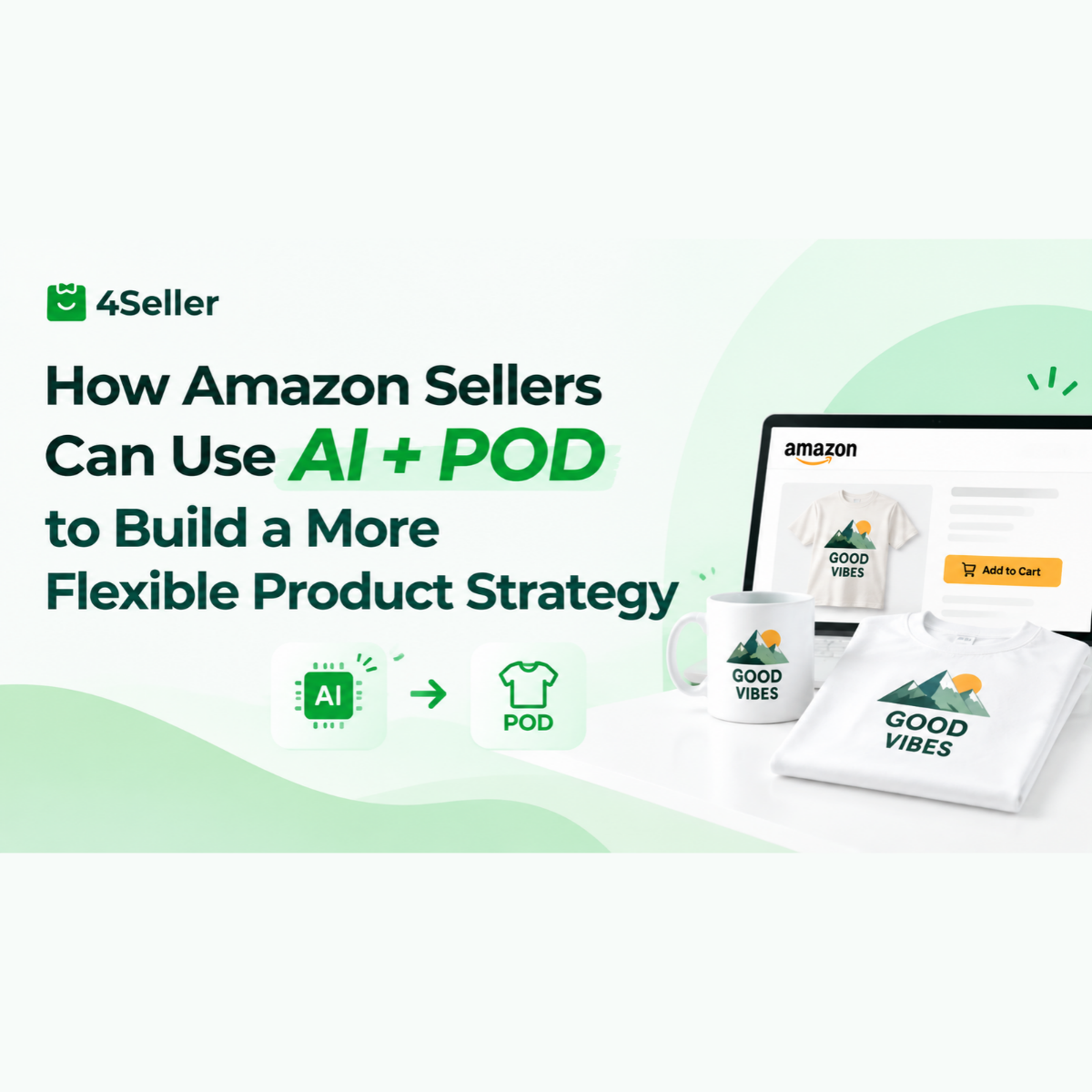 Serena - 29 Sep,2026
 Karen - 21 Sep,2026
 Serena - 20 Sep,2026
 Serena - 16 Sep,2026
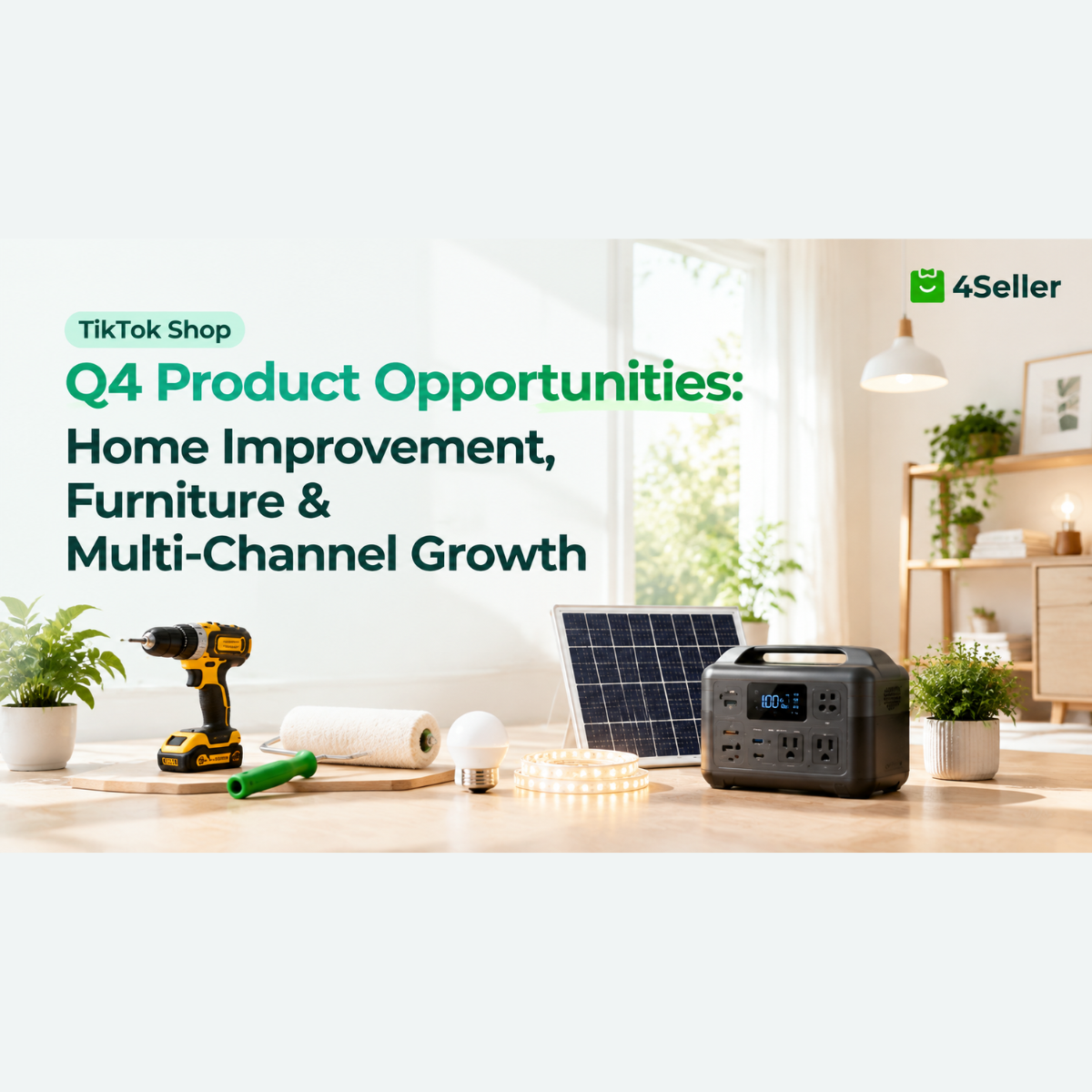 Serena - 16 Sep,2026
 Serena - 10 Sep,2026
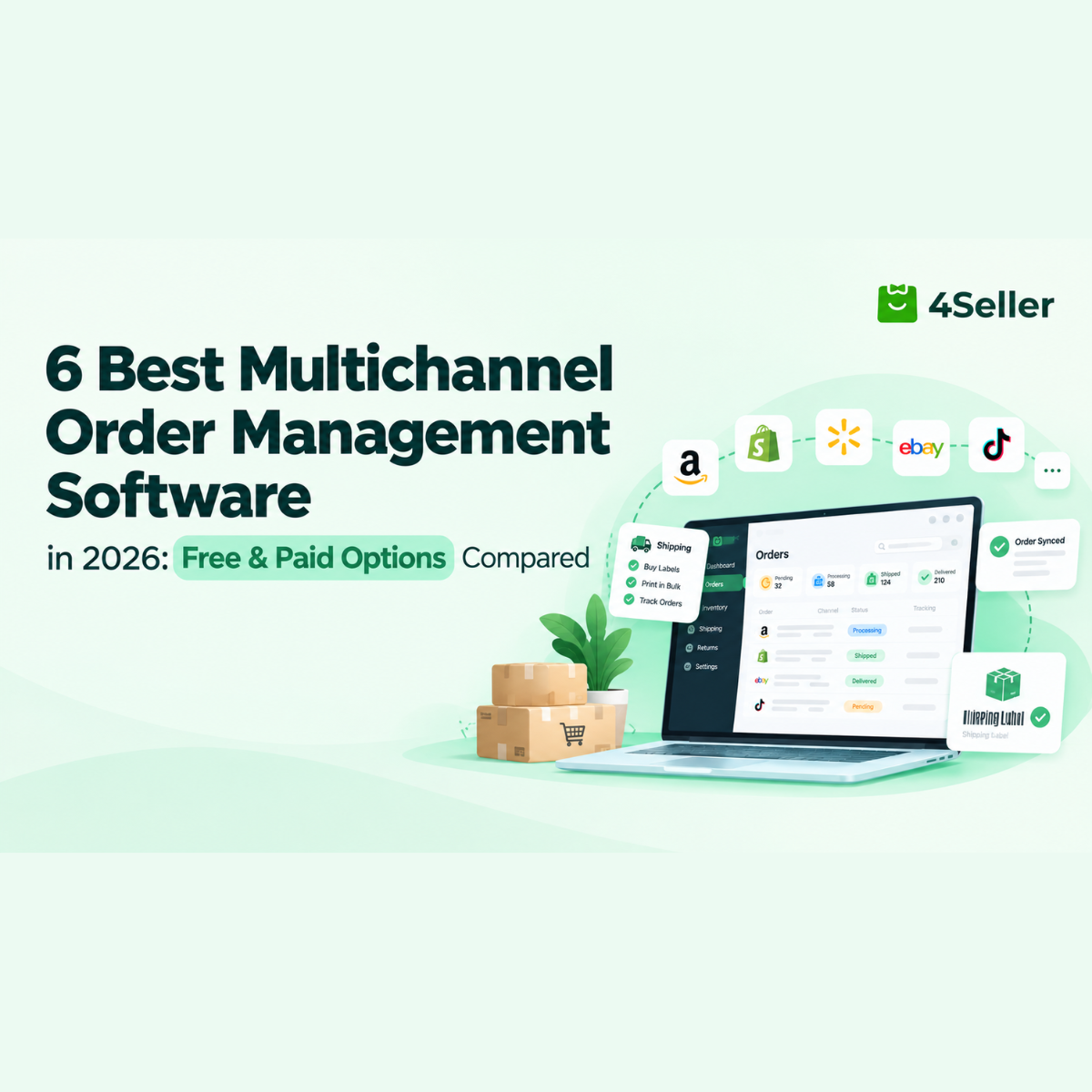 Serena - 08 Sep,2026
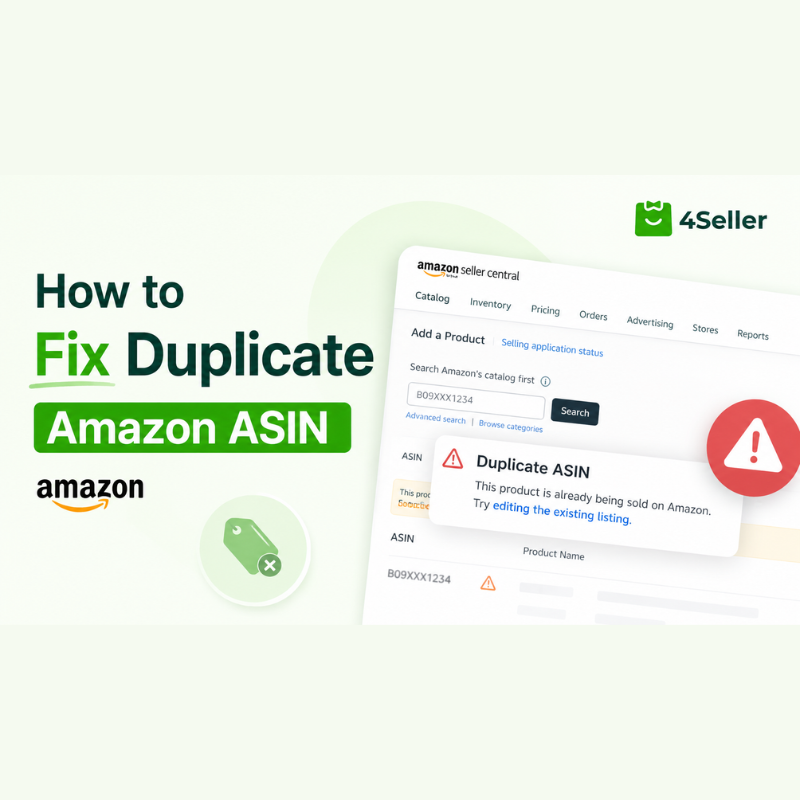 Serena - 02 Sep,2026
 Serena - 31 Aug,2026
 Serena - 20 Aug,2026
 Serena - 19 Aug,2026
 Serena - 18 Aug,2026
 Serena - 05 Aug,2026
 Serena - 04 Aug,2026
 Serena - 29 Jul,2026
 Serena - 23 Jul,2026
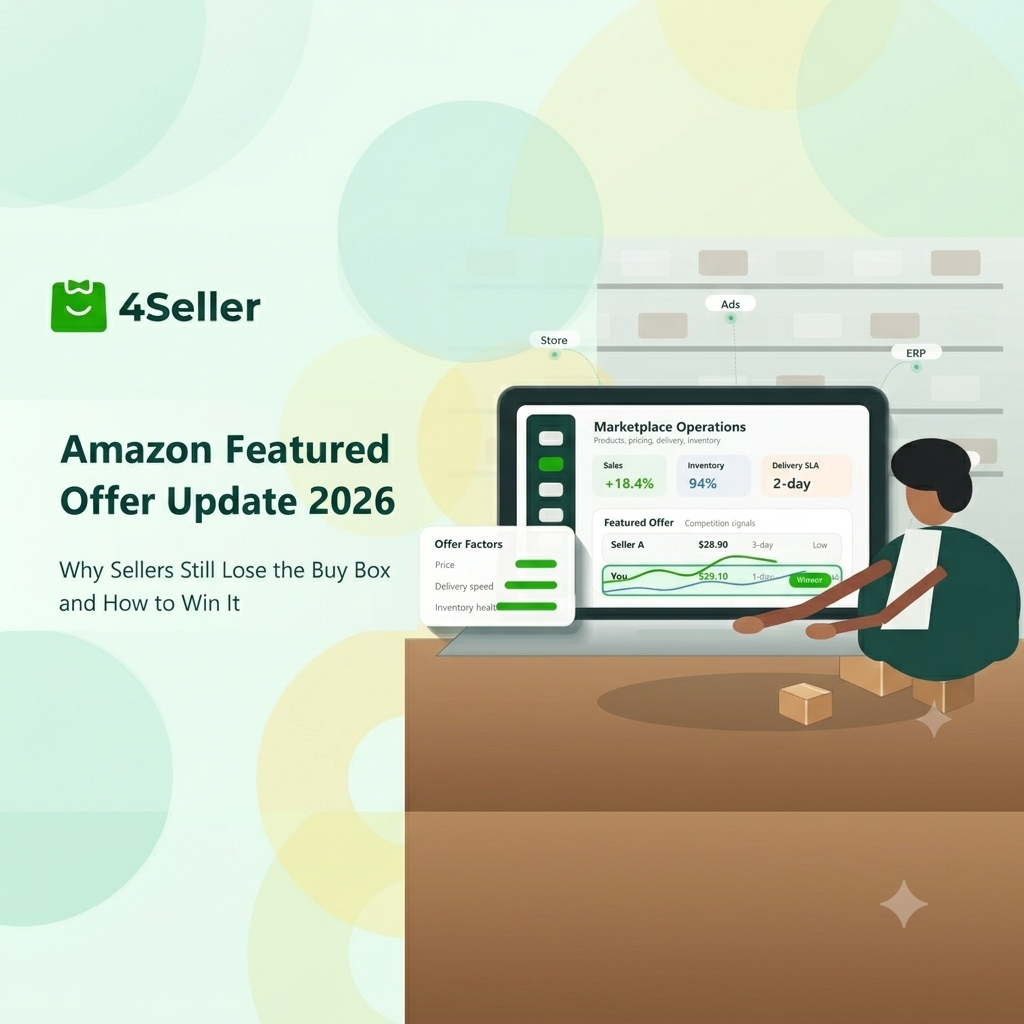 Serena - 21 Jul,2026
 Serena - 17 Jul,2026
 Serena - 15 Jul,2026
 Serena - 13 Jul,2026
 17 Dec,2024