- Multi Channel Order Management
- TikTok Shop
- Amazon
- Temu
- About 4Seller
- Shopify
- Multi Channel Inventory Management
- Amazon MCF&FBA
- Seller Tips
- Listing Management
- Marketplace News
- FedEx
- Amazon MCF
- DHL Express
- UPS
- Amazon Shipping
- eBay
- Creator Bulk Invite
- Shein
- Inventory Sync
- GLS
- Multi-channel Store
- Walmart
- Walmart WFS
- Seller Story
- Shipping Integration
- Beginner Tutorial
- Kaufland
- Royal Mail
- 3PL
- DHL Parcel
- Shipping Label
- OTTO
- Walmart MCS
- Platform Integration
- Deutsche Post
- WooCommerce
- AliExpress
- UniUni
- Stripe Tracking Sync
- SPU Catalog
- USPS
- ShipHero
- Yodel
- PayPal Tracking Sync
- GOFO
- CIRRO
- Correos
- Correos Express
- DPD
- Etsy
- Evri
- FBM
- Request Review
- Logistics Rule
- CaiNiao
- BRT
- Chronopost
- Poste Italiane
- Cdiscount
- OMS
- DHL
- WFS
- ShipBob
- Price Sync
How Amazon MCF Sellers Compliantly Fulfill TikTok Orders Under 2026 TikTok Shop New Logistics Services Requirement?
 By Joline11 Feb,2026
As TikTok Shop’s global business rapidly expands, the platform has undertaken a structural upgrade of its order fulfillment system. Beginning February 25, 2026, TikTok will progressively discontinue the traditional Amazon MCF fulfillment model and fully implement its official logistics services (TikTok Shop Logistics Services), including Fulfilled by TikTok (FBT), Upgraded TikTok Shipping, and Collections by TikTok (CBT). The core objective of this policy is to achieve standardized, controllable, and data‑driven logistics fulfillment in order to safeguard overall platform conversion rates and the consumer experience.
For sellers who originally relied on Amazon MCF for fulfillment, this mode of shipping will no longer be viable. Sellers need to quickly adjust their fulfillment approach to comply with the official requirements while ensuring efficiency and flexibility in multi‑platform operations.
This article will systematically outline how sellers who previously used Amazon MCF should compliantly fulfill TikTok Shop orders under the new logistics policy and will focus on how to use an officially certified ERP (such as 4Seller) to achieve a compliant, efficient, and unified multi‑channel fulfillment upgrade solution.
I. What Does This Policy Say?
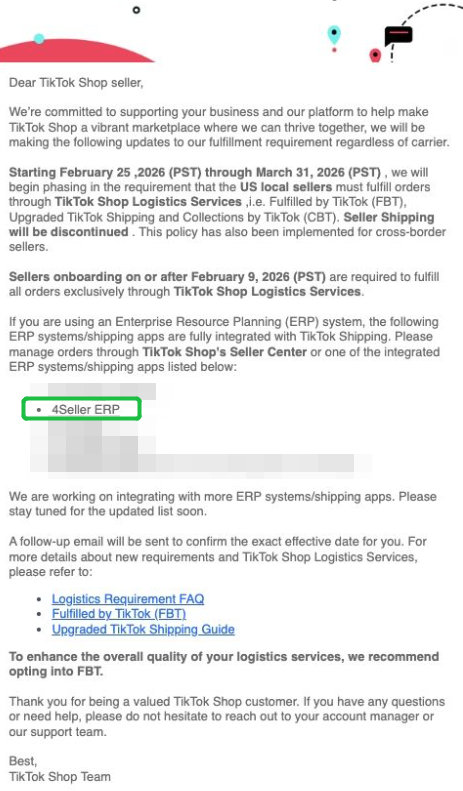
TikTok Shop has issued an official notice to sellers, announcing that starting February 25, 2026 (PST), TikTok Shop will implement official logistics services (TikTok Shop Logistics Services), gradually replacing and eliminating seller self‑fulfillment (Seller Shipping) models.
In this official notice, 4Seller ERP is explicitly listed as the first ERP system that has integrated TikTok Shipping and can support sellers in order fulfillment and shipment management through the TikTok Shop official logistics system.
The core aspects of this logistics policy adjustment are as follows:
Transition Period for Existing Sellers
From February 25 to March 31, 2026 (PST), U.S.‑based sellers will gradually stop using the mode of obtaining logistics labels through MCF and then uploading tracking numbers to TikTok, and will fully access the TikTok Shop official logistics services, including Fulfilled by TikTok (FBT), Upgraded TikTok Shipping, and Collections by TikTok (CBT).Mandatory Compliance for New Sellers
All sellers who join on or after February 3, 2026 (PST) must complete 100% of order fulfillment through TikTok Shop Logistics Services, and U.S.‑based existing sellers will also progressively stop using non‑official logistics labels during the transition period.II. How Should Sellers Who Previously Used Amazon MCF Fulfill TikTok Orders to Comply With the New Logistics Policy?
With the implementation of the TikTok Shop new logistics policy, the Amazon MCF fulfillment model is no longer feasible. For sellers who originally relied on Amazon MCF for fulfillment, there are currently three compliant fulfillment pathways:
Using FBT (Fulfilled by TikTok)
Sellers can stock inventory at TikTok official warehouses, where the platform centrally handles storage, packing, and shipping. Logistics labels are generated by the TikTok official system, and sellers do not need to manage logistics execution themselves, but inventory must be sent to the official warehouse in advance. This method is suitable for sellers with large order volumes, stable SKUs, and those who want to fully rely on platform fulfillment.Setting Up Self‑Managed Warehouses and Using CBT (Collections by TikTok)
Sellers can complete packing operations in their own warehouses, while TikTok official logistics picks up and delivers the packages. Logistics labels are generated by the official system, but the seller still performs the shipping operations, retaining autonomy in warehouse management. This is suitable for small and medium sellers with self‑managed warehouses.Using an Officially Certified ERP Integrated With TikTok Shipping (e.g., 4Seller) to Fulfill Orders With Self‑Managed or Third‑Party Warehouses
Through ERPs such as 4Seller that have completed official integration with TikTok Shipping, sellers can batch generate compliant official shipping labels and pass label information to self‑managed or third‑party warehouses for packing and shipping. This allows sellers to maintain multi‑channel inventory management and operational flexibility while ensuring that logistics labels and tracking fully meet TikTok’s official requirements.
III. Why Should Sellers Prefer 4Seller to Fulfill TikTok Orders Under the New Policy?
In the context of TikTok Shop progressively discontinuing the Amazon MCF fulfillment model, sellers need to shift to self‑managed warehouses or third‑party warehouses for fulfillment. By using an officially TikTok Shipping–integrated ERP such as 4Seller, sellers can achieve a compliance upgrade while optimizing overall fulfillment processes.
Unified Management of Multi‑Platform Differential Fulfillment, Supporting TikTok Shipping and Other Channels’ Seller Shipping in Parallel
Within the 4Seller system, sellers can, under compliance with TikTok’s new rules, switch TikTok orders to TikTok Shipping fulfillment while centrally managing orders from Amazon, Shopify, eBay, and other platforms, continuing to use Seller Shipping for those channels. All orders can be processed in a single system interface, achieving parallel and centralized management of different platform fulfillment rules, eliminating frequent backend switching, and effectively improving multi‑channel operational efficiency and overall fulfillment stability.Automatically Match Logistics Rules With Carriers, Services, Package Dimensions, and Weight, Reducing Manual Selection and Error Rates
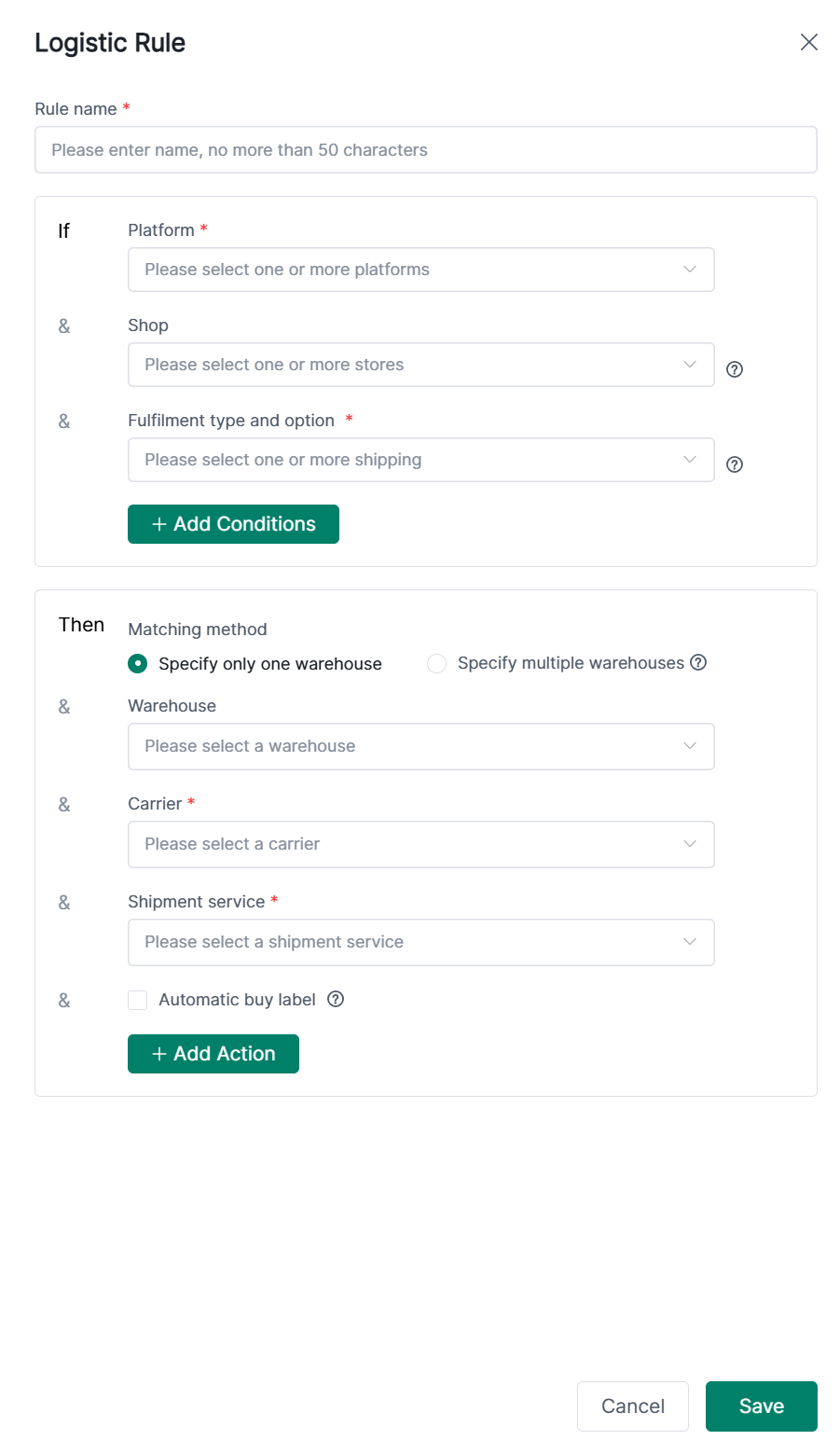
The system can automatically match TikTok Shipping services based on preset logistics rules for order conditions, removing the need for manual selection of carriers or manual entry of weights and dimensions, thereby lowering operational complexity and error risk.
One‑Click Automated Selection of Cost‑Optimal Logistics Solutions, Optimizing Fulfillment Cost Structure
4Seller supports pre‑configuration of logistics rules to automatically screen the lowest‑cost logistics solution, reducing manual price comparison and verification time, and improving overall fulfillment efficiency.One‑Click Batch Order Fulfillment Automation Significantly Improves Fulfillment Efficiency for Small and Medium Warehouses
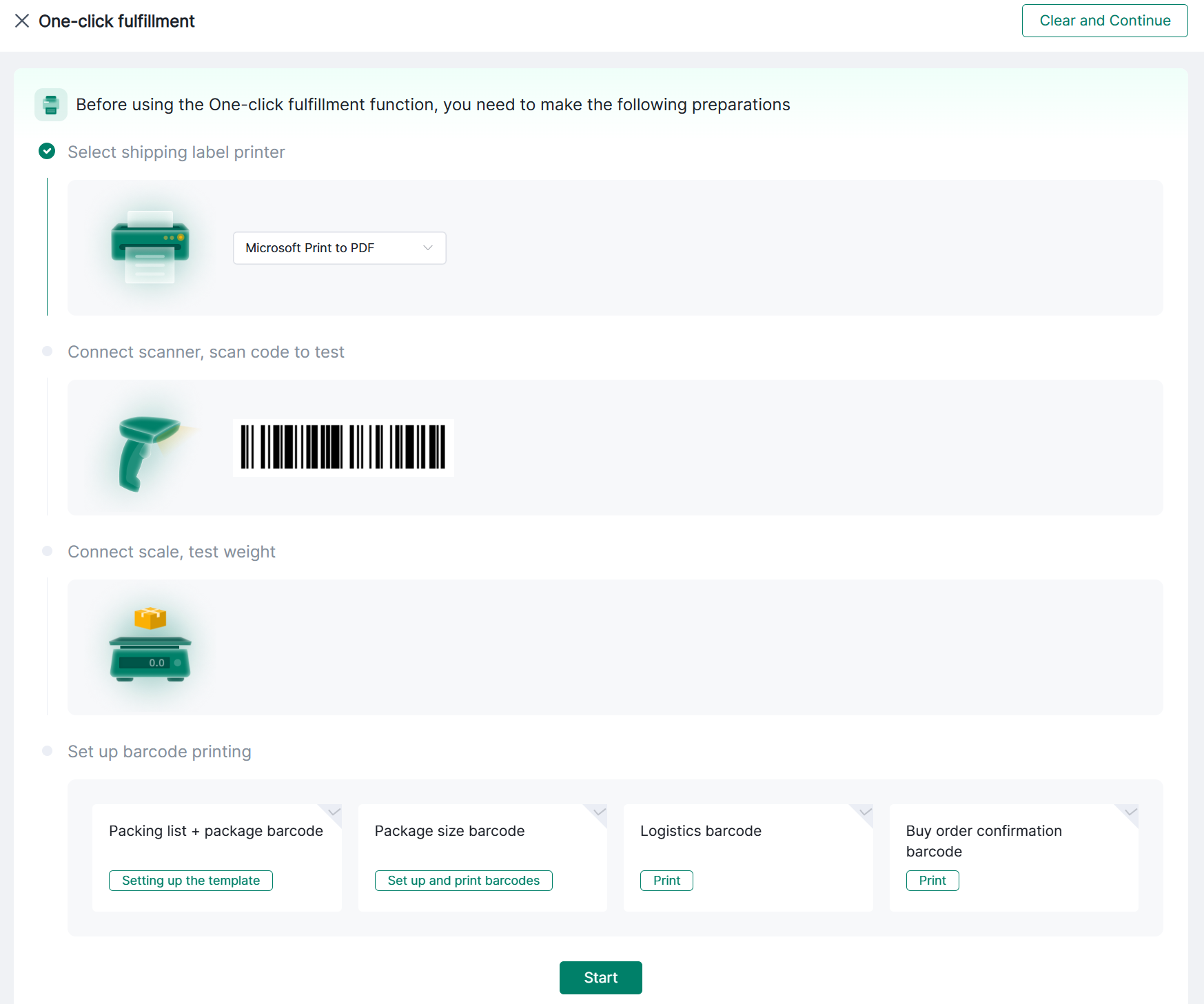
4Seller’s one‑click fulfillment feature integrates scanning, weighing, order information entry, purchase of shipping labels, and printing into a single interface. Warehouse staff only need a scanner and electronic scale to automatically enter order information, weight, and dimensions, and complete the purchase and printing of shipping labels, achieving a unified workflow from order processing to shipment. Compared with traditional single‑order manual processes, one‑click fulfillment greatly reduces manual input and operational steps, making it especially suitable for sellers with moderate order volumes and smaller warehouse scales to achieve efficient, standardized fulfillment without complex systems or additional manpower.
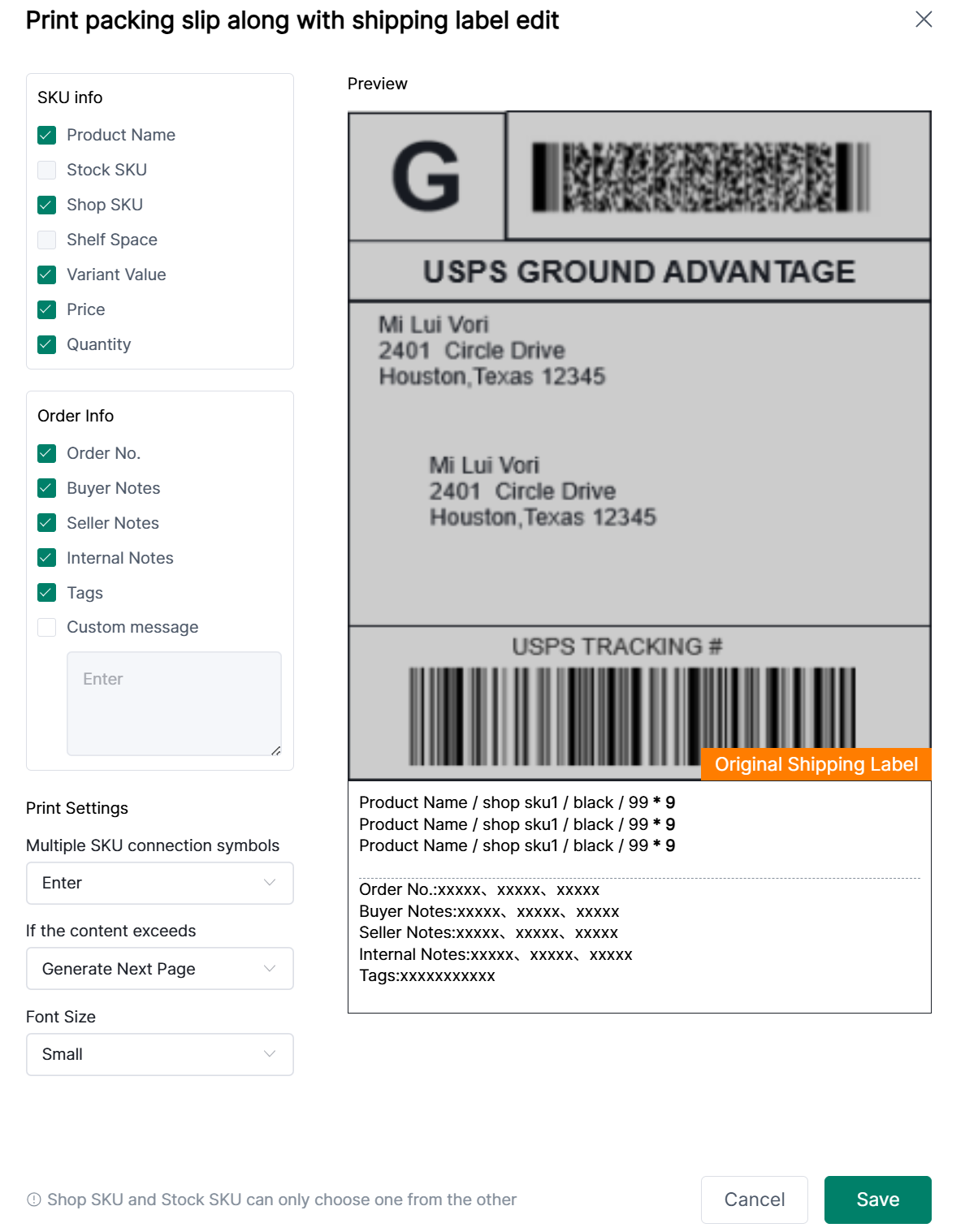
Supports Printing SKU Information, Order Details, Brand Logos, and Other Necessary Fields on Shipping Labels to Strengthen Warehouse Execution and Brand Touchpoints
4Seller supports flexible printing of product SKU, order information, brand logos, customer service contact information, and other custom fields on logistics labels. Compared to standard shipping labels that contain only basic logistics information, sellers can customize printed content according to warehouse operational needs and brand goals. On the one hand, this helps warehouse staff quickly identify order information during picking, verification, and dispatch, reducing manual verification costs; on the other hand, it can serve as a brand touchpoint to convey brand information and after‑sales support channels to end customers, enhancing overall professionalism and user experience.
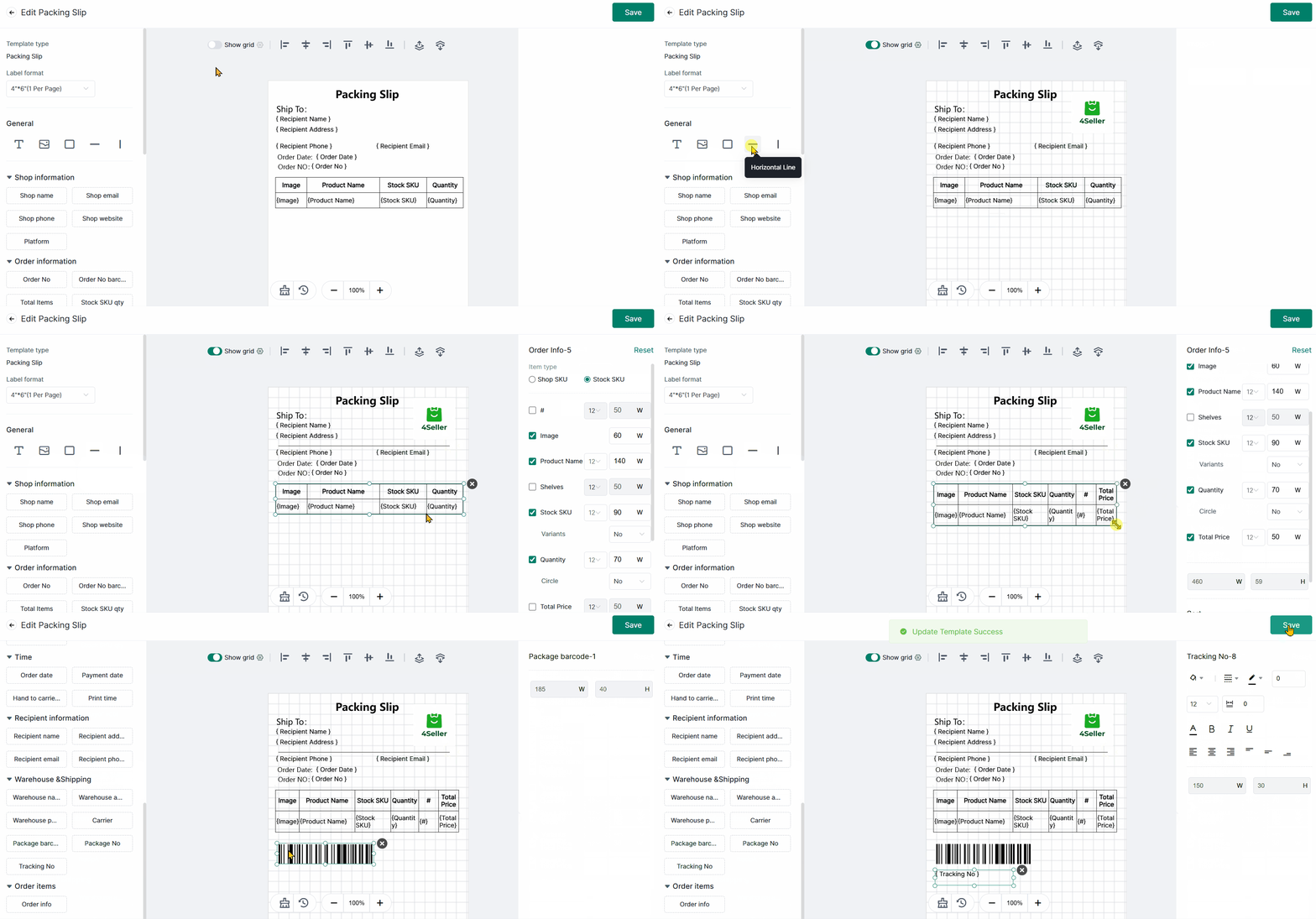
Highly Customizable Pick List and Packing Slip Templates to Improve Warehouse Execution Efficiency and Brand Professionalism
Compared with traditional ERP tools like ShipStation that require manual HTML or Liquid code modifications to achieve customization, 4Seller provides a visual editor. Users can drag and drop SKU information, customer address, order notes, brand logo, marketing text, and other fields into template areas without technical background, easily configuring templates. This dramatically lowers the usage threshold, allowing smaller sellers to enjoy advanced customization features, reducing training costs and error investigation time.
Supports SKU Group Printing for Shipping Labels, Packing Slips, and Pick Lists to Improve Picking and Fulfillment Efficiency
Warehouse staff can directly pick goods based on the number of SKUs printed on page groups and attach pre‑printed labels to corresponding items without manually matching each order. For example, in traditional processes, you may go to area A to pick one item, then to area B to pick another, and even return to area A later for items of the same SKU, wasting time and interrupting workflow. With SKU group printing, you can pick all identical SKUs at once in area A before moving to area B, significantly reducing redundant walking and maximizing picking efficiency.Can Automatically Mark Orders as Shipped After Printing Labels or Receiving Logistics Information, Reducing Repetitive Steps
After obtaining logistics information and completing label printing, the system can automatically synchronize the order’s shipped status, reducing the time cost of manually entering tracking information.Maintain Autonomous Warehouse Operations While Compliantly Using TikTok Official Logistics
Compared with printing labels directly in TikTok’s backend, using a TikTok Shipping–integrated ERP such as 4Seller enables one‑click, multi‑feature fulfillment without completely changing warehouse operation modes. Sellers can continue to have their own teams complete packing, labeling, and shipping processes, maintaining operational flexibility while meeting the platform’s new rules.Multi‑Warehouse Inventory Linkage Enables Unified Multi‑Channel Fulfillment Management
Supporting synchronization of self‑managed and third‑party warehouse inventories across multiple stores, inventory data can be updated in real time, helping sellers reduce overselling risk and maintain stable fulfillment capabilities during peak order periods.By using an officially TikTok‑certified ERP integrated with TikTok Shipping, sellers who previously used Seller Shipping can retain autonomous warehouse operations while improving fulfillment efficiency under compliance. For sellers who originally relied on Seller Shipping, this provides a balanced solution between compliance and efficiency.
Conclusion
TikTok Shop’s new logistics policy marks the platform’s transformation from “seller autonomous capability” to “platform standardized capability” in fulfillment management. Traditional Amazon MCF will be gradually phased out, and sellers must proactively develop self‑managed or third‑party warehouse fulfillment through the official logistics system.
In this context, prioritizing an officially integrated ERP system with TikTok Shipping (such as 4Seller) becomes the optimal solution. Through 4Seller, sellers can not only generate official compliant labels and centrally manage multi‑channel orders but also retain operation autonomy of self‑managed or third‑party warehouses, optimize warehouse processes, enhance fulfillment efficiency, and strengthen brand and user experience while meeting new policy requirements.
In summary, in the face of policy upgrades, sellers should deploy an official compliant fulfillment plan early to achieve both stable business growth and operational efficiency.
- Multi Channel Order Management
- TikTok Shop
- Amazon
- Temu
- About 4Seller
- Shopify
- Multi Channel Inventory Management
- Amazon MCF&FBA
- Seller Tips
- Listing Management
- Marketplace News
- FedEx
- Amazon MCF
- DHL Express
- UPS
- Amazon Shipping
- eBay
- Creator Bulk Invite
- Shein
- Inventory Sync
- GLS
- Multi-channel Store
- Walmart
- Walmart WFS
- Seller Story
- Shipping Integration
- Beginner Tutorial
- Kaufland
- Royal Mail
- 3PL
- DHL Parcel
- Shipping Label
- OTTO
- Walmart MCS
- Platform Integration
- Deutsche Post
- WooCommerce
- AliExpress
- UniUni
- Stripe Tracking Sync
- SPU Catalog
- USPS
- ShipHero
- Yodel
- PayPal Tracking Sync
- GOFO
- CIRRO
- Correos
- Correos Express
- DPD
- Etsy
- Evri
- FBM
- Request Review
- Logistics Rule
- CaiNiao
- BRT
- Chronopost
- Poste Italiane
- Cdiscount
- OMS
- DHL
- WFS
- ShipBob
- Price Sync
 17 Dec,2024
- 17 Dec,2024