- Multi Channel Order Management
- TikTok Shop
- Amazon
- Temu
- About 4Seller
- Shopify
- Multi Channel Inventory Management
- Amazon MCF&FBA
- Seller Tips
- Listing Management
- Marketplace News
- FedEx
- Amazon MCF
- DHL Express
- UPS
- Amazon Shipping
- eBay
- Creator Bulk Invite
- Shein
- Inventory Sync
- GLS
- Multi-channel Store
- Walmart
- Walmart WFS
- Seller Story
- Shipping Integration
- Beginner Tutorial
- Kaufland
- Royal Mail
- 3PL
- DHL Parcel
- Shipping Label
- OTTO
- Walmart MCS
- Platform Integration
- Deutsche Post
- WooCommerce
- AliExpress
- UniUni
- Stripe Tracking Sync
- SPU Catalog
- USPS
- ShipHero
- Yodel
- PayPal Tracking Sync
- GOFO
- CIRRO
- Correos
- Correos Express
- DPD
- Etsy
- Evri
- FBM
- Request Review
- Logistics Rule
- CaiNiao
- BRT
- Chronopost
- Poste Italiane
- Cdiscount
- OMS
- DHL
- WFS
- ShipBob
- Price Sync
How Should Sellers Using EasyShip Fulfill Orders Compliantly Under 2026 New Requirement of TikTok Shop Logistics Services?
 By Joline11 Feb,2026
As TikTok Shop continues to expand globally, especially in the U.S. market, the platform is undergoing a structural reshaping of its logistics fulfillment system. The newly released and gradually implemented logistics policy has a very clear core direction: to progressively eliminate seller-controlled shipping models and strengthen the platform’s unified management over the fulfillment chain.

This is not a simple rule adjustment, but an important step in TikTok Shop’s evolution from an “open commerce” model toward a “platform-driven commerce” model. For a large number of sellers who rely on third-party shipping tools such as EasyShip to process shipments, this change will directly impact their existing shipping methods and may even determine whether they can continue operating steadily on the TikTok Shop channel.

To understand how sellers using EasyShip-based shipping models should adjust under the new policy, it is first necessary to understand what this policy actually means and why TikTok Shop is making this change.

I. What Does This Policy Say?

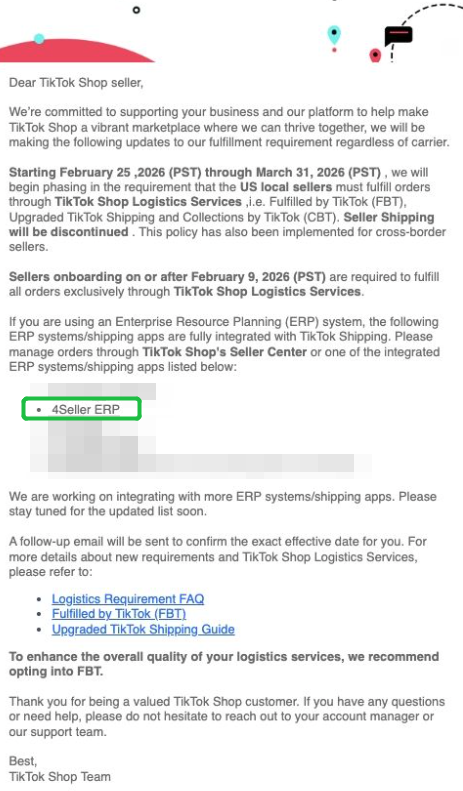
TikTok Shop issued an official notice to sellers announcing that starting February 25, 2026 (PST), TikTok Shop will implement TikTok Shop Logistics Services, gradually replacing and eliminating seller self-shipping models.

In this official announcement, 4Seller ERP was explicitly listed as the first ERP system that has completed integration with TikTok Shop and can be used directly, supporting sellers in fulfilling orders and managing shipments through TikTok Shop’s official logistics system.

The core adjustments of this logistics policy are as follows:

1. Transition Period for Existing Sellers

From February 25 to March 31, 2026 (PST), U.S. domestic sellers will gradually discontinue autonomous shipping models conducted through third-party tools such as EasyShip and fully integrate into TikTok Shop Logistics Services, including Fulfilled by TikTok (FBT), Upgraded TikTok Shipping, and Collections by TikTok (CBT).

2. Mandatory Compliance for New Sellers

All sellers who join on or after February 3, 2026 (PST) must complete 100% of order fulfillment through TikTok Shop Logistics Services. Shipping labels generated through external shipping systems such as EasyShip will no longer be supported.

II. What Does This Policy Actually Mean?

Starting February 25, 2026, TikTok Shop will fully promote its official logistics system and require order fulfillment to be completed through TikTok’s official system or officially certified interfaces. In other words, shipping methods that rely on generating third-party labels via EasyShip and manually uploading tracking numbers will no longer be considered compliant fulfillment models. As the platform continues to increase requirements for real-time fulfillment data, completeness, and traceability, these Seller Shipping processes will gradually lose fulfillment weight and eventually exit TikTok Shop’s shipping ecosystem.

Although EasyShip currently supports basic order synchronization with TikTok stores, it has not integrated into TikTok Shipping’s official logistics system and cannot directly generate compliant TikTok Shipping labels. Previously, sellers typically purchased third-party shipping labels through EasyShip, generated tracking numbers, and uploaded them back to TikTok to mark orders as shipped, which essentially belonged to the Seller Shipping self-fulfillment model. Under earlier policies, this method was still usable, but with the implementation of TikTok’s new logistics policy, this fulfillment path is being gradually phased out.

III. Why Is TikTok Shop Introducing This Policy Now?

As TikTok Shop’s order volume grows rapidly in the U.S. market, the platform has gradually exposed structural fulfillment problems such as unstable delivery times, missing fulfillment data, increased after-sales disputes, and difficulty in managing inconsistent seller service quality. Under this background, the platform has begun promoting its official logistics system and requiring sellers to gradually transition to TikTok Shop Logistics Services, including FBT, Upgraded TikTok Shipping, and CBT. The core objective is to bring the fulfillment process back under platform management so that every order can be tracked in real time and monitored systematically.

Therefore, the focus of this policy is not to restrict a specific tool but to require that shipping labels must come from TikTok’s official system or officially certified interfaces, fundamentally improving fulfillment transparency and controllability. As the rules continue to be implemented, Seller Shipping models that rely on generating labels through third-party tools such as EasyShip will no longer be regarded as compliant fulfillment and are gradually exiting the TikTok Shop ecosystem. Sellers who wish to operate sustainably in the future must choose official logistics systems or ERP solutions that have completed official TikTok Shipping integration to complete compliant fulfillment directly through the system.

IV. Under the New Policy, How Should Sellers Previously Using EasyShip Ship Orders?

Continuing to rely on EasyShip to generate labels independently while waiting to see how policies change may appear to maintain the status quo in the short term, but in reality places sellers in a passive position. The system-level weight of third-party labels is declining, and the impact may not come in the form of explicit notices but instead appear as order blocking, inability to generate labels, tightened fulfillment metrics, or restrictions on campaign participation. The key issue is not “whether EasyShip can still be used,” but “how to complete a smooth transition.”

For sellers still using EasyShip for shipping, the choices are now very clear. Either switch quickly to TikTok’s official logistics system or certified ERP fulfillment solutions, or face risks such as order restrictions, store ranking penalties, or even removal from the platform.

Currently, there are two main feasible directions:

1. Continue Using EasyShip for Fulfillment but Switch All TikTok Orders to Separate Fulfillment in the TikTok Backend

Under this model, TikTok orders must be moved from EasyShip into the TikTok backend to purchase official labels and complete fulfillment operations, while orders from other platforms such as eBay, Shopify, Shein, Temu, and Walmart continue to be processed in EasyShip.

However, this means multi-platform orders will be managed in separate systems. Operations staff will need to frequently switch systems, increasing workflow complexity and operational costs.

Additionally, this approach cannot support scenarios such as multi-store inventory synchronization, cross-TikTok store migration, unified promotion management across multiple stores, cross-platform marketing campaigns, inventory transfers, combined order picking, SKU grouped printing, or logistics strategy optimization. Sellers must frequently switch between different systems during operations, which increases complexity, raises the risk of errors, and makes unified cross-platform data management difficult.

2. Migrate to an Officially Certified ERP Supporting TikTok Logistics (Such as 4Seller) for Unified Multi-Platform Fulfillment Management

Sellers may also choose to switch to ERP systems that have completed official TikTok integration, such as 4Seller. Through official APIs, compliant TikTok Shipping labels can be generated directly, allowing sellers to process TikTok orders alongside Amazon, eBay, Shopify, and other platform orders within a single system without switching dashboards. While meeting platform fulfillment requirements, sellers can maintain centralized multi-channel order management similar to EasyShip, making shipping workflows more seamless and efficient under the new policy.


Regardless of which method is chosen, the underlying reality remains the same: shipping is no longer just a balance between cost and efficiency but has become part of platform compliance rules. Sellers who will continue participating in the TikTok Shop ecosystem are those willing to align their fulfillment processes with platform standards.

V. What Benefits Do EasyShip Sellers Gain by Using the Officially Certified 4Seller ERP Under the New Policy?

Compared to EasyShip, which focuses on shipping label generation tools, 4Seller as an all-in-one ERP for multi-platform and multi-store operations demonstrates clear structural advantages under TikTok’s new policy.

1. 4Seller Is an Official TikTok Recommended Partner Under the New Policy, Enabling Direct Compliant Shipping and Automated Fulfillment

Although EasyShip has completed basic TikTok integration, its capabilities remain at order import and label generation levels. It cannot directly generate TikTok Shipping official labels nor synchronize real-time fulfillment data back to TikTok, making it difficult to meet the platform’s requirements for traceable, monitorable, and controllable fulfillment processes. By contrast, 4Seller as an official TikTok integration partner can generate compliant TikTok Shipping labels directly and automatically synchronize fulfillment data, transforming shipping workflows from manual operations and external uploads into platform-level automated fulfillment and resolving compliance risks at the source.

2. Transition from a “Cross-Border Shipping Rate Comparison Tool” to a “Multi-Platform E-Commerce Management Hub Covering Products, Orders, Inventory, and Data Dashboards”

EasyShip’s core functions revolve around logistics networks such as global carrier integration, automated rate comparison, tax calculation, customs rules, and international shipping discounts. Its focus is on selecting the most cost-effective shipping route rather than managing multi-platform orders. EasyShip’s typical users are cross-border independent site sellers, DTC brands, or merchants requiring frequent international shipping who prioritize logistics coverage and cost optimization. In contrast, 4Seller is positioned as an e-commerce ERP and fulfillment management hub serving multi-platform, multi-store sellers, covering the full transaction lifecycle from products and orders to inventory and warehouse execution.

3. Parallel Fulfillment Rules for Seller Shipping and TikTok Shipping Across Multiple Platforms Without Splitting Warehouse Workflows

EasyShip is more suitable for centralized shipping under a single fulfillment logic. Within 4Seller, sellers can operate different platform fulfillment rules simultaneously, such as using TikTok Shipping for TikTok orders while continuing Seller Shipping for Amazon, Shopify, and eBay orders. All orders remain managed within one system, preventing warehouse process fragmentation and reducing operational complexity.

4. 4Seller Supports Self-Owned Warehouses, 3PF, and Platform Warehouse Inventory Integration While EasyShip Focuses More on Single-Point Shipping Inventory

EasyShip is fundamentally a logistics purchasing and label generation platform, with inventory capabilities centered around basic SKU management and shipment confirmation, making it more suitable for single-warehouse structures. When sellers manage platform warehouses, third-party warehouses, and self-owned warehouses simultaneously, additional ERP systems are often required for inventory consolidation.

By contrast, 4Seller as an ERP and fulfillment hub supports unified management of self-owned warehouses, 3PF warehouses, and platform warehouse inventories. Through multi-warehouse synchronization and real-time inventory mapping, the system automatically allocates inventory based on platform rules and fulfillment strategies, reducing overselling risk and maintaining operational stability during peak periods.

5. Advanced Label Printing Features Improve Warehouse Efficiency Beyond Standard Rate Comparison Printing

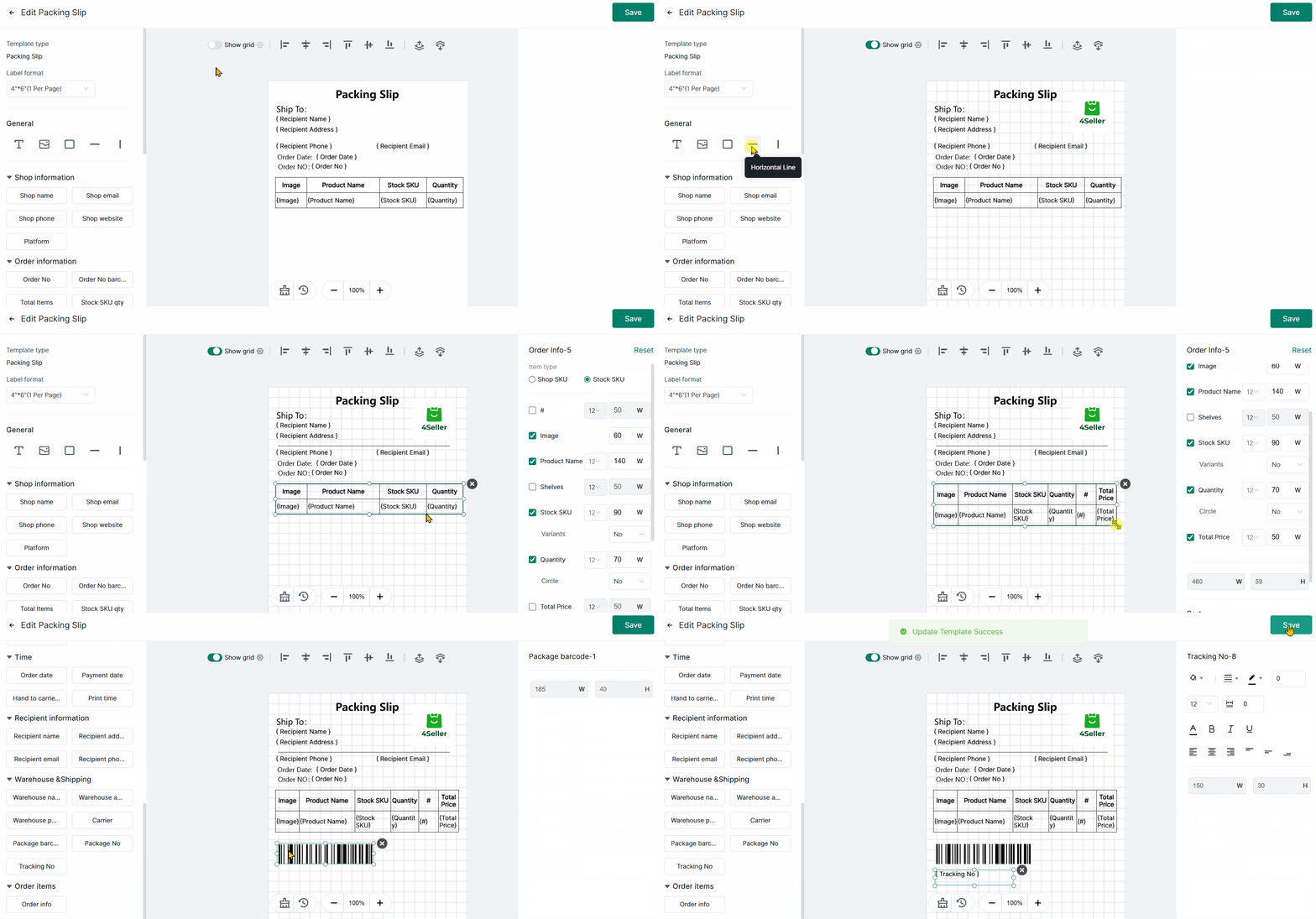
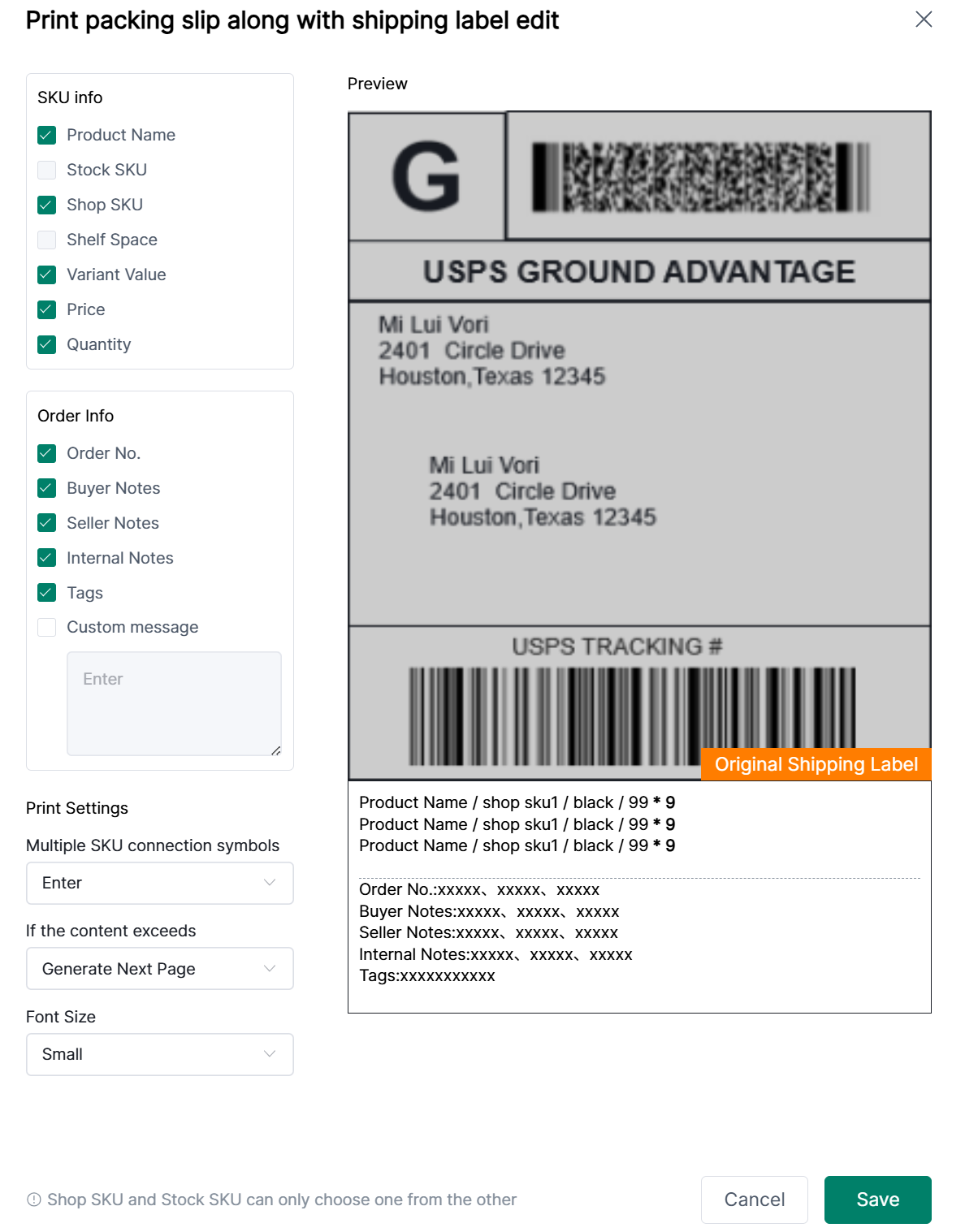
EasyShip lacks customizable label template features and has limited flexibility. 4Seller provides a visual drag-and-drop template editor allowing sellers to configure SKU details, order notes, brand logos, and marketing messages on labels, pick lists, and packing slips. Scanning, weighing, label purchasing, and printing are integrated into a one-click workflow, improving warehouse efficiency without increasing labor or technical costs.

6. Lower Migration Costs and Smoother Policy Transition

System migration is itself a hidden cost for sellers during policy transitions. EasyShip uses a subscription pricing model, while 4Seller offers free usage options and supports quick migration of existing workflows and warehouse practices, allowing sellers to maintain operational continuity during compliance transitions.

For sellers previously using EasyShip, switching to the officially certified 4Seller ERP not only enables compliance with TikTok Shop’s new logistics policy but also helps maintain warehouse efficiency and establish a long-term sustainable multi-channel fulfillment system.

VI. What 4Seller Full End-to-End Capability Coverage Includes?

1. Multi-Warehouse Inventory Synchronization for Unified Multi-Channel Fulfillment Management

Supports syncing inventory from both self-operated warehouses and third-party warehouses across multiple stores and sales channels. Inventory data can be updated in real time, helping sellers reduce overselling risks while maintaining stable fulfillment performance during peak order periods.

2. Highly Customizable Pick List and Packing Slip Templates to Improve Warehouse Efficiency and Brand Professionalism


Compared to traditional ERP tools like EasyShip that require manual modification of HTML or Liquid code for customization, 4Seller provides a visual editor that allows users to design shipping labels, packing slips, pick lists, and other templates through simple drag-and-drop components.

For example, users can directly drag fields such as SKU information, customer addresses, order notes, brand logos, and marketing messages into the print layout without any technical background. This significantly lowers the barrier to entry, enabling small and medium-sized sellers to access advanced customization features while reducing training costs and troubleshooting time.

3. Unified Management of Platform-Specific Fulfillment Strategies with Flexible Parallel Operations

Within the 4Seller system, sellers can switch TikTok orders to TikTok Shipping in compliance with new TikTok policies while simultaneously managing orders from platforms such as Amazon, Shopify, and eBay using Seller Shipping (self-fulfillment).

All orders can be processed within a single unified interface, allowing different platform fulfillment rules to operate in parallel under centralized management. This eliminates the need to frequently switch between multiple backends and significantly improves multi-channel operational efficiency and overall fulfillment stability.

4. Automated One-Click Label Printing and Order Fulfillment Workflow to Greatly Improve Small and Mid-Size Warehouse Efficiency


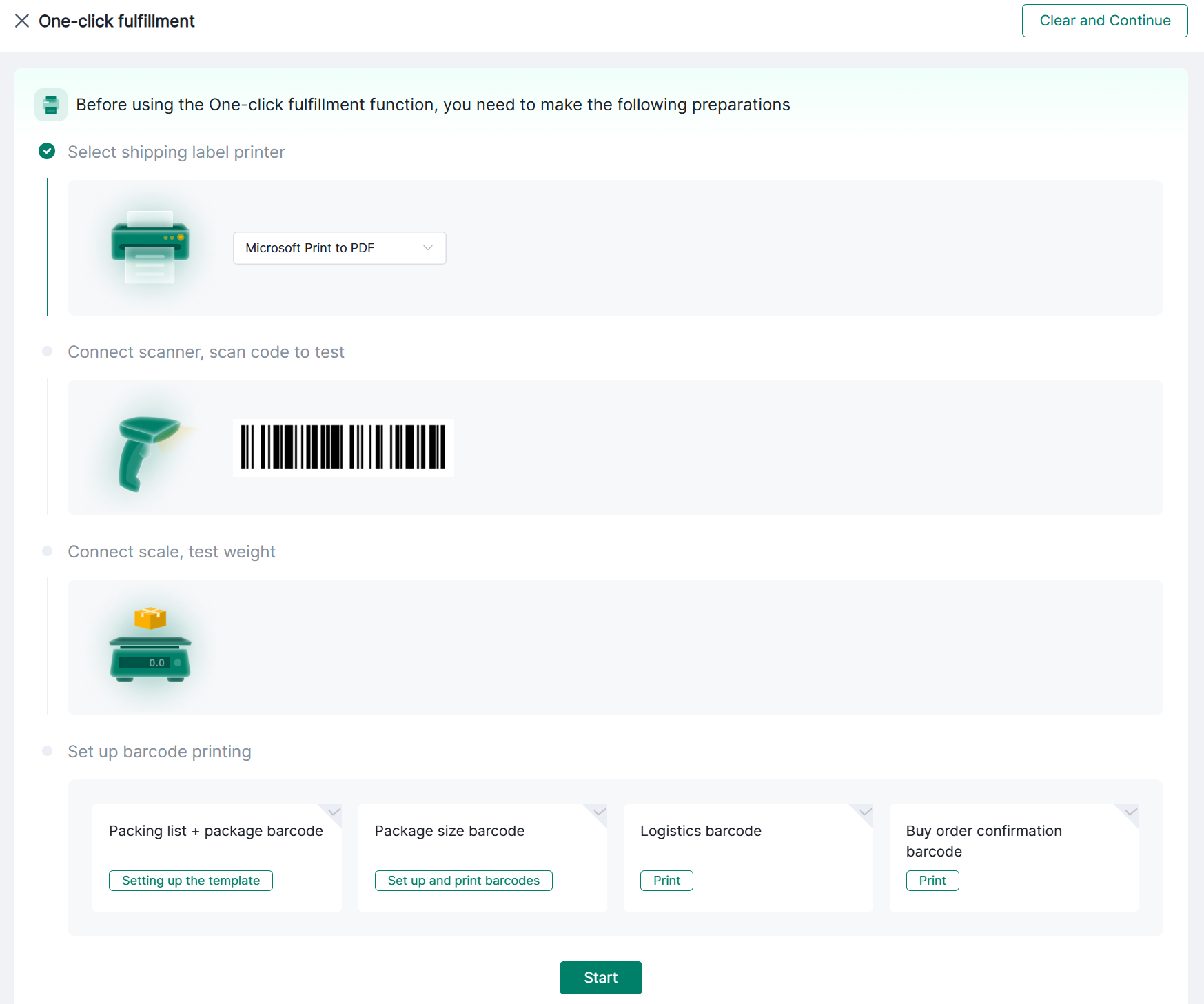
4Seller’s one-click label printing feature integrates barcode scanning, weighing, order data entry, label purchasing, and printing into a single operational interface. Warehouse staff can use barcode scanners and electronic scales to automatically capture order information, weight, and dimensions, and complete label purchasing and printing in one streamlined process.

Compared to traditional manual workflows that require entering information order by order, this feature significantly reduces manual input and operational steps. It is particularly suitable for sellers with moderate order volumes and smaller warehouse teams who want to achieve efficient, standardized fulfillment without complex systems or additional manpower.

5. Custom Label Printing with SKU, Order Details, and Branding Elements on Shipping Labels to Strengthen Warehouse Execution and Brand Touchpoints


4Seller allows sellers to flexibly print SKU details, order information, brand logos, customer service contacts, and other custom fields directly onto shipping labels.

Unlike standard labels that contain only basic logistics information, sellers can customize printed content based on warehouse operational needs and branding objectives. This helps warehouse staff quickly identify orders during sorting, verification, and shipping processes, reducing manual verification costs. At the same time, shipping labels can serve as additional brand touchpoints, delivering brand information and after-sales support channels to end customers and enhancing professionalism and user experience.

6. Maintain Independent Warehouse Operations While Remaining Compliant with TikTok Official Logistics

Compared to printing labels directly within the TikTok backend, sellers using 4Seller ERP with integrated TikTok Shipping can access advanced one-click printing features without completely changing their warehouse workflows. Sellers can continue using their own teams to handle packing, labeling, and dispatch processes while remaining compliant with new platform requirements.

By using the TikTok-official-certified 4Seller ERP integrated with TikTok Shipping, sellers who previously relied on EasyShip can maintain independent warehouse operations while improving fulfillment efficiency under compliant conditions. For EasyShip users in particular, this provides a balanced solution between regulatory compliance and operational efficiency.

Conclusion

The essence of TikTok Shop’s new logistics policy is not to restrict sellers but to incorporate fulfillment capabilities into a standardized platform system.

Seller Shipping is being phased out, meaning traditional shipping models relying on EasyShip label generation will gradually exit TikTok Shop.

Future sellers who can continue operating on TikTok Shop will not be those relying on single shipping tools but those capable of achieving compliant fulfillment through official logistics systems or officially certified solutions while maintaining operational efficiency.

By integrating with the officially integrated 4Seller ERP, sellers can maintain multi-channel order management, multi-warehouse inventory synchronization, and automated fulfillment workflows while complying with platform rules and establishing a stable and sustainable operational model under the new policy.
- Multi Channel Order Management
- TikTok Shop
- Amazon
- Temu
- About 4Seller
- Shopify
- Multi Channel Inventory Management
- Amazon MCF&FBA
- Seller Tips
- Listing Management
- Marketplace News
- FedEx
- Amazon MCF
- DHL Express
- UPS
- Amazon Shipping
- eBay
- Creator Bulk Invite
- Shein
- Inventory Sync
- GLS
- Multi-channel Store
- Walmart
- Walmart WFS
- Seller Story
- Shipping Integration
- Beginner Tutorial
- Kaufland
- Royal Mail
- 3PL
- DHL Parcel
- Shipping Label
- OTTO
- Walmart MCS
- Platform Integration
- Deutsche Post
- WooCommerce
- AliExpress
- UniUni
- Stripe Tracking Sync
- SPU Catalog
- USPS
- ShipHero
- Yodel
- PayPal Tracking Sync
- GOFO
- CIRRO
- Correos
- Correos Express
- DPD
- Etsy
- Evri
- FBM
- Request Review
- Logistics Rule
- CaiNiao
- BRT
- Chronopost
- Poste Italiane
- Cdiscount
- OMS
- DHL
- WFS
- ShipBob
- Price Sync
 17 Dec,2024
- 17 Dec,2024