- Multi Channel Order Management
- TikTok Shop
- Amazon
- Temu
- About 4Seller
- Shopify
- Multi Channel Inventory Management
- Amazon MCF&FBA
- Seller Tips
- Listing Management
- Marketplace News
- FedEx
- Amazon MCF
- DHL Express
- UPS
- Amazon Shipping
- eBay
- Creator Bulk Invite
- Shein
- Inventory Sync
- GLS
- Multi-channel Store
- Walmart
- Walmart WFS
- Seller Story
- Shipping Integration
- Beginner Tutorial
- Kaufland
- Royal Mail
- 3PL
- DHL Parcel
- Shipping Label
- OTTO
- Walmart MCS
- Platform Integration
- Deutsche Post
- WooCommerce
- AliExpress
- UniUni
- Stripe Tracking Sync
- SPU Catalog
- USPS
- ShipHero
- Yodel
- PayPal Tracking Sync
- GOFO
- CIRRO
- Correos
- Correos Express
- DPD
- Etsy
- Evri
- FBM
- Request Review
- Logistics Rule
- CaiNiao
- BRT
- Chronopost
- Poste Italiane
- Cdiscount
- OMS
- DHL
- WFS
- ShipBob
- Price Sync
How Should Sellers Using ShippingEasy Fulfill Orders Compliantly Under 2026 New Requirement of TikTok Shop Logistics Services?
 By Joline11 Feb,2026
As TikTok Shop continues expanding globally, especially in the U.S. market, the platform is carrying out a structural overhaul of its logistics fulfillment system. The newly released and gradually implemented logistics policy has a very clear core direction: gradually eliminating seller-controlled shipping methods and strengthening the platform’s unified management over the entire fulfillment chain.

This is not a minor rule adjustment, but a significant step in TikTok Shop’s evolution from an “open marketplace model” toward a “platform-controlled e-commerce ecosystem.” For a large number of sellers who rely on third-party label-generation tools such as ShippingEasy for fulfillment, this change will directly impact their existing shipping workflows and may even determine whether they can continue operating steadily on TikTok Shop.

To understand how sellers using ShippingEasy for fulfillment should adjust under the new policy, it is first necessary to clarify what this policy actually means and why TikTok Shop is implementing it.

1. What Is This Policy About?

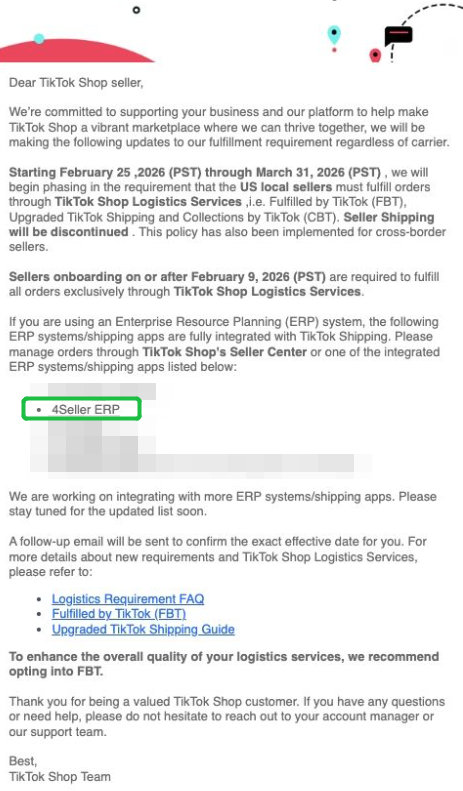
TikTok Shop has issued an official announcement stating that starting February 25, 2026 (PST), TikTok Shop will roll out TikTok Shop Logistics Services, gradually replacing and eliminating the Seller Shipping model.

In the official announcement, 4Seller ERP was explicitly listed as the first ERP system fully integrated and directly usable with TikTok Shop, enabling sellers to manage order fulfillment and shipping through TikTok Shop’s official logistics system.

The core points of this logistics policy adjustment are as follows:

1. Transition Period for Existing Sellers

From February 25, 2026 to March 31, 2026 (PST), U.S.-based existing sellers will gradually discontinue independent shipping through third-party tools such as ShippingEasy and fully transition to TikTok Shop official logistics services, including:
-
Fulfilled by TikTok (FBT)
-
Upgraded TikTok Shipping
-
Collections by TikTok (CBT)
2. Mandatory Compliance for New Sellers
All sellers who onboarded on or after February 3, 2026 (PST) must complete 100% of order fulfillment through TikTok Shop Logistics Services. Generating shipping labels via external systems such as ShippingEasy will no longer be supported.
2. What Does This Policy Actually Mean?
ShippingEasy currently does not integrate with TikTok’s official logistics system. This means it cannot directly generate official compliant TikTok Shipping labels.
In practice, many sellers export orders from TikTok, upload them into ShippingEasy to generate tracking numbers, and then manually upload the tracking numbers back to TikTok to mark orders as shipped. While this Seller Shipping process could function previously, under the new rules requiring real-time, complete, and traceable fulfillment data, this manual workflow can no longer be considered compliant.
Additionally, because ShippingEasy cannot synchronize fulfillment chain data in real time, issues such as delayed shipments, abnormal tracking updates, and after-sales disputes become harder for the platform to monitor effectively. TikTok Shop now requires every order to remain traceable, monitorable, and verifiable. Otherwise, store ratings and platform trust will be directly affected.
From a practical execution standpoint, relying on ShippingEasy to manually mark TikTok orders as shipped under the Seller Shipping model has been fully phased out under the new TikTok logistics policy.
3. Why Is TikTok Shop Introducing This Policy Now?
As TikTok Shop’s U.S. order volume grows rapidly, structural fulfillment issues have emerged, including unstable delivery times, missing fulfillment data, increasing after-sales disputes, and inconsistent seller service quality.
Under this context, the platform is promoting its official logistics system and requiring sellers to gradually transition to TikTok Shop Logistics Services, including FBT, Upgraded TikTok Shipping, and CBT. The core goal is to bring fulfillment processes back under platform management, ensuring that every order can be tracked and monitored systematically in real time.
Therefore, the focus of this policy is not on restricting a specific tool but on requiring that shipping labels originate from TikTok’s official system or certified integrations to fundamentally improve fulfillment transparency and controllability.
As the rules are gradually implemented, Seller Shipping models relying on manual tracking uploads will lose fulfillment weight and stability. In other words, the practice of manually uploading tracking numbers from ShippingEasy is gradually exiting the TikTok Shop ecosystem.
Sellers who wish to operate sustainably must either adopt official logistics services or use ERP systems that have completed official TikTok Shipping integration to handle compliant fulfillment directly within the system.
4. How Should Sellers Previously Using ShippingEasy Ship Orders Under the New Policy?
ShippingEasy has long been a primary shipping tool for generating labels and connecting with carriers such as USPS and UPS. Previously, sellers could independently generate labels and select shipping services through ShippingEasy, with minimal platform involvement.
However, under the new rules, continuing to generate shipping labels independently through ShippingEasy will no longer be compliant, because these labels fall under Seller Shipping and do not meet TikTok Shop’s new fulfillment control requirements.
Continuing to rely on ShippingEasy while waiting to see how policies evolve may appear sustainable in the short term but is already a passive position. Third-party labels are gradually losing system-level weight. The impact may not come as explicit notices but may appear through blocked orders, inability to generate labels, stricter fulfillment metrics, or restricted campaign eligibility.
The key question is not whether ShippingEasy can still be used, but how to transition smoothly.
For sellers still using ShippingEasy, the choices are clear:
-
Transition to TikTok official logistics or certified ERP solutions as soon as possible, or
-
Face risks such as restricted orders, reduced store ranking, or removal from the platform.
Currently, there are two primary paths:
1. Continue Using ShippingEasy for Other Platforms but Fulfill TikTok Orders Directly in TikTok Backend
TikTok orders must be processed separately within TikTok’s backend, while orders from eBay, Shopify, Shein, Temu, Walmart, and other platforms can remain in ShippingEasy.
However, this leads to fragmented order management, frequent system switching, increased workflow complexity, and higher operational costs.
Additionally, functions such as multi-store inventory synchronization, TikTok store migration, unified promotions, cross-platform campaigns, inventory transfers, combined picking, SKU group printing, and logistics strategy optimization cannot be fully supported. Frequent switching between systems increases operational complexity, error risk, and prevents unified data management.
2. Migrate to an Officially Certified ERP Supporting TikTok Logistics (e.g., 4Seller)
Sellers may choose to migrate to ERP systems officially integrated with TikTok, such as 4Seller. Through official APIs, compliant TikTok Shipping labels can be generated directly. Sellers can manage TikTok, Amazon, eBay, Shopify, and other platform orders within a single system without switching backends.
This maintains centralized multi-channel order management while ensuring compliance and improving workflow efficiency under the new policy.
Regardless of the approach chosen, sellers must recognize that shipping is no longer just a balance between cost and efficiency. It is now part of platform compliance. Sellers who remain successful on TikTok Shop will be those who align fulfillment operations with platform requirements.
5. Benefits for ShippingEasy Sellers Using Officially Certified 4Seller ERP
Compared to ShippingEasy, which focuses primarily on label generation, 4Seller as an all-in-one multi-platform ERP offers clear structural advantages under the new policy.
1. Official TikTok Partner for Compliance and Automated Fulfillment
ShippingEasy is not integrated with TikTok Shipping. Sellers must export and manually upload tracking numbers, increasing labor costs and failing to meet real-time fulfillment data requirements.
As an official TikTok integration partner, 4Seller can generate compliant TikTok Shipping labels directly and automatically synchronize fulfillment data, shifting shipping workflows from manual to automated.
2. From Single Shipping Tool to Full Multi-Platform Commerce Operations Hub
ShippingEasy focuses on shipping workflows. When fulfillment models change, sellers must rely on additional systems or manual processes.
4Seller functions as a fulfillment operations hub with a built-in rule engine that dynamically routes orders across different fulfillment modes within one system.
3. Flexible Switching Across Multiple Fulfillment Models
4Seller supports TikTok Shipping, self-fulfillment warehouses, and third-party fulfillment simultaneously, enabling sellers to adapt quickly without restructuring warehouse processes.
4. Lower Migration Costs and Smoother Policy Transition
ShippingEasy operates on a subscription model, while 4Seller offers free usage and migration support, reducing transition costs during mandatory policy changes.
The specific end-to-end capability coverage includes:
1. Multi-Warehouse Inventory Synchronization for Unified Multi-Channel Fulfillment Management
Supports syncing inventory from self-operated warehouses and third-party warehouses across multiple stores. Inventory data can be updated in real time, helping sellers reduce overselling risks while maintaining stable fulfillment capacity during peak order periods.
2. Highly Customizable Pick List and Packing Slip Printing Templates to Improve Warehouse Execution Efficiency and Brand Professionalism
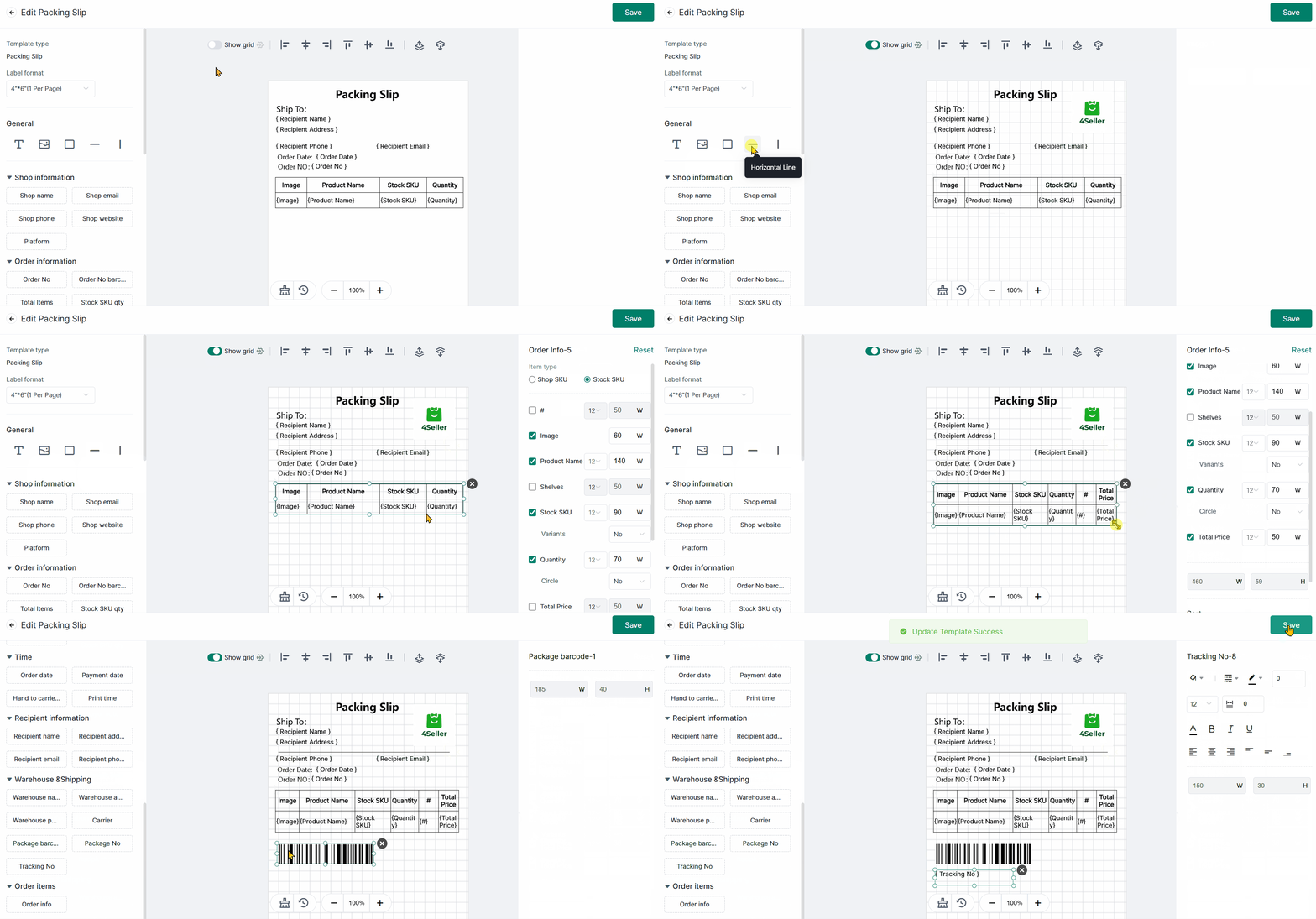
Compared to traditional ERP tools like ShippingEasy that require manual modification of HTML or Liquid code for customization, 4Seller provides a visual editor that allows users to design shipping labels, packing slips, pick lists, and other templates through simple drag-and-drop components. For example, you can directly drag fields such as SKU information, customer addresses, order notes, brand logos, and marketing messages into the printing area without any technical background. This greatly lowers the barrier to use, enabling small and medium-sized sellers to enjoy advanced customization features while saving training costs and reducing troubleshooting time.
3. Unified Management of Multi-Platform Differentiated Fulfillment, Supporting Flexible Parallel Operations of TikTok Shipping and Seller Shipping on Other Platforms
Within the 4Seller system, sellers can switch TikTok orders to TikTok Shipping fulfillment in compliance with new TikTok policies, while simultaneously connecting and centrally managing orders from Amazon, Shopify, eBay, and other platforms, and continuing to use Seller Shipping self-fulfillment models.
All orders can be processed within the same system interface, enabling flexible parallel fulfillment rules across different platforms under centralized management, eliminating the need to frequently switch between backends and effectively improving multi-channel operational efficiency and overall fulfillment stability.
4. Automated One-Click Label Printing and Order Fulfillment Workflow to Significantly Improve Shipping Efficiency for Small and Medium Warehouses
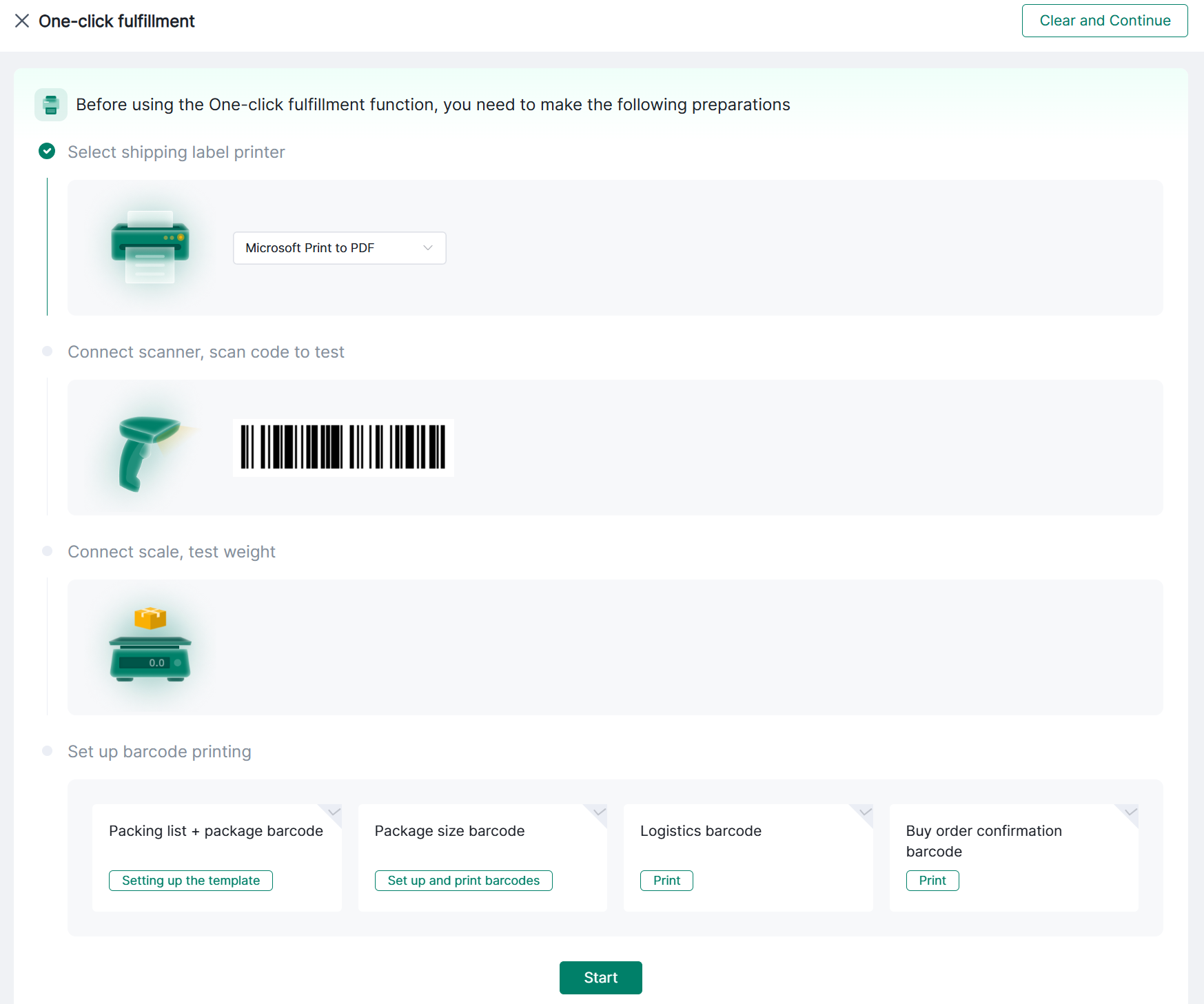
4Seller’s one-click label printing feature integrates barcode scanning, weighing, order information entry, label purchasing, and printing into a single operational interface. Warehouse staff only need to use barcode scanners and electronic scales to automatically input order information, weight, and dimensions, and complete label purchasing and printing, achieving an integrated operational workflow from order processing to shipment.
Compared to traditional methods that require manually entering information for each order, one-click printing significantly reduces manual input and operational steps. It is especially suitable for sellers with moderate order volumes and smaller warehouse teams who want to achieve efficient and standardized shipping processes without complex systems or additional manpower.
5. Support Printing SKU Information, Order Details, Brand Logos, and Other Essential Information on Shipping Labels to Strengthen Warehouse Execution and Brand Touchpoints
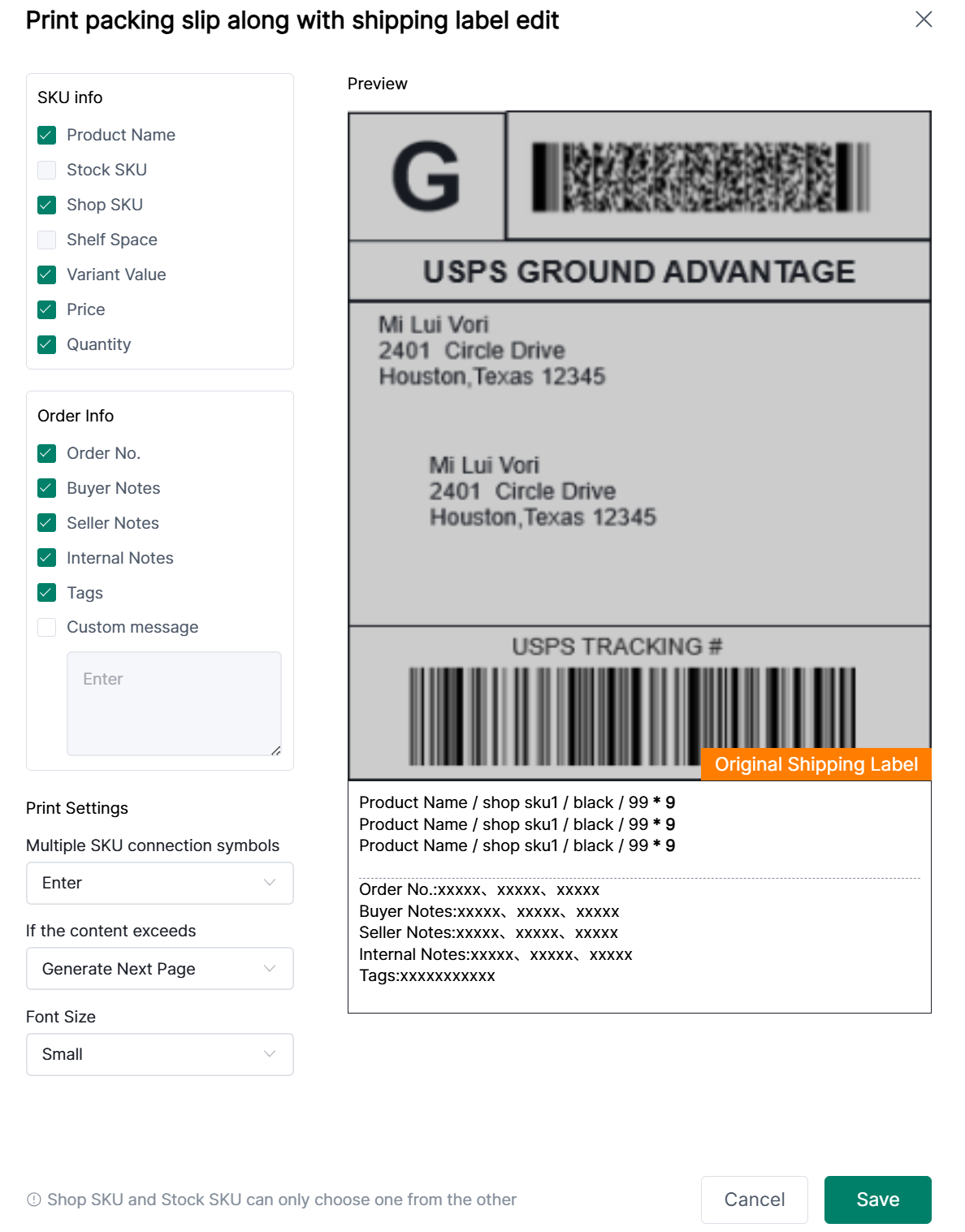
4Seller supports flexibly printing product SKU information, order details, brand logos, customer service contact information, and other custom fields on shipping labels.
Compared to standard labels that only contain basic logistics information, sellers can customize printed content based on warehouse operational needs and brand objectives. On one hand, this helps warehouse staff quickly identify order information during sorting, verification, and shipping processes, reducing manual checking costs; on the other hand, labels can serve as brand touchpoints to deliver brand information and after-sales support channels to end customers, enhancing overall professionalism and user experience.
6. Maintain Independent Warehouse Operations While Compliantly Using TikTok Official Logistics
Compared to printing labels directly within the TikTok backend, sellers using the 4Seller ERP integrated with TikTok Shipping can achieve one-click multi-feature label printing without completely changing their warehouse operation models. Sellers can still rely on their own teams to complete packing, labeling, and dispatch processes, maintaining operational flexibility while complying with new platform requirements.
By using the TikTok-official-certified 4Seller ERP integrated with TikTok Shipping, merchants who previously used ShippingEasy for fulfillment can continue maintaining independent warehouse operations under compliant conditions while improving fulfillment efficiency. For merchants who originally relied on ShippingEasy, this is a solution that balances compliance and operational efficiency.
Conclusion
Seller Shipping is exiting the TikTok Shop ecosystem. Traditional workflows relying on manually uploading tracking numbers from ShippingEasy will gradually become invalid.
Sellers who succeed in the future will be those who implement automated, compliant fulfillment through official logistics systems or certified ERP integrations.
By adopting 4Seller ERP with TikTok Shipping integration, former ShippingEasy users can continue managing multi-channel orders, synchronizing multi-warehouse inventory, and maintaining automated fulfillment workflows while building a stable and sustainable operational model under the new rules.
- Multi Channel Order Management
- TikTok Shop
- Amazon
- Temu
- About 4Seller
- Shopify
- Multi Channel Inventory Management
- Amazon MCF&FBA
- Seller Tips
- Listing Management
- Marketplace News
- FedEx
- Amazon MCF
- DHL Express
- UPS
- Amazon Shipping
- eBay
- Creator Bulk Invite
- Shein
- Inventory Sync
- GLS
- Multi-channel Store
- Walmart
- Walmart WFS
- Seller Story
- Shipping Integration
- Beginner Tutorial
- Kaufland
- Royal Mail
- 3PL
- DHL Parcel
- Shipping Label
- OTTO
- Walmart MCS
- Platform Integration
- Deutsche Post
- WooCommerce
- AliExpress
- UniUni
- Stripe Tracking Sync
- SPU Catalog
- USPS
- ShipHero
- Yodel
- PayPal Tracking Sync
- GOFO
- CIRRO
- Correos
- Correos Express
- DPD
- Etsy
- Evri
- FBM
- Request Review
- Logistics Rule
- CaiNiao
- BRT
- Chronopost
- Poste Italiane
- Cdiscount
- OMS
- DHL
- WFS
- ShipBob
- Price Sync
 17 Dec,2024
- 17 Dec,2024