- Multi Channel Order Management
- TikTok Shop
- Amazon
- Temu
- About 4Seller
- Shopify
- Multi Channel Inventory Management
- Amazon MCF&FBA
- Seller Tips
- Listing Management
- Marketplace News
- Amazon Shipping
- DHL Express
- UPS
- Amazon MCF
- FedEx
- eBay
- Shein
- Creator Bulk Invite
- Inventory Sync
- GLS
- Multi-channel Store
- Walmart WFS
- Walmart
- Royal Mail
- Shipping Integration
- Kaufland
- DHL Parcel
- Seller Story
- Beginner Tutorial
- 3PL
- Walmart MCS
- Shipping Label
- Deutsche Post
- WooCommerce
- OTTO
- Platform Integration
- PayPal Tracking Sync
- UniUni
- Yodel
- ShipHero
- SPU Catalog
- Stripe Tracking Sync
- USPS
- GOFO
- CIRRO
- Correos
- Correos Express
- DPD
- Etsy
- Evri
- FBM
- Request Review
- Logistics Rule
- CaiNiao
- BRT
- Chronopost
- Poste Italiane
- Cdiscount
- AliExpress
- OMS
- DHL
- ShipBob
- WFS
- Price Sync
Amazon MCF to TikTok Shop Automatic Integration: ByteStand vs. 4Seller Comparison
 By Joline12 Mar,2026
Table of Content
1. Pricing Models
2. Operational Friction
3. Crisis Management
4. Fulfillment Logic
5. Support & Stability
6. Scaling Infrastructure
7. Platform Compliance
8. Summary
As more and more Amazon FBA sellers view TikTok Shop as their second growth curve, using Amazon MCF (Multi-Channel Fulfillment) to process TikTok orders has become an industry standard. In building this "automated fulfillment hub," sellers inevitably encounter two names when choosing their tools: the veteran app ByteStand and the rising star 4Seller Easy MCF.As efficiency tools, both can handle basic order routing. But if we stretch the timeline and look from the perspectives of capital efficiency, team learning costs, and multi-channel expansion, there are significant differences in their target audiences and capability boundaries. Below is an in-depth review based on real-world seller scenarios.
Pricing Models: Are your "dormant SKUs" secretly eating away at your TikTok Shop margins?
When investing in SaaS tools, mature sellers care not only about the current monthly fee but also the "incremental cost" as their business scales.
As an early player in the market, ByteStand uses a tiered pricing model based on SKU count. This model is relatively friendly to sellers with single blockbuster products, but in actual operations, many sellers hit a pain point: the system counts products in "Draft" and "Archived" statuses towards the total.
Case Study: A fast-fashion seller has about 500 active SKUs, but a massive 2,000 archived SKUs from past seasons. When using ByteStand, they are forced to pay a higher-tier subscription fee for these 2,000 units of "dormant data" that generate zero sales, invisibly inflating their per-order fulfillment costs. Just as several users have stated verbatim: "Pricing feels unfair as it includes draft and archived products," and "The pricing structure is not transparent."
In contrast, 4Seller takes a completely different approach to breaking this bottleneck—implementing a transparent, free strategy across the core MCF workflow (inventory sync, order fulfillment, SKU mapping). For sellers who are in their TikTok Shop exploration phase and need to frequently test new products (listing a massive amount of SKUs), this means the cost of trial and error is virtually zero. Sellers can take the saved software subscription budget and reinvest it directly into TikTok influencer outreach or Ads.
Operational Friction: Is your team losing an hour every day wrestling with an outdated interface?
Tools are meant to be used. If an automation tool requires operators to spend hours maintaining it every day, it defeats the purpose.
Many users have indicated that ByteStand's configuration process is highly unintuitive; without customer service holding their hand via video calls, they simply cannot figure out the complex shipping settings. ByteStand's underlying architecture is quite traditional. While functionally complete, its interface and operational logic feel a bit heavy for users accustomed to modern SaaS interactions. Some sellers report getting easily lost in the complex settings menus during their initial multi-store and multi-warehouse mapping without support guidance.
4Seller, on the other hand, adopts a modern interface benchmarked against Shopify Polaris design guidelines. Whether it's initial account setup, product migration, MCF fulfillment, or inventory synchronization, there is clear, "step-by-step" guidance. The system also automatically detects SKU match rates, dramatically reducing reliance on manual customer service. For small to medium-sized sellers, an out-of-the-box, hands-off solution that requires no training to get running is a massive efficiency boost in itself.
Crisis Management: When an order stalls during a traffic spike, does your system leave you flying blind?
During major promotional periods (like BFCM or TikTok mega-sales), orders spike instantly. The scariest part isn't an error occurring, but being left "completely in the dark" after it happens.
ByteStand users frequently report a lack of a global overview dashboard ("No real dashboard overview or SKU table"). Once a glitch occurs, merchants are left flying blind and have no choice but to track down customer support. Across different time zones, the communication turnaround time can easily jeopardize TikTok Shop's stringent fulfillment SLAs.
4Seller provides a powerful visual data dashboard and Sync Logs. Whether it's product syncing, listing, inventory flow, or order fulfillment, the status is clear at a glance. If an order fails to fulfill, the system doesn't just highlight the specific reason in red (e.g., "Invalid Zip Code Format," "SKU Out of Stock at FBA," "Fulfillment Warehouse Not Specified"); it also provides a direct "Fix Now" operational button right next to it. This "self-healing" error mechanism allows even junior operators with no technical background to resolve anomalies in seconds, drastically cutting down customer service communication costs.
Fulfillment Logic: Are rigid, one-way shipping rules forcing you to bleed profits on cross-region delivery?
As a business matures, relying solely on single FBA fulfillment can no longer satisfy a seller's margin requirements. A hybrid FBA + 3PL (Third-Party Logistics) model is the ultimate endgame.
-
Basic One-Way Push
If your supply chain is extremely straightforward and all your goods are in Amazon warehouses, ByteStand is perfectly capable. But when your operations involve multiple overseas warehouses, its rule configuration falls short.
-
Smart Routing Engine
This is where 4Seller widens the gap in product depth. It allows sellers to build advanced automation rules based on If/Then logic:
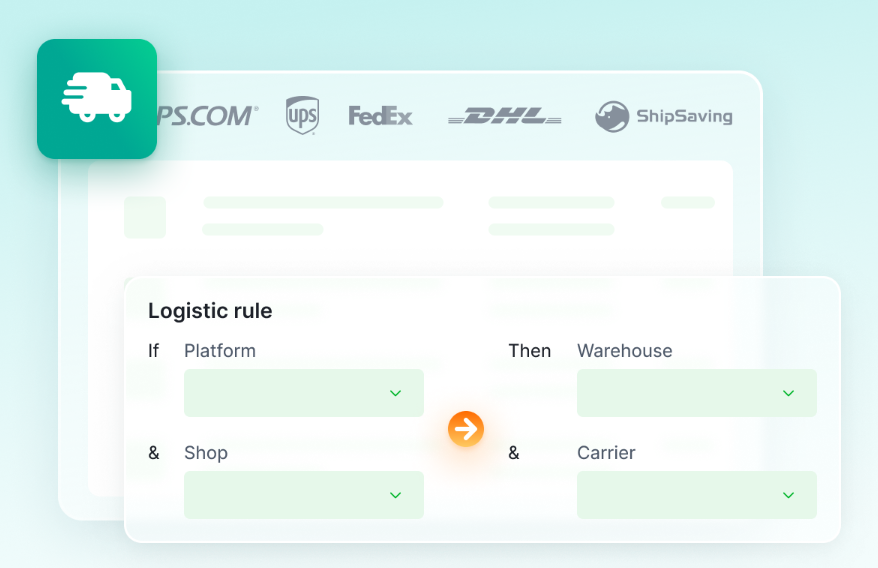
Rule A: If the order's shipping address is in the US West (CA, WA), automatically route the fulfillment to a US West 3PL warehouse (saving cross-zone shipping fees).
Rule B: If the order is in the US East and the 3PL is out of stock, automatically fallback to Amazon MCF for fulfillment.
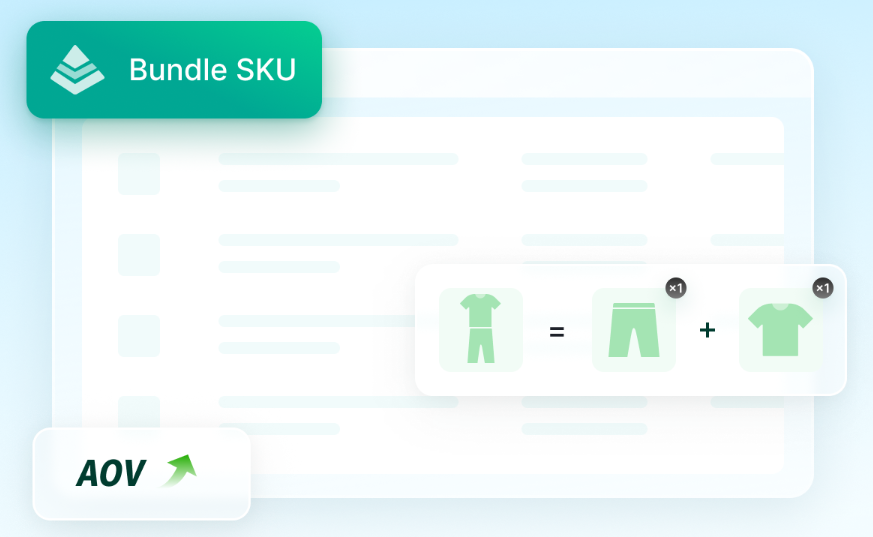
Rule C: If a buyer purchases a "Bundle," the system automatically splits it into base SKUs and deducts the corresponding inventory for each. This granular logistics dispatching not only prevents single-point stockouts but also pinches out considerable shipping cost differentials across tens of thousands of annual orders.
Support & Stability: Can your store afford to wait out a 12-hour timezone gap when an urgent glitch strikes?
E-commerce never sleeps. System stability (SLA) and customer service response speeds directly impact store performance.
ByteStand occasionally suffers from glitches like mismatched shipping countries. For users outside US time zones (like Australia, the UK, or the APAC region), seeking technical support often means enduring painful time lags, leaving urgent issues unresolved in real-time.
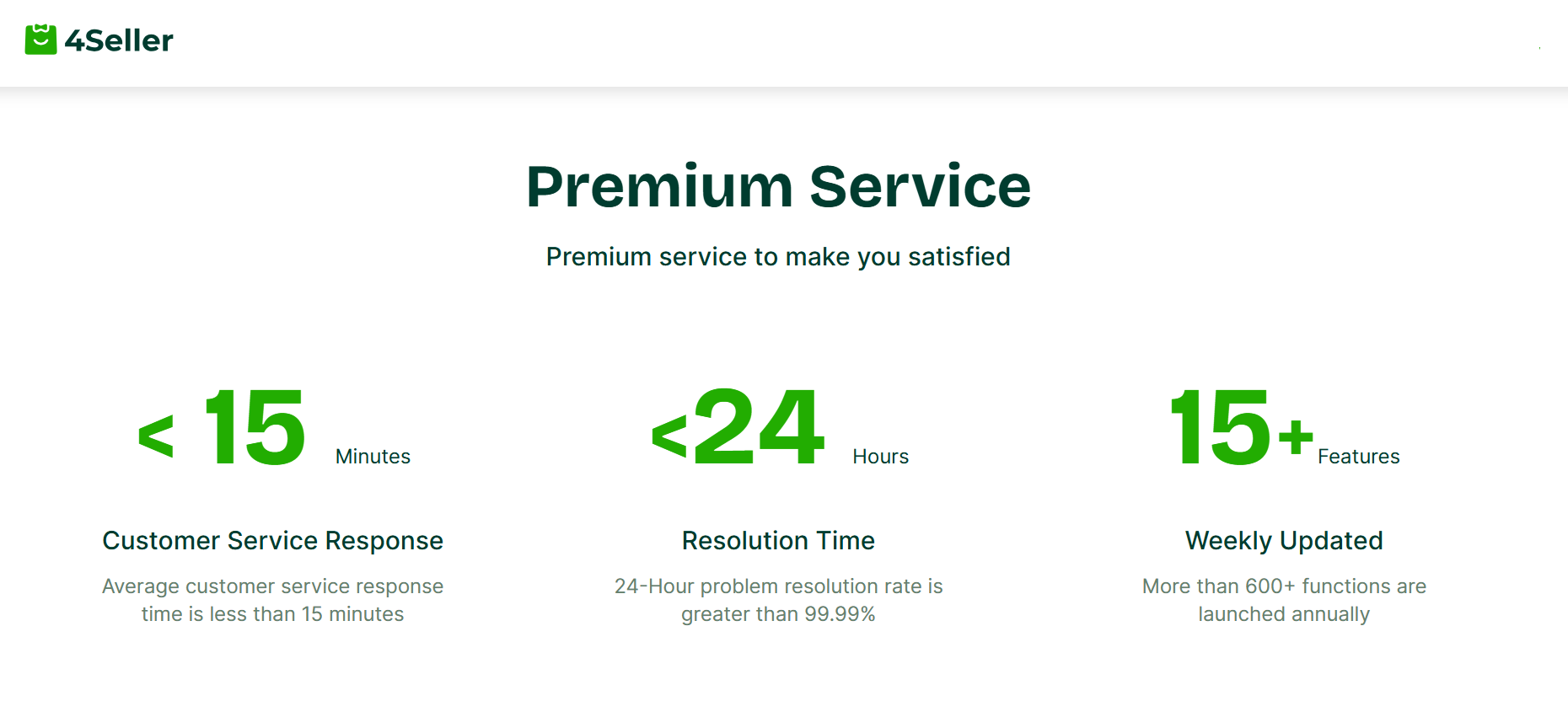
4Seller boasts exceptional system stability and is equipped with a 24/7 human customer service team across multiple regions. If you encounter a tricky issue, they support 1-on-1 Zoom remote troubleshooting. Additionally, the system features a comprehensive, multi-language (English/German/French/Spanish/Italian) self-service knowledge base and video library, ensuring global sellers can find solutions at any time.
Scaling Infrastructure: Will manual mapping bottlenecks drag down your operations when your daily orders 10x?
During phases of rapid business expansion, a seller's biggest fear isn't order growth, but their system failing to keep up. When processing massive amounts of SKUs, a lack of automated support means manual operations easily lead to human errors or missed mappings.
4Seller's Core Advantages:
-
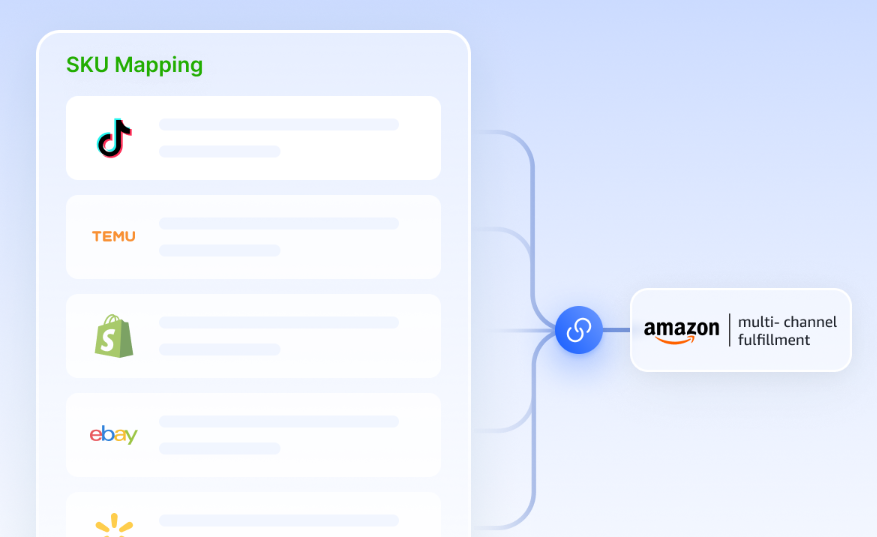
Unlimited SKU Mapping: Link an arbitrary number of TikTok product URLs to Amazon FBA SKUs. No spreadsheets, zero human errors, and absolutely no mapping caps.
-
One-Click Product Listing: Migrate and list your existing Amazon products directly to your target platform stores with a single click, boosting time-to-market efficiency.
-
Support for Bundle Sales: Sell product bundles on TikTok to increase Average Order Value (AOV); the system will automatically and accurately deduct the corresponding quantities from your Amazon single-item inventory.
Platform Compliance: Is your fulfillment tool actually protecting your store from TikTok's strict "De-Amazonification" penalties?
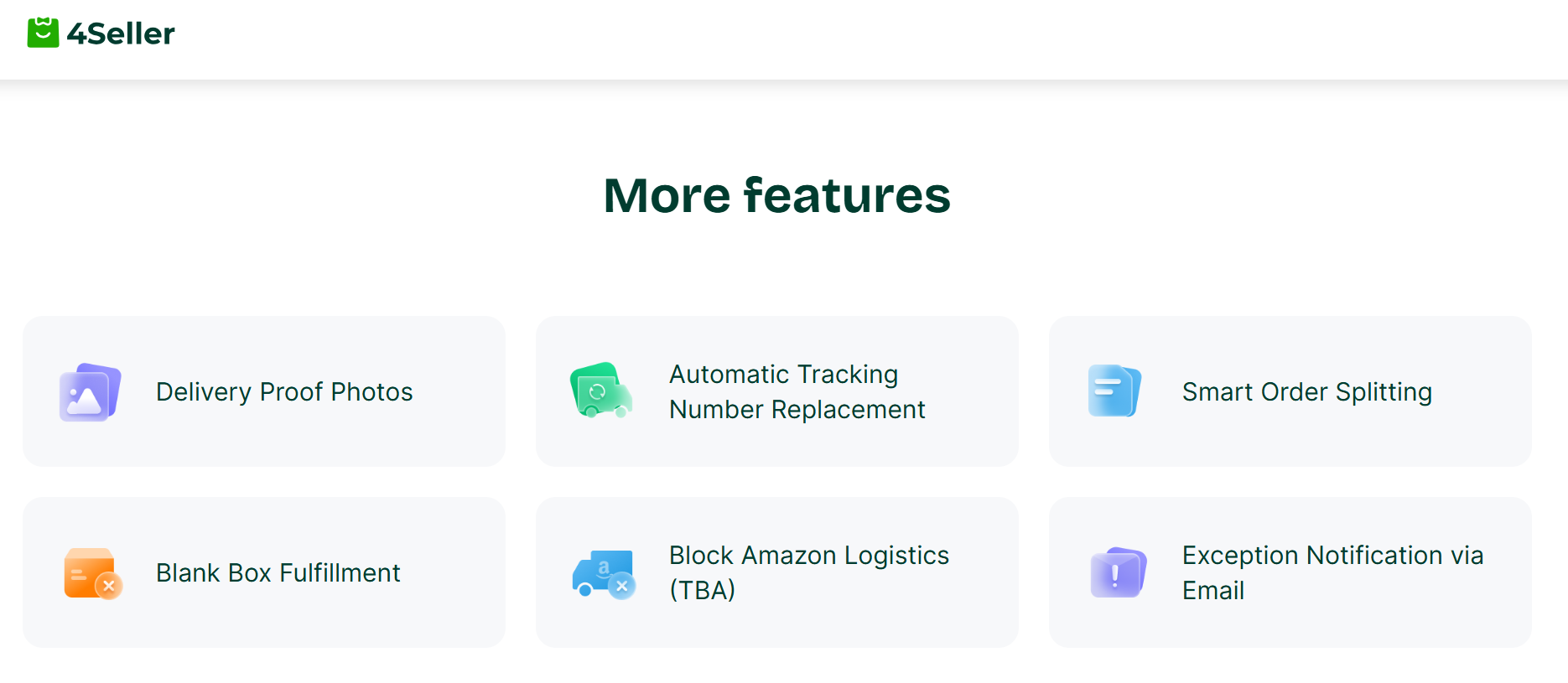
Platforms like TikTok have strict "De-Amazonification" requirements for logistics providers and packaging. When dealing with "Blank Box" shipping, excluding Amazon Logistics (TBA), and acquiring Proof of Delivery (POD), lacking a compliant solution easily leads to store penalties.
In this dimension, 4Seller's underlying logic has clearly undergone deeper customization for TikTok's rules:
-
Block TBA Last-Mile Delivery: The system supports forcibly intercepting Amazon Logistics (TBA), prioritizing carriers like UPS, USPS, or FedEx that are officially recognized and trackable by TikTok.
-
Blank Box Support: Enable unbranded packaging fulfillment with one click, avoiding platform customer complaints caused by buyers receiving packages with massive Amazon logos.
-
POD (Proof of Delivery) Sync: Automatically capture and sync successful delivery receipts. This is a powerful weapon to protect seller funds when handling "Item Not Received" disputes (Chargebacks).
Summary
Objectively speaking, there is no absolutely perfect tool, only the best choice for your current business stage.
If you are a very early-stage solo seller who only needs the most basic Shopify/Amazon one-way sync and are accustomed to traditional interfaces, ByteStand's ability to reliably run basic workflows as a veteran tool is unquestionable.
However, if your business is on the rise and you want a "logistics brain" with zero hidden fees, lightweight operations, and the ability to support complex hybrid fulfillment logic as you expand to TikTok Shop, independent sites, and other multi-channel avenues, then 4Seller Easy MCF undoubtedly demonstrates stronger product capability and long-term investment value. It is more than just a shipping plugin; it acts as an automated operational assistant that understands compliance and cost optimization.
Helping article pls refer:
1. Amazon MCF Integration with 4Seller ERP
2. How to Fulfill Orders via Amazon MCF Automatically Within MCF Tools?
- Multi Channel Order Management
- TikTok Shop
- Amazon
- Temu
- About 4Seller
- Shopify
- Multi Channel Inventory Management
- Amazon MCF&FBA
- Seller Tips
- Listing Management
- Marketplace News
- Amazon Shipping
- DHL Express
- UPS
- Amazon MCF
- FedEx
- eBay
- Shein
- Creator Bulk Invite
- Inventory Sync
- GLS
- Multi-channel Store
- Walmart WFS
- Walmart
- Royal Mail
- Shipping Integration
- Kaufland
- DHL Parcel
- Seller Story
- Beginner Tutorial
- 3PL
- Walmart MCS
- Shipping Label
- Deutsche Post
- WooCommerce
- OTTO
- Platform Integration
- PayPal Tracking Sync
- UniUni
- Yodel
- ShipHero
- SPU Catalog
- Stripe Tracking Sync
- USPS
- GOFO
- CIRRO
- Correos
- Correos Express
- DPD
- Etsy
- Evri
- FBM
- Request Review
- Logistics Rule
- CaiNiao
- BRT
- Chronopost
- Poste Italiane
- Cdiscount
- AliExpress
- OMS
- DHL
- ShipBob
- WFS
- Price Sync
 17 Dec,2024
- 17 Dec,2024