Popular Posts
- Multi Channel Order Management
- TikTok Shop
- Amazon
- Temu
- About 4Seller
- Shopify
- Multi Channel Inventory Management
- Amazon MCF&FBA
- Seller Tips
- Listing Management
- Marketplace News
- FedEx
- Amazon MCF
- DHL Express
- UPS
- Amazon Shipping
- eBay
- Creator Bulk Invite
- Shein
- Inventory Sync
- GLS
- Multi-channel Store
- Walmart
- Walmart WFS
- Seller Story
- Shipping Integration
- Beginner Tutorial
- Kaufland
- Royal Mail
- 3PL
- DHL Parcel
- Shipping Label
- OTTO
- Walmart MCS
- Platform Integration
- Deutsche Post
- WooCommerce
- AliExpress
- UniUni
- Stripe Tracking Sync
- SPU Catalog
- USPS
- ShipHero
- Yodel
- PayPal Tracking Sync
- GOFO
- CIRRO
- Correos
- Correos Express
- DPD
- Etsy
- Evri
- FBM
- Request Review
- Logistics Rule
- CaiNiao
- BRT
- Chronopost
- Poste Italiane
- Cdiscount
- OMS
- DHL
- WFS
- ShipBob
- Price Sync
10 Best Multichannel Inventory Management Software in 2026
 By Serena19 Aug,2026
10 Best Multichannel Inventory Management Software
It is essential for ecommerce sellers who sell across multiple channels to choose the right multichannel inventory management software. The right solution helps sellers sync inventory, manage stock levels, and prevent overselling across platforms such as Amazon, Shopify, Walmart, and other marketplaces.
- Sellercloud -- Best for high-volume marketplace sellers
- Linnworks -- Best for multichannel retailers scaling operations
- 4Seller -- Best for growing ecommerce sellers
- Cin7 -- Best for retail, wholesale and manufacturing businesses
- Sellbrite -- Best for small marketplace sellers
- Veeqo -- Best for Amazon-focused sellers
- Brightpearl -- Best for omnichannel retail brands
- Ordoro -- Best for shipping-focused ecommerce sellers
- ChannelEngine -- Best for marketplace expansion
- Rithum -- Best for enterprise marketplace management
Different sellers have different inventory needs. Enterprise retailers may need advanced warehouse management and forecasting features, while growing marketplace sellers may look for affordable inventory sync software that connects multiple sales channels in one place.
In this guide, we compare the 10 best multi-channel inventory sync and inventory management solutions for ecommerce sellers in 2026.
| Software | Best For | Main Channels | Business Size | Pricing |
| Sellercloud | High-volume marketplace sellers | Amazon, Walmart, eBay, Shopify, marketplaces | Mid-market to Enterprise | Custom pricing |
| Linnworks | Multichannel retailers scaling operations | Amazon, Shopify, Walmart, eBay, TikTok Shop, 100+ channels | Mid-market | Custom pricing |
| 4Seller | Growing ecommerce sellers | Amazon, Shopify, Walmart, TikTok Shop, eBay, Temu, SHEIN | SMB to Mid-market | Free / Affordable |
| Cin7 | Retail, wholesale and manufacturing businesses | Ecommerce, wholesale, retail | Mid-market | Paid plans |
| Sellbrite | Small marketplace sellers | Amazon, eBay, Walmart, Shopify | SMB | Paid plans |
| Veeqo | Amazon-focused sellers | Amazon and ecommerce channels | SMB | Free / Low cost |
| Brightpearl | Omnichannel retail brands | Ecommerce, retail, POS | Mid-market to Enterprise | Custom pricing |
| Ordoro | Shipping-focused ecommerce sellers | Ecommerce channels, dropshipping suppliers | SMB | Paid plans |
| ChannelEngine | Marketplace expansion | 950+ marketplaces/channels | Mid-market to Enterprise | Custom pricing |
| Rithum | Enterprise marketplace management | 400+ channels | Enterprise | Custom pricing |
-
Sellercloud
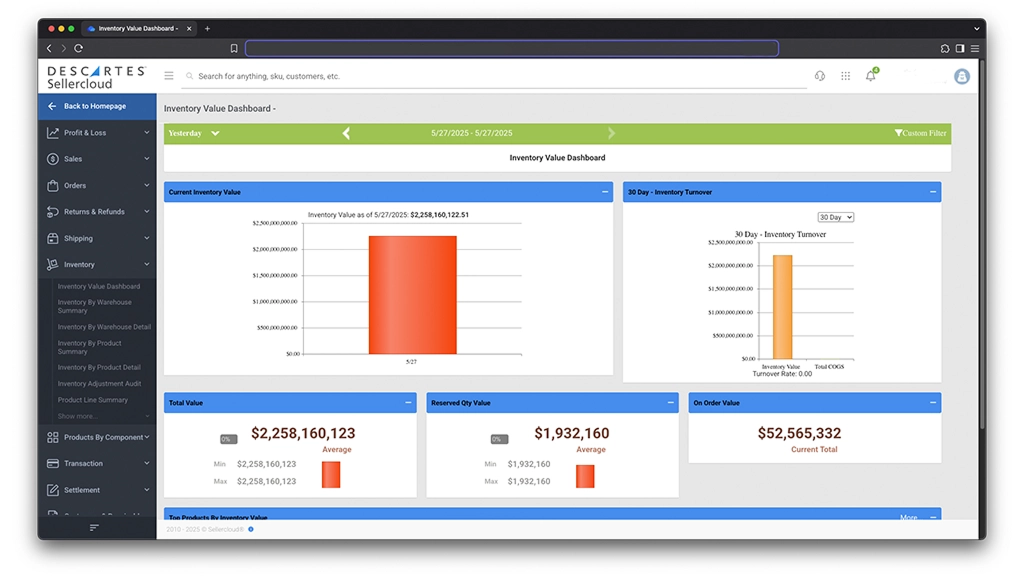
Sellercloud is a robust multichannel inventory management software engineered for high-volume sellers with expansive product catalogs, complex fulfillment workflows, and multiple sales channels.
- Inventory Synchronization & Frequency: Supports strict, automated multi-channel inventory sync. Inventory updates trigger nearly instantly upon order receipt or stock adjustments, syncing across connected channels (Amazon, eBay, Walmart, Wayfair, etc.) within 1 to 5 minutes (depending on the target marketplace API thresholds).
- Preventing Overselling: Features customizable reserve stock rules (safety stock buffer) that artificially reduce published quantities to prevent overselling during high-volume sales events.
- Low Stock Alerts & Purchasing: Includes intelligent forecasting engines that generate purchase orders automatically when stock hits defined reorder points.
- Support for Multiple Warehouses: Complete multi-warehouse visibility, supporting bin/grid tracking, physical stock transfers, and seamless integration with FBA, WFS, and 3PL networks.
- Best suited for: High-volume Amazon/Walmart sellers, enterprise catalogs (10,000+ SKUs), multi-warehouse logistics.
- Limitations: Steeper learning curve, higher setup fee, suited mainly for mid-market and enterprise businesses.
-
Linnworks
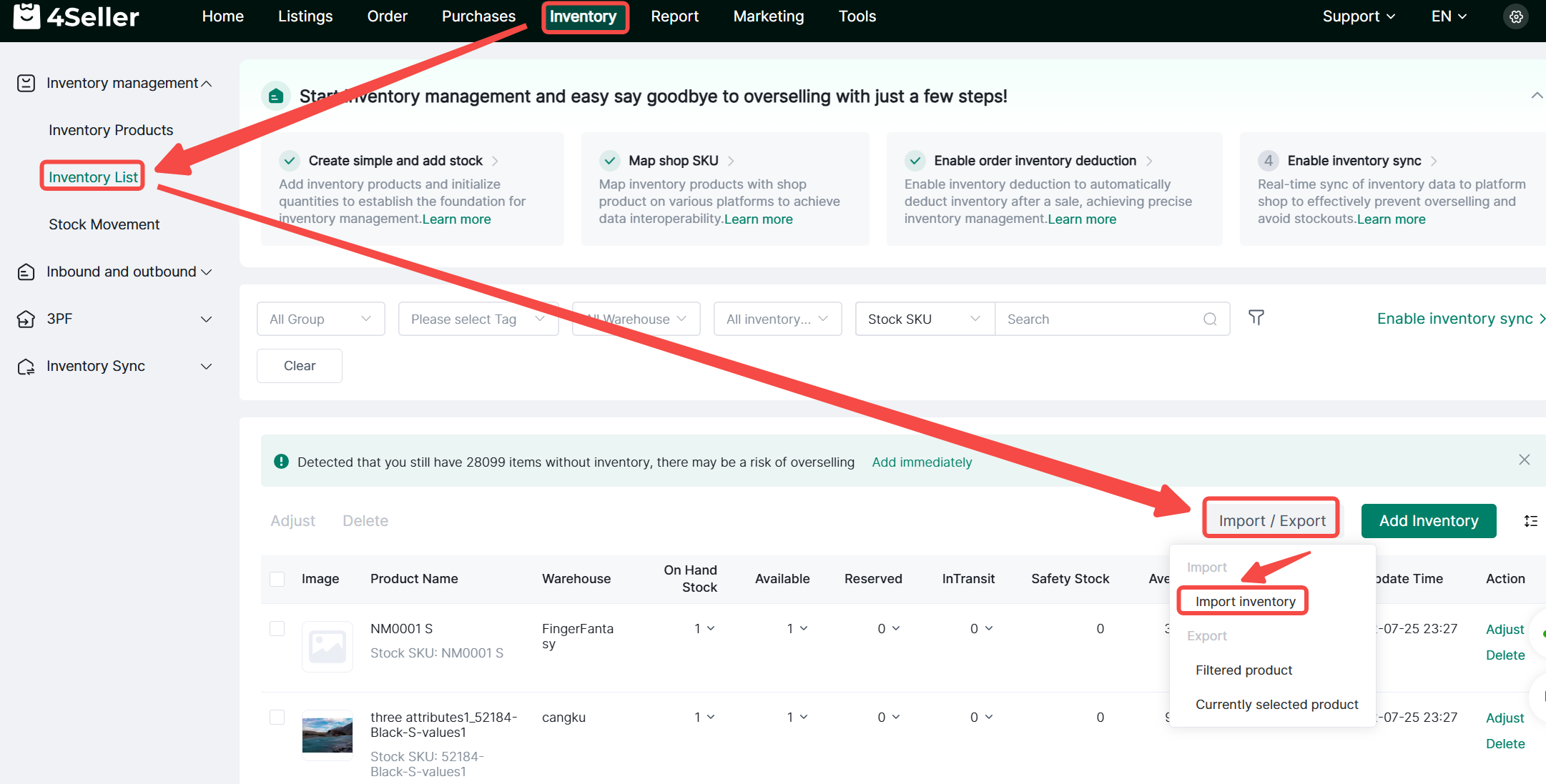
Linnworks is an industry-leading multi channel ecommerce inventory management system that bridges inventory, orders, listings, and shipping within a unified platform.
- Inventory Synchronization & Frequency: Offers automated inventory synchronization across dozens of global marketplaces. Sync intervals typically range from 1 to 15 minutes based on marketplace API capabilities and user automation configurations.
- Preventing Overselling: Automatically updates and locks available stock quantities across all secondary channels the moment an order is finalized on any single channel.
- Low Stock Alerts: Provides low stock threshold monitoring, reorder point triggers, and supplier management to streamline replenishment.
- Support for Multiple Warehouses: Full multi-location tracking with intelligent rule-based routing (e.g., routing orders to the closest warehouse with available stock).
- Best suited for: Growing mid-sized ecommerce brands, sellers expanding internationally across European and US marketplaces.
- Limitations: Premium pricing structure; initial system onboarding and implementation require dedicated time.
 Best for: Fast-growing cross-border and marketplace sellers seeking affordable, near real-time sync
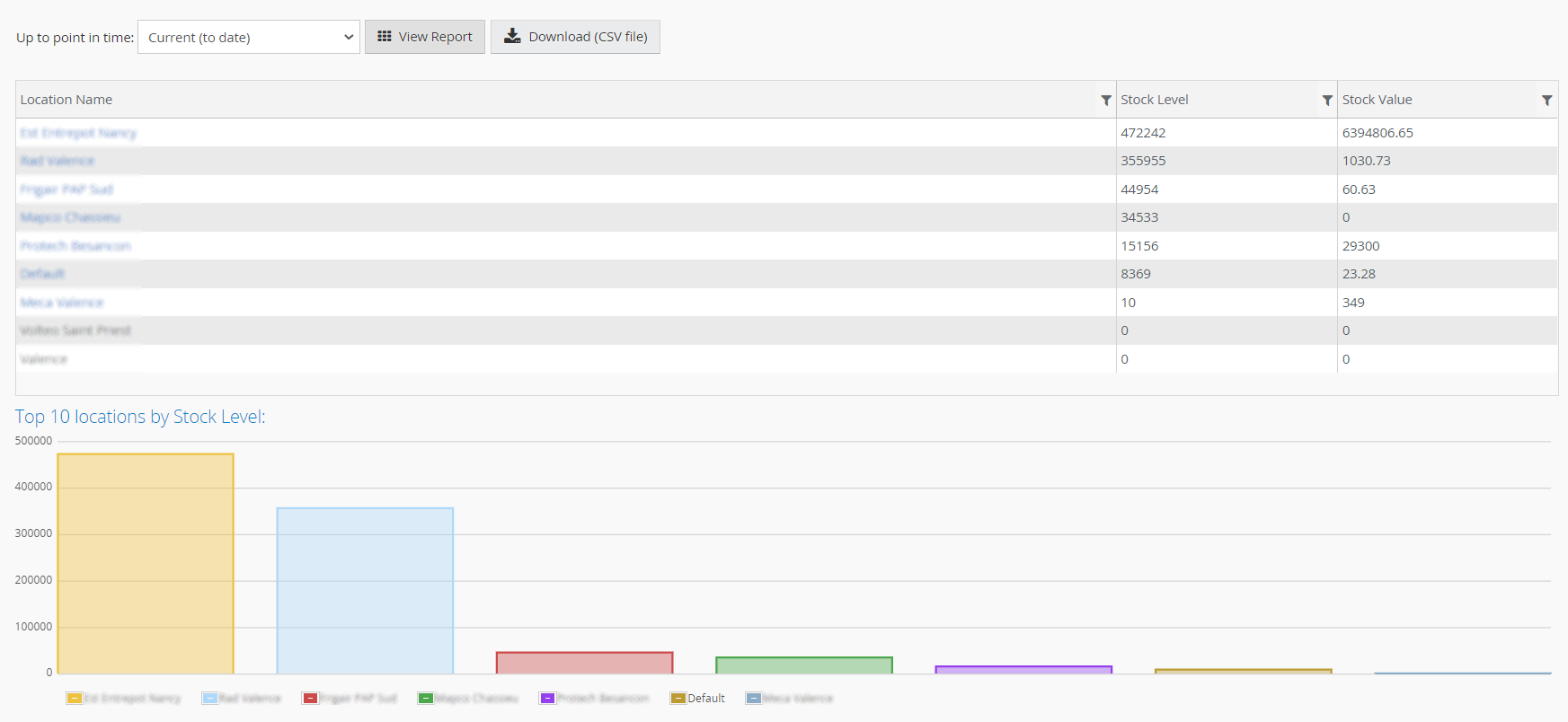
4Seller is a highly specialized inventory sync software designed for ecommerce merchants expanding aggressively across platforms like Amazon, Shopify, Walmart, TikTok Shop, eBay, Temu, and SHEIN.
- Inventory Synchronization & Frequency: Engineered specifically for dynamic marketplace demands. 4Seller delivers high-frequency multi-channel inventory sync, processing updates within 5 minutes after an order is placed to eliminate inventory lag across fast-paced platforms like TikTok Shop and Temu.
- Preventing Overselling: Uses zero-stock protection and virtual stock allocation rules to lock inventory instantly upon checkout, making it a reliable solution to prevent overselling.
- Support for Multiple Warehouses: Supports seamless multi-warehouse allocation, enabling sellers to split stock across self-managed warehouses, FBA, and regional 3PLs with custom mapping.
- Best suited for: Small-to-medium marketplace sellers, TikTok Shop / Temu / Amazon sellers, merchants looking for cost-effective multi channel ecommerce inventory management.
- Limitations: Not focused on heavy manufacturing or complex raw material Assembly/BOM workflows.
-
Cin7
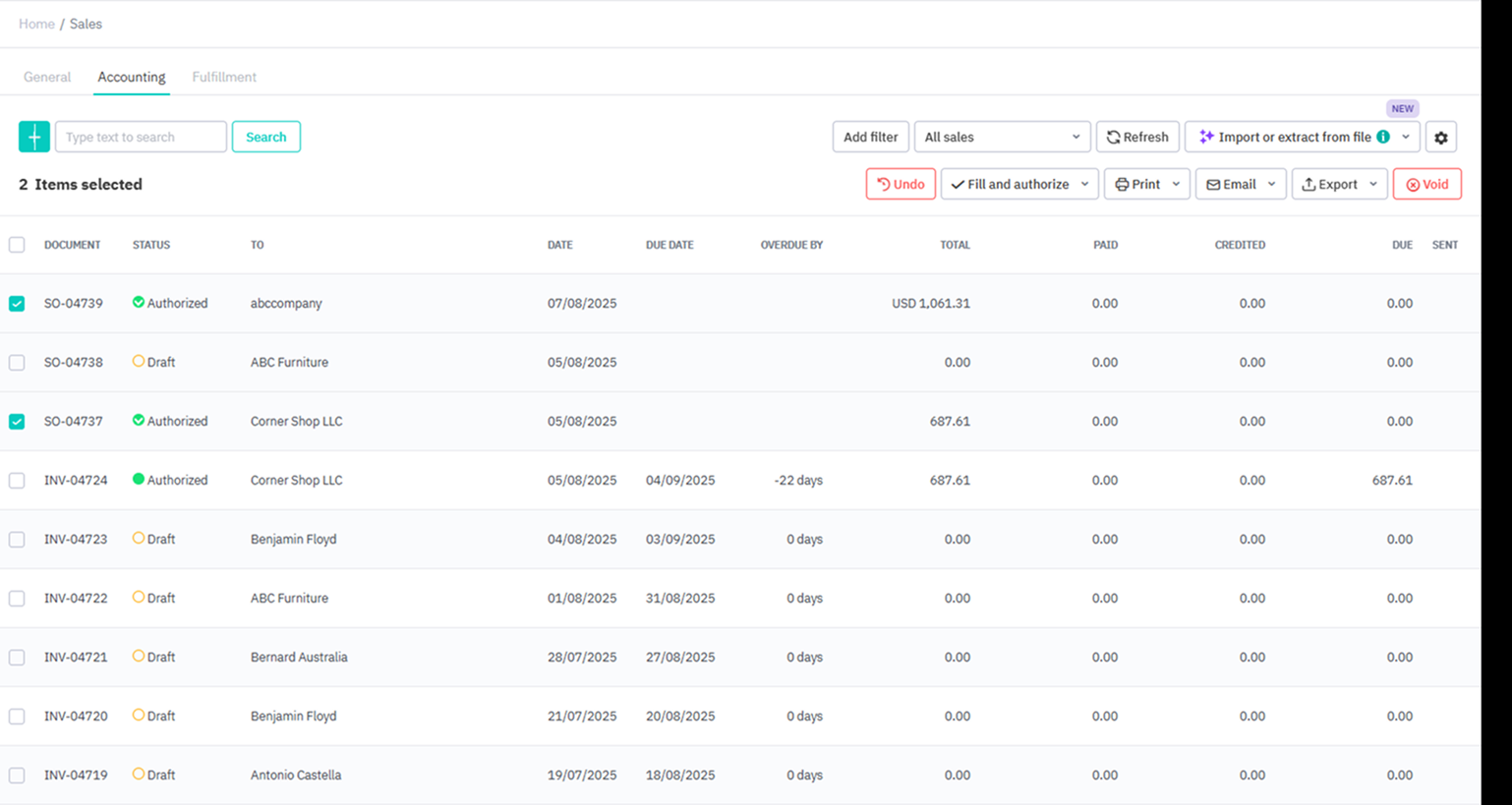
Cin7 is an enterprise-grade ERP-lite inventory management platform designed for brands needing deeper integration between retail POS, wholesale (EDI), B2C commerce, and manufacturing.
- Inventory Synchronization & Frequency: Performs central inventory updates across B2B, B2C, POS, and 3PL connections, running automated sync cycles generally every 5 to 15 minutes.
- Preventing Overselling: Dedicates inventory allocations specifically to wholesale or B2B contracts so retail marketplace orders do not drain reserved stock.
- Low Stock Alerts: Features advanced demand forecasting, BOM (Bill of Materials) tracking, and automated PO generation based on historical velocity.
- Support for Multiple Warehouses: Advanced multi-warehouse tracking, retail store inventory tracking, and 3PL EDI synchronization.
- Best suited for: Omnichannel brands selling both wholesale (B2B) and retail (B2C), light manufacturers.
- Limitations: High operational complexity and setup cost; overkill for simple marketplace-only sellers.
-
Sellbrite
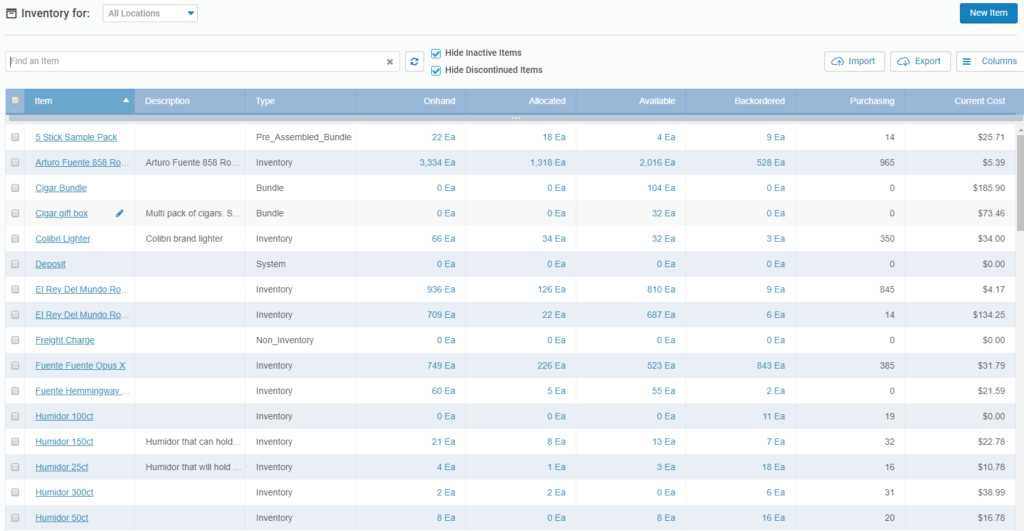
Owned by GoDaddy, Sellbrite focuses on simplicity and ease of use, providing intuitive inventory synchronization without bloated operational features.
- Inventory Synchronization & Frequency: Automatically coordinates stock levels across sales channels. Sync routines run approximately every 15 minutes across integrated channels.
- Preventing Overselling: Automatically reflects updated inventory numbers to connected channels whenever a sale occurs, helping early-stage merchants avoid stockouts.
- Low Stock Alerts: Basic inventory reports highlight low-stock items for quick reordering.
- Support for Multiple Warehouses: Allows basic stock distribution across multiple fulfillment centers, though advanced routing rules are limited.
- Best suited for: Solo entrepreneurs, small-scale eBay/Etsy/Amazon sellers, merchants managing under 1,000 SKUs.
- Limitations: Lacks advanced warehouse logistics, bundle/kitting workflows, or sub-5-minute sync options.
-
Veeqo
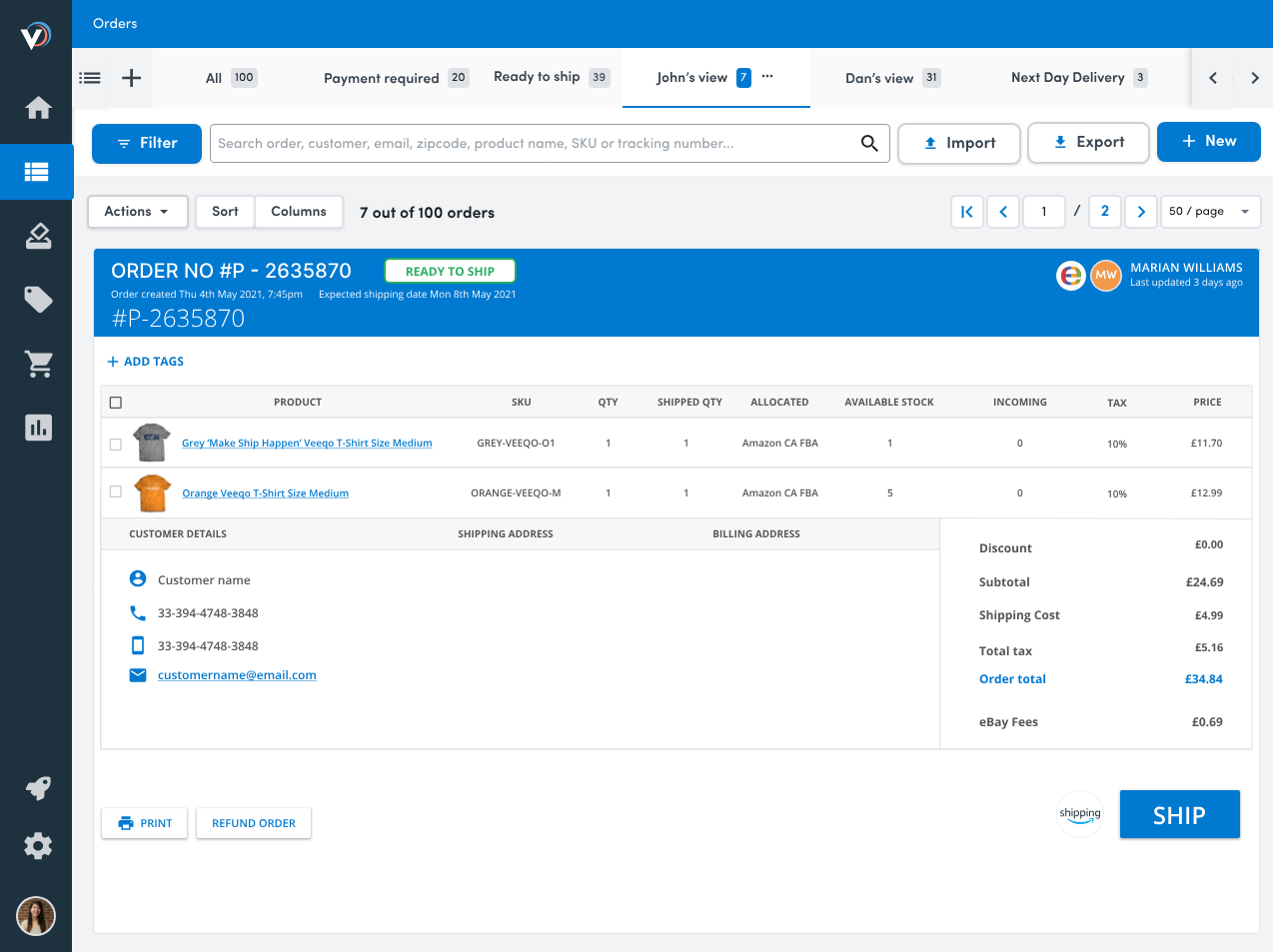
Acquired by Amazon, Veeqo is a shipping and multichannel inventory management software tool that offers robust features at zero software subscription cost for sellers shipping through its platform.
- Inventory Synchronization & Frequency: Delivers steady multi-channel inventory sync across Amazon, Shopify, eBay, and Walmart, updating stock levels within 2 to 10 minutes of order import.
- Preventing Overselling: Real-time stock counts update immediately across all connected channels once an order is picked or processed, protecting account health metrics.
- Low Stock Alerts: Offers customizable low-stock threshold notifications and stock forecasting tools based on previous sales rates.
- Support for Multiple Warehouses: Supports multiple location tracking, bin locations, and digital picking/packing workflows via the Veeqo mobile app.
- Best suited for: Amazon-centric sellers looking to cut software costs while maintaining multi-channel shipping and inventory efficiency.
- Limitations: Platform updates and integrations favor Amazon ecosystem workflows over standalone third-party channels.
-
Brightpearl (by Sage)
Brightpearl is a Retail Operating System (ROS) combining order management, multi channel ecommerce inventory management, accounting, CRM, and POS into a central hub.
- Inventory Synchronization & Frequency: Features real-time multi-channel stock adjustments across stores, webshops, and marketplaces, executing updates in near real-time (under 2 minutes) via direct API pipelines.
- Preventing Overselling: Centralized automation rules dynamically allocate and hold stock instantly as orders flow in from any source.
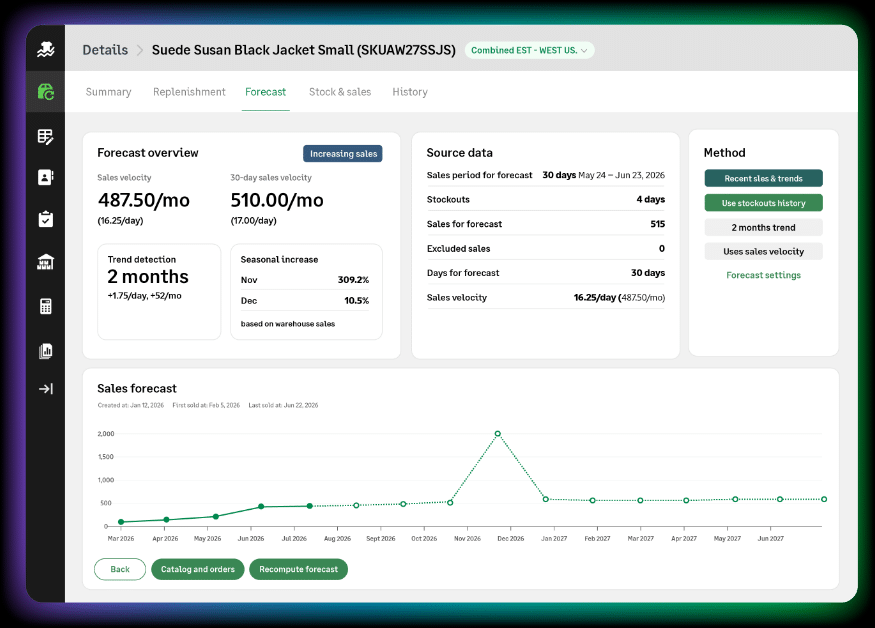
- Low Stock Alerts: Built-in Inventory Planner engine predicts demand based on seasonality, lead times, and promotional velocity to send precise reorder alerts.
- Support for Multiple Warehouses: Enterprise-grade multi-warehouse management, including cross-docking, automated stock transfers, and 3PL routing.
- Best suited for: Fast-growing retail brands generating over $1M+ in revenue requiring unified financial and inventory data.
- Limitations: High annual contract costs; requires formal implementation and onboarding.
-
Ordoro
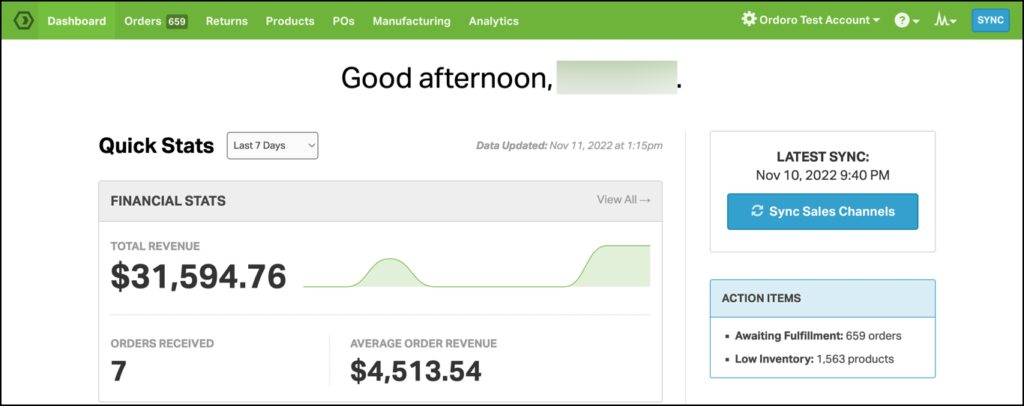
Ordoro combines discounted shipping rate access with specialized inventory sync software and vendor/dropshipping management capabilities.
- Inventory Synchronization & Frequency: Performs periodic inventory updates across platforms like Shopify, WooCommerce, Amazon, and eBay, typically running sync cycles every 10 to 15 minutes.
- Preventing Overselling: Keeps master stock numbers updated across channels and offers kitting/bundling support to maintain accurate component counts.
- Low Stock Alerts: Allows setting reorder points on individual products and alerts managers when thresholds are breached.
- Support for Multiple Warehouses: Supports multiple shipping locations and excels at automated dropship order routing to external suppliers.
- Best suited for: E-commerce stores leveraging dropship vendors, lighter inventory setups, and high-volume parcel shipping.
- Limitations: Deeper warehouse management (WMS) features are limited compared to Sellercloud or Linnworks.
-
ChannelEngine
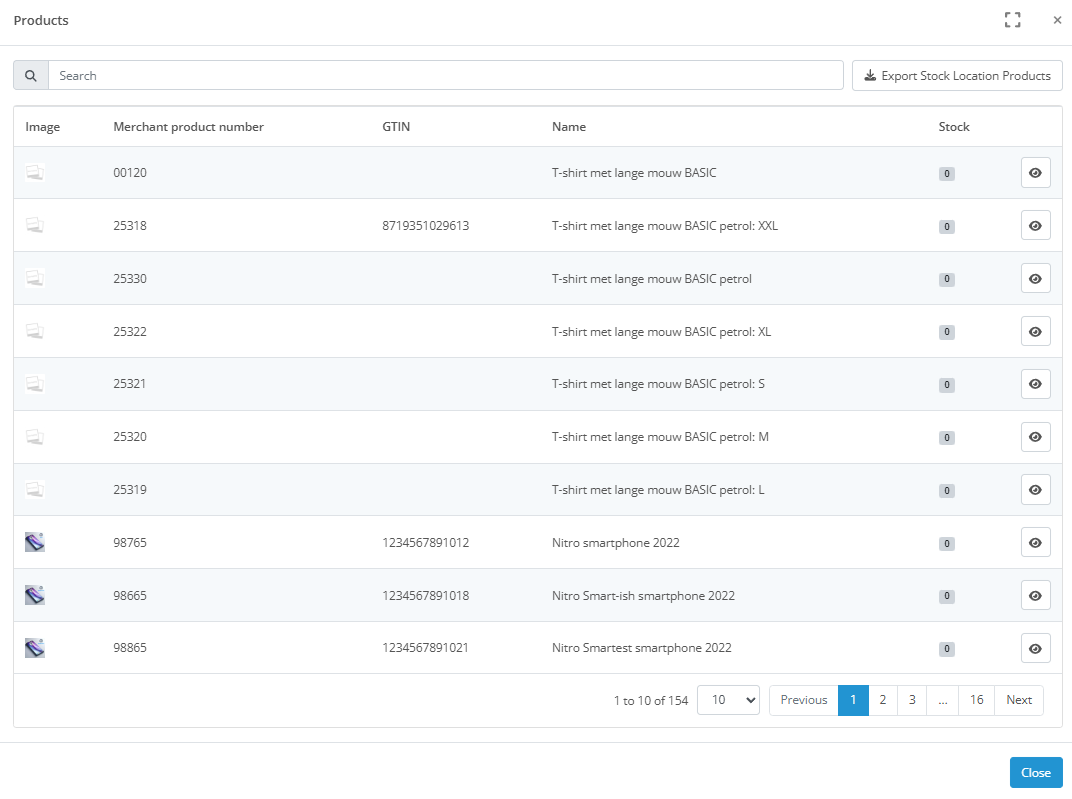
ChannelEngine focuses heavily on global marketplace connectivity, bridging brand ERPs directly with over 700+ international marketplaces (such as Amazon, Zalando, Cdiscount, Mercado Libre, and Shopee).
- Inventory Synchronization & Frequency: Acts as an integration layer, translating stock feeds between central ERP/WMS systems and channels. Sync speed ranges from 2 to 10 minutes, depending on the target marketplace API limit.
- Preventing Overselling: Allows brands to set custom stock buffers and channel-specific ceiling limits to prevent overselling on volatile international channels.
- Low Stock Alerts: Relies on parent ERP data for deep forecasting, but provides real-time channel connection health and stock-level warnings.
- Support for Multiple Warehouses: Connects complex distribution networks, local fulfillment centers, and marketplace fulfillment programs (like FBA/Zalando Fulfillment) globally.
- Best suited for: Established brands aiming for rapid cross-border expansion into European, Asian, and Latin American marketplaces.
- Limitations: Focuses primarily on integration and channel management rather than standalone warehouse picking/packing.
-
Rithum (formerly ChannelAdvisor)
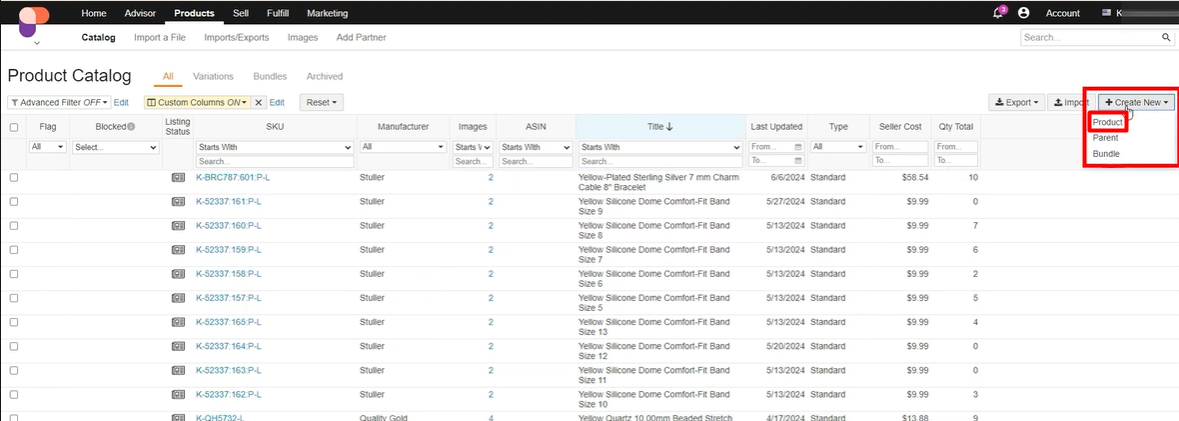
Rithum is one of the largest enterprise-grade platforms for multi-channel commerce, digital marketing, and supply chain automation.
- Inventory Synchronization & Frequency: Enterprise-level inventory synchronization engine designed to process millions of SKUs across global sales touchpoints, syncing within minutes via high-throughput enterprise pipelines.
- Preventing Overselling: Advanced logic allows complex inventory rules, velocity-based quantity buffers, and automated channel shutting when stock hits critical thresholds.
- Low Stock Alerts: Comprehensive analytics dashboards provide predictive inventory velocity, demand forecasting, and supply chain visibility.
- Support for Multiple Warehouses: Handles global supply chains, multi-tiered fulfillment networks, drop-shippers, and internal warehouses seamlessly.
- Best suited for: Large enterprise brands, manufacturers, and global sellers requiring complex channel management.
- Limitations: High cost structure (often custom enterprise pricing with GMV fees) and complex setup process.
How to Choose the Right Solution?
- For High-Frequency, Fast-Paced Marketplace Sellers: If you sell on fast-moving channels like TikTok Shop, Amazon, and Temu where stock updates must happen rapidly to prevent overselling, affordable inventory sync software like 4Seller or Amazon-focused tools like Veeqo offer high speed without enterprise price tags.
- For Complex Warehousing & High SKU Counts: If you manage multiple physical warehouses, bin locations, and custom picking routes, dedicated platforms like Sellercloud or Linnworks provide the deepest operational control.
- For Wholesale & Omnichannel Brands: If you combine retail store POS, B2B wholesale, and online marketplaces, integrated operating systems like Cin7 or Brightpearl ensure your accounting, inventory, and order streams remain synchronized.
All Topics
- Multi Channel Order Management
- TikTok Shop
- Amazon
- Temu
- About 4Seller
- Shopify
- Multi Channel Inventory Management
- Amazon MCF&FBA
- Seller Tips
- Listing Management
- Marketplace News
- FedEx
- Amazon MCF
- DHL Express
- UPS
- Amazon Shipping
- eBay
- Creator Bulk Invite
- Shein
- Inventory Sync
- GLS
- Multi-channel Store
- Walmart
- Walmart WFS
- Seller Story
- Shipping Integration
- Beginner Tutorial
- Kaufland
- Royal Mail
- 3PL
- DHL Parcel
- Shipping Label
- OTTO
- Walmart MCS
- Platform Integration
- Deutsche Post
- WooCommerce
- AliExpress
- UniUni
- Stripe Tracking Sync
- SPU Catalog
- USPS
- ShipHero
- Yodel
- PayPal Tracking Sync
- GOFO
- CIRRO
- Correos
- Correos Express
- DPD
- Etsy
- Evri
- FBM
- Request Review
- Logistics Rule
- CaiNiao
- BRT
- Chronopost
- Poste Italiane
- Cdiscount
- OMS
- DHL
- WFS
- ShipBob
- Price Sync
Popular Posts
 17 Dec,2024
Table of Content
Popular Posts
- 17 Dec,2024

Back to top