Popular Posts
- Multi Channel Order Management
- TikTok Shop
- Amazon
- Temu
- About 4Seller
- Shopify
- Multi Channel Inventory Management
- Amazon MCF&FBA
- Seller Tips
- Listing Management
- Marketplace News
- FedEx
- Amazon MCF
- DHL Express
- UPS
- Amazon Shipping
- eBay
- Creator Bulk Invite
- Shein
- Inventory Sync
- GLS
- Multi-channel Store
- Walmart
- Walmart WFS
- Seller Story
- Shipping Integration
- Beginner Tutorial
- Kaufland
- Royal Mail
- 3PL
- DHL Parcel
- Shipping Label
- OTTO
- Walmart MCS
- Platform Integration
- Deutsche Post
- WooCommerce
- AliExpress
- UniUni
- Stripe Tracking Sync
- SPU Catalog
- USPS
- ShipHero
- Yodel
- PayPal Tracking Sync
- GOFO
- CIRRO
- Correos
- Correos Express
- DPD
- Etsy
- Evri
- FBM
- Request Review
- Logistics Rule
- CaiNiao
- BRT
- Chronopost
- Poste Italiane
- Cdiscount
- OMS
- DHL
- WFS
- ShipBob
- Price Sync
Best CedCommerce Alternatives for Shopify and Amazon Inventory Sync (2026)
 By Serena20 Aug,2026
CedCommerce is a popular Shopify marketplace integration solution that helps sellers connect their stores with platforms like Amazon, Walmart, Etsy, and eBay. Its marketplace-specific apps provide dedicated features for individual channels, making it a practical choice for sellers managing one or a few marketplaces.
However, as sellers expand to multiple sales channels, managing inventory synchronization through separate apps can become more complicated. Multiple marketplace connectors may lead to fragmented inventory data, different subscription costs, and additional setup work. Many growing sellers start looking for a more centralized multichannel inventory sync solution that can manage stock across platforms from one place.
This guide compares the best CedCommerce alternatives for 2026, focusing specifically on inventory synchronization methods, SKU management, warehouse support, marketplace coverage, and overall pricing. Whether you are looking for a Shopify Amazon inventory sync tool or a centralized inventory management platform, these solutions can help you find the right fit for your business.Quick Comparison: Shopify & Amazon Inventory Sync Tools
| Feature / App | 4Seller | LitCommerce | Sellbrite | Nembol | CedCommerce |
| System Architecture | Centralized Platform | Centralized Dashboard | Centralized Workspace | Lightweight Middleware | Decentralized App Connectors |
| Inventory Sync Speed | 1–5 Minutes (Webhook Real-Time on Amazon and Shopify) | Scheduled / Triggered | Near Real-Time | Periodic / Triggered | App-Dependent |
| SKU Mapping & Bundles | Advanced (1-to-Many, Bundles) | Standard (1-to-1 Mapping) | Standard (Master SKU) | Basic SKU Matching | Basic SKU Matching |
| Key Channel Support | Amazon, Shopify, Walmart, TikTok Shop, Temu, SHEIN, eBay, Etsy | Amazon, Shopify, eBay, Etsy, Walmart, TikTok Shop | Amazon, Shopify, eBay, Etsy, Walmart | Amazon, Shopify, eBay, Etsy, Walmart | Channel-Specific Extensions |
| Best Pricing Value | Free Plan Available | Paid Tiered Plans | Free Tier (Low Volume) / Paid | Paid Subscription | Pay Per Marketplace App |
Core Selection Criteria: What Matters in Inventory Synchronization?
When moving away from CedCommerce’s single-connector model, focus on these technical inventory capabilities:- Sync Frequency & Latency: Look for platforms capable of rapid stock adjustments (e.g., 1–5 minute intervals or Webhook triggers) to prevent overselling across high-velocity sales channels.
- Multi-Warehouse Order Routing: The capability to match buyer shipping addresses with the nearest self-operated warehouse to optimize fulfillment efficiency.
- SKU Mapping Flexibility: Handling scenarios where a single internal SKU corresponds to different ASINs, Shopify handles, or bundled kits across platforms.
Detailed Breakdown: Best 4 CedCommerce Alternatives
-
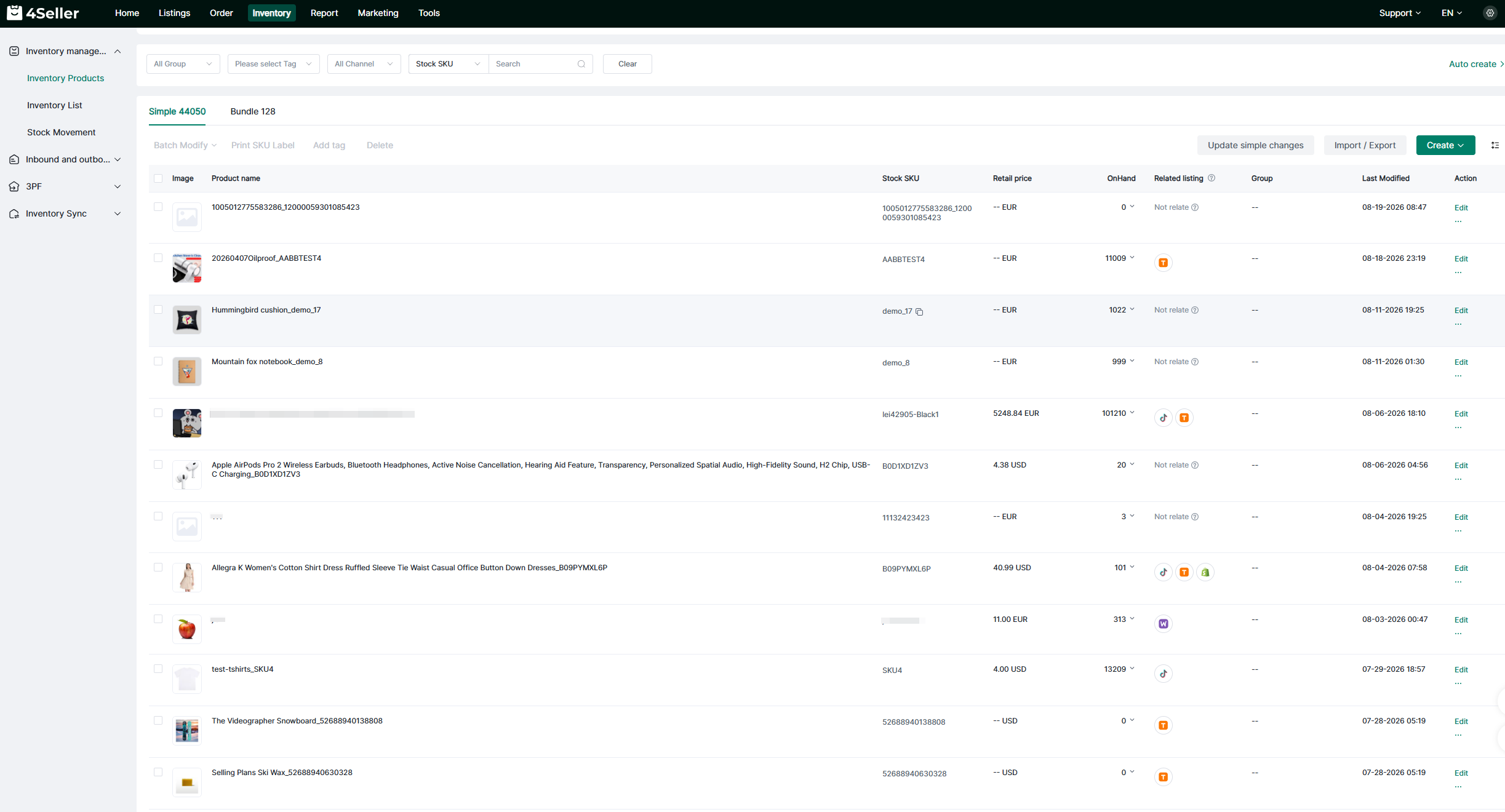
4Seller – Best Centralized Multichannel Inventory Sync Platform
- Fast Sync & Webhook Triggers: 4Seller maintains a rapid stock update interval of 1 to 5 minutes, with supported Amazon and Shopify leveraging Webhook integration for instant, real-time inventory updates upon sales events. For cross-platform inventory fulfilled through shared self-operated warehouses, 4Seller effectively prevents overselling and can automatically route orders to the nearest local warehouse based on the buyer's shipping address.
- SKU & Bundle Mapping: Supports complex 1-to-Many SKU mapping, multi-pack variations, and product bundles. If a customer buys a 3-pack on Shopify, 4Seller instantly deducts 3 individual units from the main pool across Amazon and eBay.
- Next-Gen Marketplace Coverage: Beyond Amazon and Shopify, 4Seller natively integrates with high-growth channels including TikTok Shop, Temu, and SHEIN, ensuring centralized inventory control across both traditional and social commerce platforms.
- Pricing: Offers a functional free plan, which is significantly more cost-effective than paying separate CedCommerce subscription fees for each channel.
- Best For: Growing Amazon and Shopify merchants and sellers operating across 3+ channels (including TikTok Shop/Temu) who need multi-warehouse inventory rules.
-
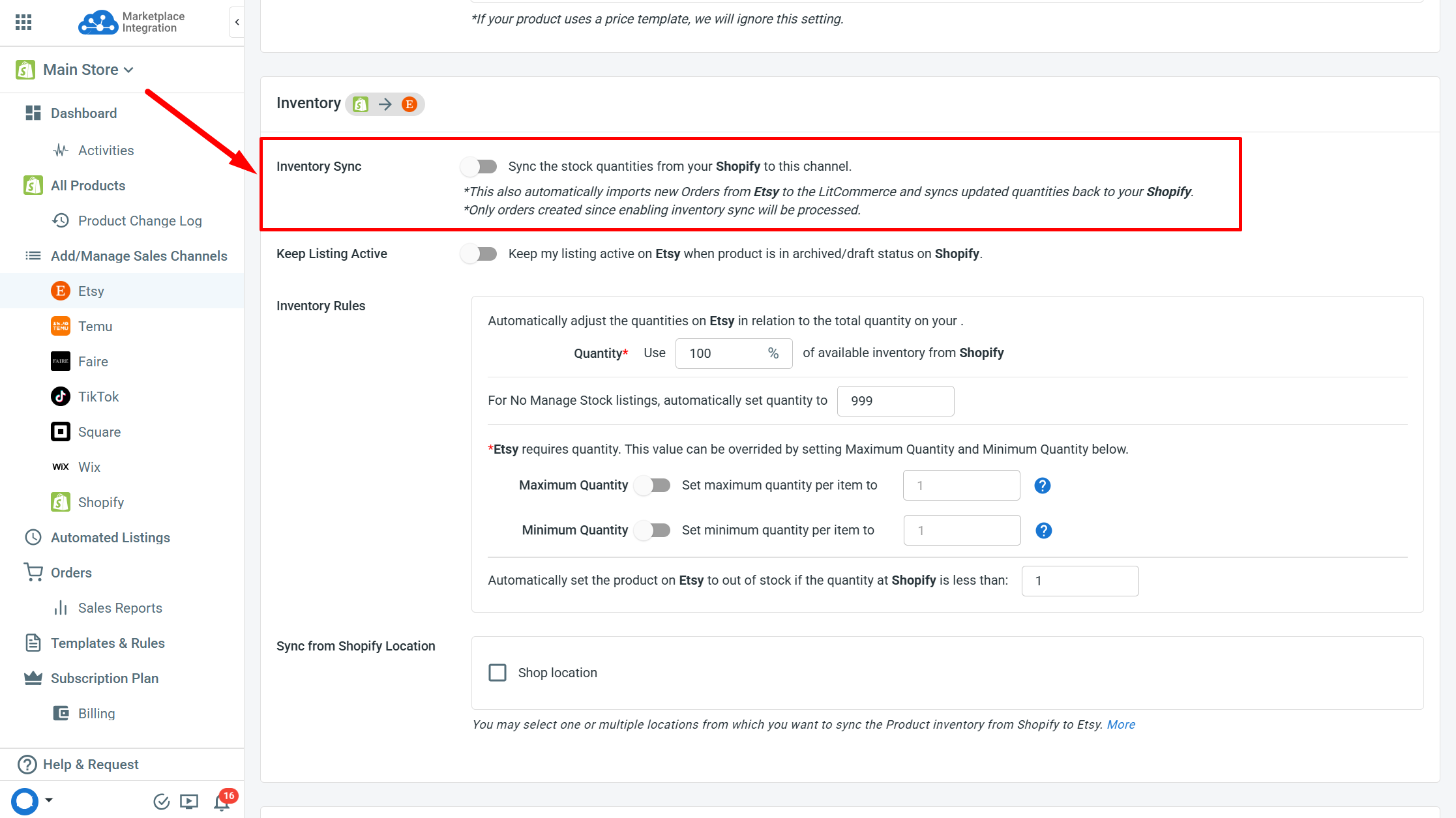
LitCommerce – Best for Shopify-Centric Marketplace Expansion
- Inventory Sync Approach: Operates on a central dashboard using a "Main Store" (usually Shopify) as the central inventory source. When stock changes on Shopify, LitCommerce pushes updates to connected channels.
- Listing & Inventory Linkage: Strong focus on quick listing creation alongside stock updates. It allows simple inventory rules, such as setting a fixed quantity limit for specific channels.
- Inventory Limitations: Lacks advanced multi-warehouse routing and native 3PL/FBA inventory allocation logic compared to full ERP/operations platforms.
- Pricing: Starts around $29/month, scaling with order volume and listing count.
- Best For: Shopify-first stores with simple inventory structures looking for straightforward cross-listing and basic stock mirroring.
-
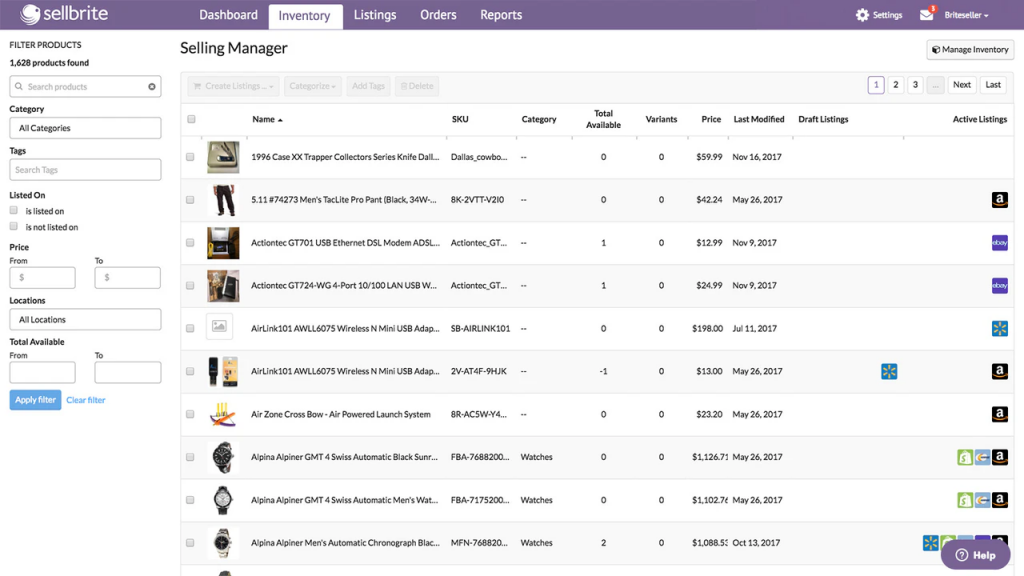
Sellbrite – Best for Simple Multi-Channel Catalog Sync
- Centralized Master Inventory: Uses a "Master SKU" system. Sellers adjust the master stock level, and Sellbrite broadcasts the available inventory across all connected listings.
- Inventory Control Features: Allows sellers to set "Channel Reserve" inventory (e.g., holding back 5 units for Shopify while listing the rest on Amazon) to prevent stockouts.
- Inventory Limitations: Multi-warehouse handling is basic, and it lacks deeper automation rules for multi-channel fulfillment or social commerce platforms like Temu and SHEIN.
- Pricing: Free plan for up to 30 orders/month; paid tiers scale based on monthly order volume.
- Best For: Small-to-medium businesses selling primarily on Amazon, eBay, and Shopify who prefer an easy-to-use, clean interface.
-
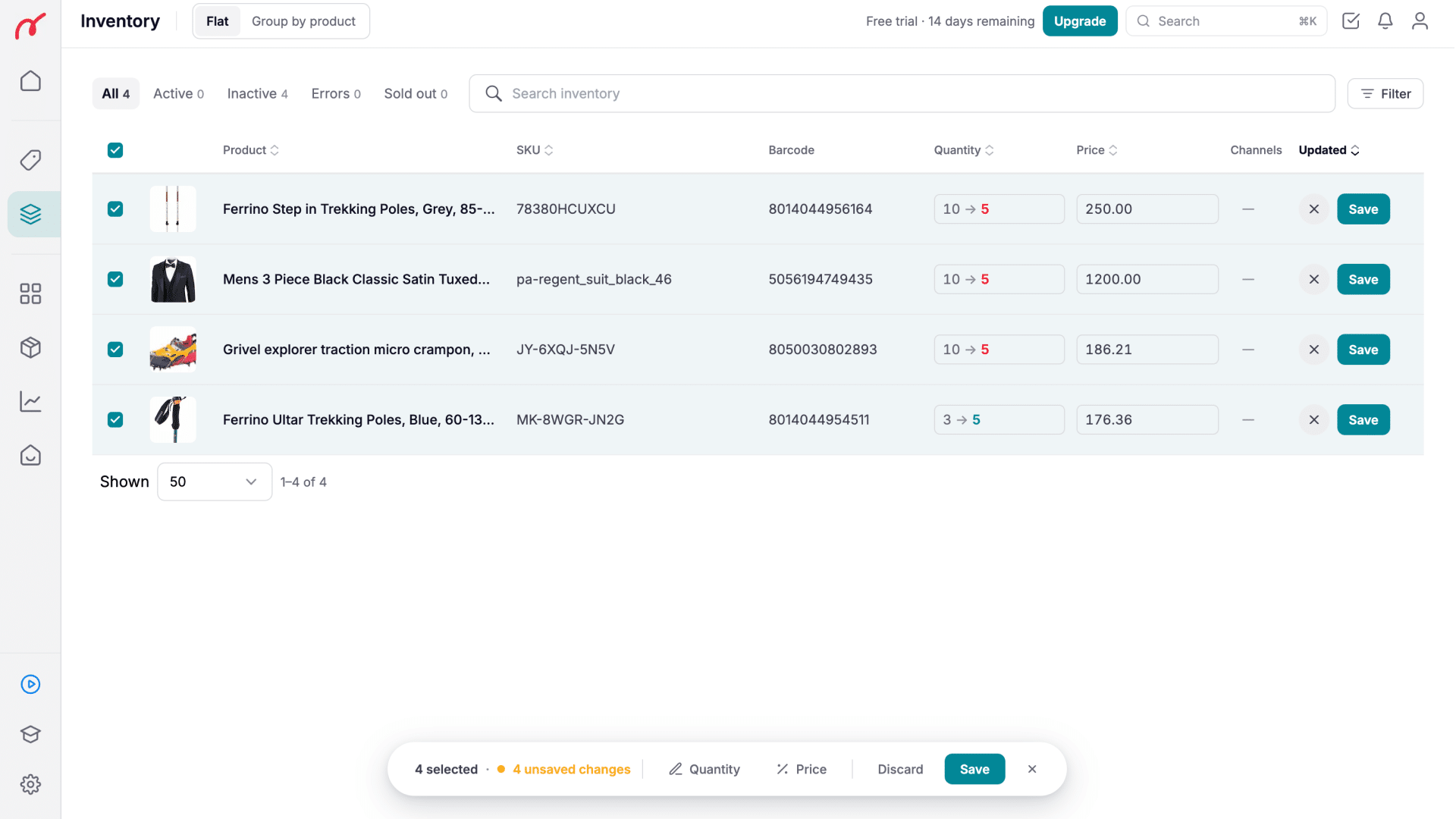
Nembol – Best Lightweight Inventory Sync Tool for Small Catalogs
- Lightweight Sync Mechanism: When a product is purchased on one channel, Nembol automatically deducts the quantity on other connected platforms (Shopify, Amazon, Etsy, eBay).
- Inventory Limitations: Nembol does not support multi-warehouse stock, advanced SKU bundle mapping, or FBA inventory tracking. It operates purely as a 1-to-1 inventory deduction middleware.
- Pricing: Flat monthly/annual subscription fees based on channel connections.
- Best For: Micro-sellers or boutique stores with small product catalogs looking for no-frills, low-cost stock deduction across 2-3 marketplaces.
FAQ: Key Decisions on Shopify & Amazon Inventory Sync
What is the best CedCommerce alternative for multi-channel inventory sync?
4Seller is the top alternative for sellers managing multiple channels. Unlike CedCommerce’s single-app model, 4Seller provides a centralized dashboard supporting inventory sync across Amazon, Shopify, Walmart, TikTok Shop, eBay, Etsy, Temu, and SHEIN, with 1–5 minute sync intervals, Webhook integration, and automated bundle SKU deduction.How does 4Seller manage multi-warehouse order fulfillment?
In 4Seller, inventory levels are set manually by the seller for each warehouse, keeping self-operated warehouse stock separate from FBA. For orders fulfilled via self-operated warehouses, 4Seller can automatically match the buyer's delivery address to the nearest warehouse for optimal shipping.Can these alternatives prevent overselling during sales spikes?
Yes. Platforms like 4Seller use real-time sync triggers and allow safety stock buffer settings (e.g., hiding a listing when stock hits 2 units), preventing overselling during flash sales on channels like TikTok Shop or Amazon.How are bundle and kit products synced in 4Seller?
When a customer purchases a composite or bundle product on any channel, 4Seller automatically deducts the corresponding stock from each child SKU, preventing overselling across connected storefronts.Conclusion
Choosing the right CedCommerce alternative depends on your operational complexity:- Choose Nembol or LitCommerce if you are a small Shopify seller needing basic 1-to-1 stock updates on 1 or 2 marketplaces.
- Choose Sellbrite if you prefer a traditional catalog dashboard for Amazon and eBay.
- Choose 4Seller if you need a centralized platform to sync inventory across Amazon, Shopify, TikTok Shop, Temu, and multi-warehouse setups with Webhook speed, localized order routing, and automatic bundle SKU deduction.
All Topics
- Multi Channel Order Management
- TikTok Shop
- Amazon
- Temu
- About 4Seller
- Shopify
- Multi Channel Inventory Management
- Amazon MCF&FBA
- Seller Tips
- Listing Management
- Marketplace News
- FedEx
- Amazon MCF
- DHL Express
- UPS
- Amazon Shipping
- eBay
- Creator Bulk Invite
- Shein
- Inventory Sync
- GLS
- Multi-channel Store
- Walmart
- Walmart WFS
- Seller Story
- Shipping Integration
- Beginner Tutorial
- Kaufland
- Royal Mail
- 3PL
- DHL Parcel
- Shipping Label
- OTTO
- Walmart MCS
- Platform Integration
- Deutsche Post
- WooCommerce
- AliExpress
- UniUni
- Stripe Tracking Sync
- SPU Catalog
- USPS
- ShipHero
- Yodel
- PayPal Tracking Sync
- GOFO
- CIRRO
- Correos
- Correos Express
- DPD
- Etsy
- Evri
- FBM
- Request Review
- Logistics Rule
- CaiNiao
- BRT
- Chronopost
- Poste Italiane
- Cdiscount
- OMS
- DHL
- WFS
- ShipBob
- Price Sync
Popular Posts
 17 Dec,2024
Table of Content
Popular Posts
- 17 Dec,2024

Back to top