Popular Posts
- Multi Channel Order Management
- TikTok Shop
- Amazon
- Temu
- About 4Seller
- Shopify
- Multi Channel Inventory Management
- Amazon MCF&FBA
- Seller Tips
- Listing Management
- Marketplace News
- FedEx
- Amazon MCF
- DHL Express
- UPS
- Amazon Shipping
- eBay
- Creator Bulk Invite
- Shein
- Inventory Sync
- GLS
- Multi-channel Store
- Walmart
- Walmart WFS
- Seller Story
- Shipping Integration
- Beginner Tutorial
- Kaufland
- Royal Mail
- 3PL
- DHL Parcel
- Shipping Label
- OTTO
- Walmart MCS
- Platform Integration
- Deutsche Post
- WooCommerce
- AliExpress
- UniUni
- Stripe Tracking Sync
- SPU Catalog
- USPS
- ShipHero
- Yodel
- PayPal Tracking Sync
- GOFO
- CIRRO
- Correos
- Correos Express
- DPD
- Etsy
- Evri
- FBM
- Request Review
- Logistics Rule
- CaiNiao
- BRT
- Chronopost
- Poste Italiane
- Cdiscount
- OMS
- DHL
- WFS
- ShipBob
- Price Sync
AliExpress Direct / Marketplace: The Complete Guide to Launching Your Store on AliExpress
 By Serena20 Sep,2026
If you run an established US e-commerce business, such as Amazon, Walmart, or your own Shopify store, you already know the daily pressures of single-channel dependency. Escalating Amazon PPC ad costs, shrinking margins, and aggressive competitor bidding make expanding your sales footprint essential for growth. You should know more about AliExpress in 2026.
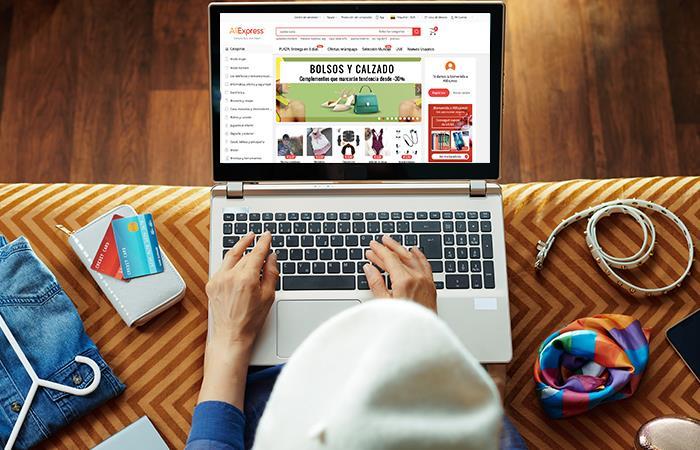
AliExpress is often misunderstood as solely a cross-border platform for overseas factories. However, through its AliExpressLocal program, the marketplace is actively expanding its network of domestic US merchants. If you hold inventory in US warehouses, you can now reach millions of global and domestic shoppers with fast local shipping, zero cross-border logistics friction, and significantly lower customer acquisition costs.
Before creating your account, this article helps you to choose the right business model (AliExpress Marketplace vs. AliExpress Direct), optimize your inventory across channels, and understand platform requirements to scale fast.
AliExpress Marketplace vs. Direct: Which Operating Model Fits You?
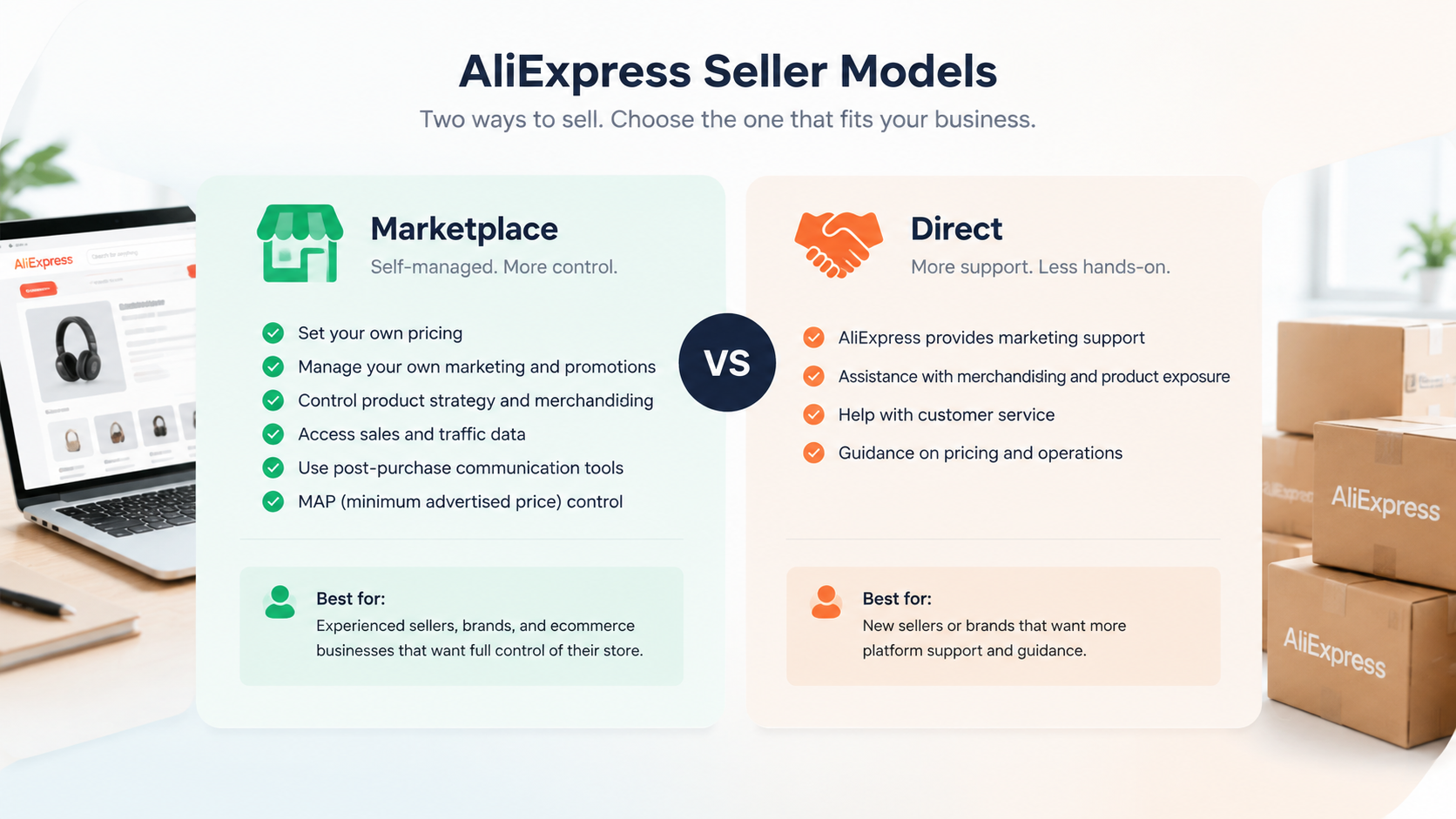
When onboarding onto the AliExpressLocal framework, US merchants choose between two operational models: Marketplace (self-managed) or Direct (platform-managed).
Option A: AliExpressLocal Marketplace
Self-Operated Control Store Model
Best Suited For: Established Amazon, Walmart, or Shopify sellers with in-house operations teams
Complete Control: You manage product pricing, store promotions, custom merchandising, and MAP policies.
Option B: AliExpressLocal Direct
AliExpress-Assisted Managed Store Model
Best Suited For: Emerging brands, catalog owners, or sellers wanting lean operational overhead
Platform-Guided: AliExpress assists directly with marketing strategy, merchandising, pricing guidance, and customer service.
Choosing the Right Model for Your US E-commerce Operations
To decide which path aligns with your current infrastructure, evaluate your team's bandwidth and business goals:
| Strategic Business Criteria | AliExpress Marketplace (Self-Managed) | AliExpress Direct (Platform-Assisted) |
| Existing Amazon or Walmart Store? | ✅ Strongly Recommended | 🟡 Optional Path |
| US Warehouse Inventory On Hand? | ✅ Excellent Fit | 🟡 Optional Path |
| Full Pricing & MAP Policy Control? | ✅ Total Control | 🔴 Platform-Guided |
| In-House Marketplace Operations Team? | ✅ Required | 🔴 Not Required |
| Dedicated Platform Support Needed? | 🔴 Self-Managed | ✅ Hands-On Support |
| Multi-Channel Brand Scaling Target? | ✅ Designed for Scaling | 🟡 Channel-Specific |
Strategic Advantages of Expanding Your US E-commerce Brand to AliExpress
-
Turn Your US Inventory into a New Sales Channel
With AliExpressLocal, US merchants can choose different selling models based on their business needs while managing their products, pricing, and operations through the platform.
-
Maximize Revenue from Your Existing US Warehouse Stock
-
Reduce Amazon Ad Dependency and Diversify Revenue Streams
High-Converting Product Categories and US Compliance Standards
While AliExpress hosts virtually all retail verticals, success depends on aligning your inventory with consumer discovery behavior.Categories with High Marketplace Traction
- Consumer Electronics & Accessories: Mobile accessories, smart desk gadgets, audio gear, and charging solutions. Buyers actively compare technical specs across channels, making competitive pricing and local delivery speed key differentiators.
- Home & Garden: Modular storage, outdoor accent lighting, DIY tools, and home organization tools. High visual appeal makes these products effective for image-driven marketplace discovery.
- Beauty & Personal Care: Cosmetic tools, skincare devices, LED therapy equipment, and styling accessories. A trend-sensitive, social-discovery-heavy category with strong impulse-purchase conversion.
- Fashion & Lifestyle Accessories: Jewelry, bags, wallets, and watches. Compact packaging limits shipping overhead, providing healthy margins on multi-unit orders.
Onboarding Checklist: Verification Requirements for US Merchants
To open an official enterprise seller account on AliExpress, you must register as a verified corporate entity.() Prepare the following documentation before starting your application:Business Documentation: State business registration certificate, legal corporate entity name, and verified physical business address.
Identity Verification: Government-issued photo ID (Driver’s License or Passport) of the company's legal representative.
Federal Tax Data: Employer Identification Number (EIN) issued by the IRS along with tax registration forms.
Corporate Payment Account: US business bank account details matching your corporate entity for automated payouts.
Brand Rights (If Applicable): Registered trademark documentation or authorized distributor authorization letters to unlock Brand Store badges.
| Onboarding Step | Verification Stage | Required US Documentation |
| Step 1 | Entity Registration | US Corporate Certificate (LLC or Corporation), official legal business address, and corporate contact details. |
| Step 2 | Owner Identity Check | Government-issued ID (US Driver’s License or Passport) of the legal representative. |
| Step 3 | Tax Identification | Official Employer Identification Number (EIN) issued by the IRS. |
| Step 4 | Financial Settlement | US Business Bank Account details matching your corporate registration for automated payouts. |
| Step 5 | Brand Protection | Registered US trademark documentation or official brand authorization letters (optional, for official brand badges). |
Step-by-Step Store Launch Process for US Merchants
| Launch Sequence | Operational Phase | Key Tasks & Objectives |
| Phase 1 | Model Selection | Choose between Marketplace (full control) or Direct (platform assistance). |
| Phase 2 | Account Verification | Submit company EIN, business registration, legal ID, and US bank payout info on the AliExpress Seller Portal. |
| Phase 3 | Store Customization | Set up your brand logo, custom header banners, shipping policies, and domestic return rules. |
| Phase 4 | Catalog Publication | Upload product titles, assign category mappings, set pricing rules, and add high-resolution imagery. |
| Phase 5 | Fulfillment Setup | Connect your US warehouse or 3PL, configure handling cutoffs, and publish local shipping templates. |
How 4Seller Accelerates Your Multi-Channel Expansion onto AliExpress
Expanding to a new sales channel manually can overwhelm your operations team. 4Seller provides multi-channel e-commerce automation software that connects your existing Amazon, Walmart, or Shopify workflows directly with AliExpress. Both of AliExpress Direct stores and Marketplace stores can be authorized to 4Seller.- Catalog Migration
- Inventory Overselling
Summary: Which AliExpress Store Model Should Your Brand Choose?
Expanding your US e-commerce footprint beyond Amazon doesn't require reinventing your supply chain. You can quickly unlock a new revenue stream by choosing the store model that matches your internal resources.Choose AliExpress Direct if:
- You are an emerging brand or supplier with great physical products but a small operating team.
- You prefer to outsource platform merchandising, campaign enrollment, pricing guidance, and customer service to AliExpress.
- You want to use 4Seller on the back end to automatically sync multi-channel inventory, handle fulfillment workflows, and avoid overselling.
Choose AliExpress Marketplace if:
- You are an established Amazon, Walmart, or Shopify brand with an in-house marketplace management team.
- Strict control over pricing, MAP policies, promotional scheduling, and direct customer branding is essential to your business model.
- You use multi-channel management tools like 4Seller to seamlessly automate catalog migration, inventory sync, and order routing alongside your existing channel stack.
All Topics
- Multi Channel Order Management
- TikTok Shop
- Amazon
- Temu
- About 4Seller
- Shopify
- Multi Channel Inventory Management
- Amazon MCF&FBA
- Seller Tips
- Listing Management
- Marketplace News
- FedEx
- Amazon MCF
- DHL Express
- UPS
- Amazon Shipping
- eBay
- Creator Bulk Invite
- Shein
- Inventory Sync
- GLS
- Multi-channel Store
- Walmart
- Walmart WFS
- Seller Story
- Shipping Integration
- Beginner Tutorial
- Kaufland
- Royal Mail
- 3PL
- DHL Parcel
- Shipping Label
- OTTO
- Walmart MCS
- Platform Integration
- Deutsche Post
- WooCommerce
- AliExpress
- UniUni
- Stripe Tracking Sync
- SPU Catalog
- USPS
- ShipHero
- Yodel
- PayPal Tracking Sync
- GOFO
- CIRRO
- Correos
- Correos Express
- DPD
- Etsy
- Evri
- FBM
- Request Review
- Logistics Rule
- CaiNiao
- BRT
- Chronopost
- Poste Italiane
- Cdiscount
- OMS
- DHL
- WFS
- ShipBob
- Price Sync
Popular Posts
 17 Dec,2024
Table of Content
Popular Posts
- 17 Dec,2024

Back to top